
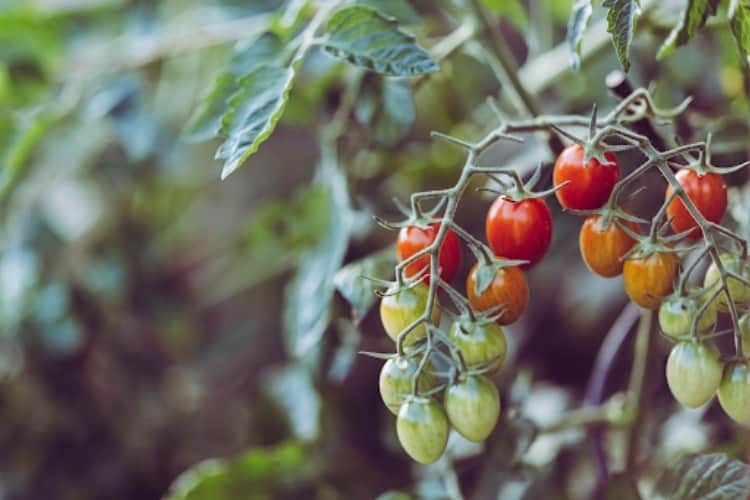
For seedlings intended for outdoor planting, a simple overhead light that covers the seed tray evenly is usually the right starting point. To grow fruiting tomatoes entirely indoors, plan for a much bigger canopy, stronger light, supports and ventilation. The fixtures below vary greatly in size and output. Compare exact model revisions before purchasing: the name used on an older retailer listing may differ from the currently sold unit.
Affiliate disclosure: Swipe Garden may earn a commission from qualifying purchases through some retailer links. Check the exact model, current price and seller before buying. Read our disclosure.
At-a-glance grow-light comparison
| 2023 model | 2026 verification | Better use case |
|---|---|---|
| VIPARSPECTRA XS1500 LED (original model) | Archived retailer ASIN now identifies XS1500 Pro; model revisions vary | A compact tomato-starting setup or small indoor area with appropriate mounting. The size may be suitable for young plants, but a full fruiting canopy needs careful coverage planning. |
| HYPHOTONFLUX HPF3000 | Manufacturer listing sold out | A larger dedicated indoor tomato canopy, if the exact fixture can be found and the lighting map suits the crop. |
| Medic Grow Full Cycle LED (2023 name) | Exact historical SKU not independently matched | Only consider a modern Medic Grow fixture after matching its complete model number, footprint, wattage, controller and hanging requirements. |
| SANSI dimmable LED (2023 name) | 70 W model family documented; exact 2023 revision unverified | Small tomato seed-starting areas where a compatible 70 W-style panel delivers suitable measured light and mounting clearance. |
| VIVOSUN VS2000 | Official VS2000 documented; historical retailer link mismatched and removed | A compact grow-tent setup in which the manufacturer's light map meets the needs of the tomato canopy. |
Fixture models and their intended setups
1. VIPARSPECTRA XS1500 LED (original model)
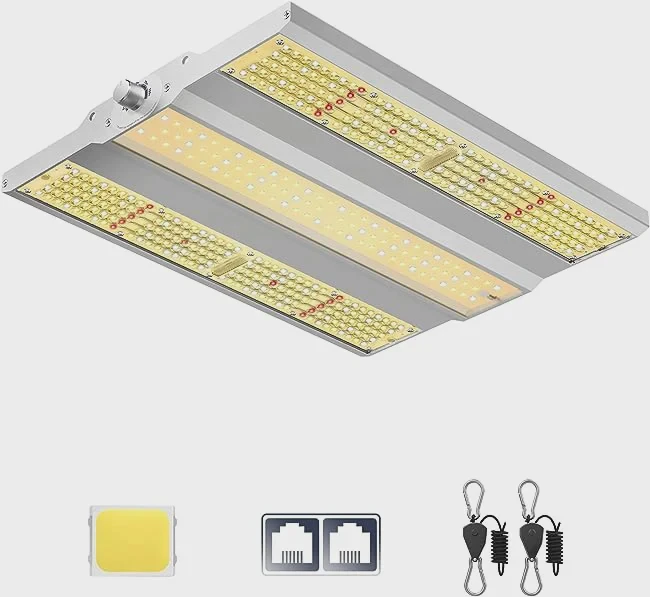
Model details: The 2023 article called this XS1500, but its original Amazon ASIN now resolves to a VIPARSPECTRA XS1500 Pro product page. VIPARSPECTRA's own current XS1500 Pro listing describes a 150 W lens-design fixture with dimming and a small-tent footprint and displayed $99.99 USD on October 10, 2026. The associated retailer product title supports the Pro identification, although the 2023 photograph and all historical revisions are not independently confirmed to be identical.
When it may fit: A compact tomato-starting setup or small indoor area with appropriate mounting. The size may be suitable for young plants, but a full fruiting canopy needs careful coverage planning.
Cons and cautions: Check the exact revision before comparing lens design, output, area, warranty or price. Do not equate the old and Pro models.
Manufacturer documentation or current model reference — verify revision
Retailer listing — confirm exact model and price.
2. HYPHOTONFLUX HPF3000
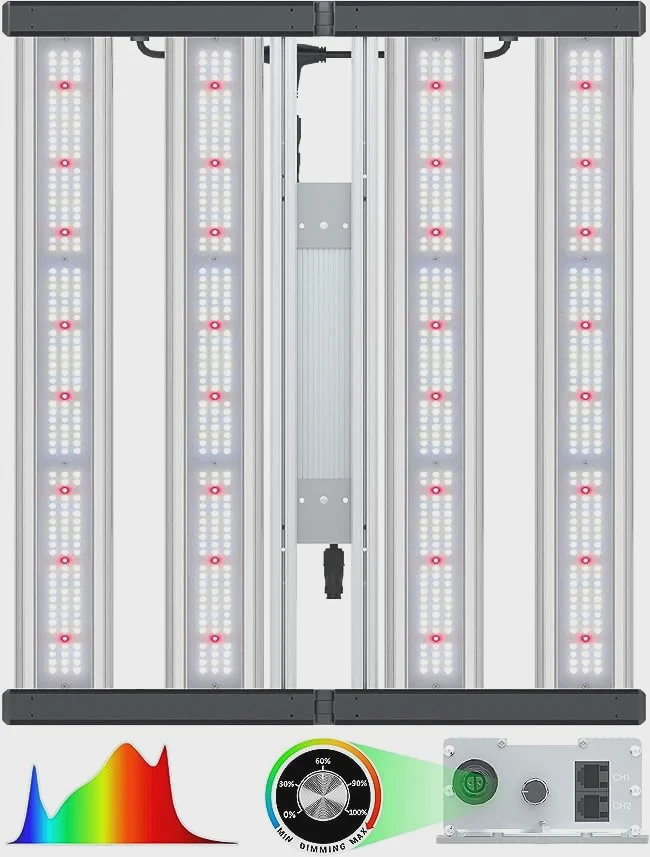
Model details: HYPHOTONFLUX describes HPF3000 as a 320 W dimmable, full-spectrum bar fixture suited to roughly a 3 × 3 ft area. The manufacturer's current shop collection marked this model sold out at the October 10, 2026 check.
When it may fit: A larger dedicated indoor tomato canopy, if the exact fixture can be found and the lighting map suits the crop.
Cons and cautions: Stock and warranty for old listings are uncertain. Dimming does not solve insufficient clearance, poor airflow or an undersized growing space.
Manufacturer documentation or current model reference — verify revision
Retailer listing — confirm exact model and price.
3. Medic Grow Full Cycle LED (2023 name)
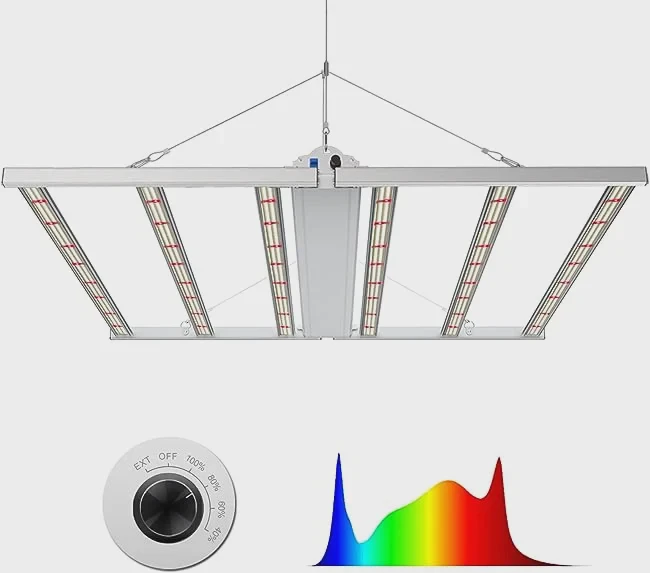
Model details: The 2023 article used the generic label 'Full Cycle LED', but its original Amazon ASIN now resolves to a Medic Grow Fold-6 product title describing a 660 W fixture. Medic Grow has also published Fold-6 models; however, exact revisions, stock and a current US price for this original retailer variant were not independently confirmed. Match the complete model/revision before relying on published wattage or installation data.
When it may fit: Only consider a modern Medic Grow fixture after matching its complete model number, footprint, wattage, controller and hanging requirements.
Cons and cautions: A current manufacturer collection is a research starting point, not confirmation that an archived Amazon listing is the same device.
Manufacturer documentation or current model reference — verify revision
Retailer listing — confirm exact model and price.
4. SANSI dimmable LED (2023 name)
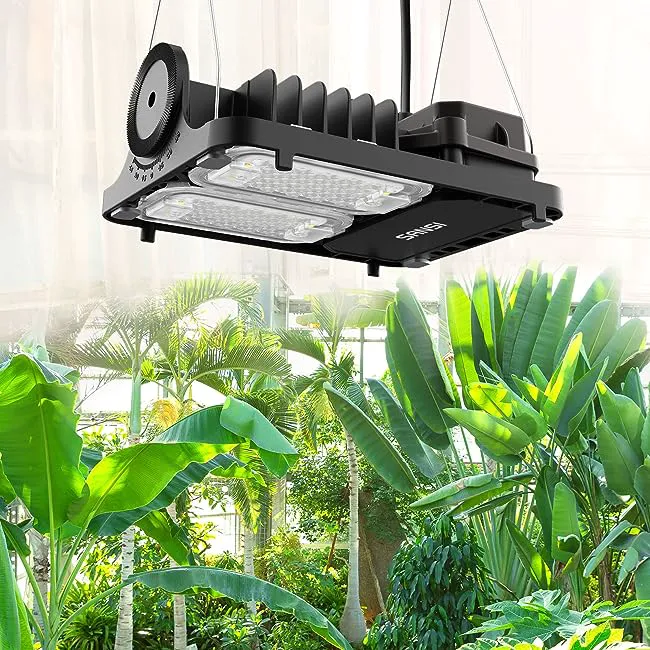
Model details: The original retailer ASIN has been associated with a SANSI 70 W dimmable grow-light panel, model C21GL-R08-70W, in secondary product records. SANSI publishes a current/upgraded 70 W dimmable model, but exact revision equivalence to the 2023 retailer SKU remains unconfirmed. No current US price is asserted for the old ASIN.
When it may fit: Supplemental light for one or two tomato seedlings if the measured canopy coverage is sufficient.
Cons and cautions: A 70 W panel can support a small seed-starting setup but should not automatically be assumed sufficient for a fully grown, fruiting tomato canopy. Check the current model and plant-level light map.
Manufacturer documentation or current model reference — verify revision
Retailer listing — confirm exact model and price.
5. VIVOSUN VS2000
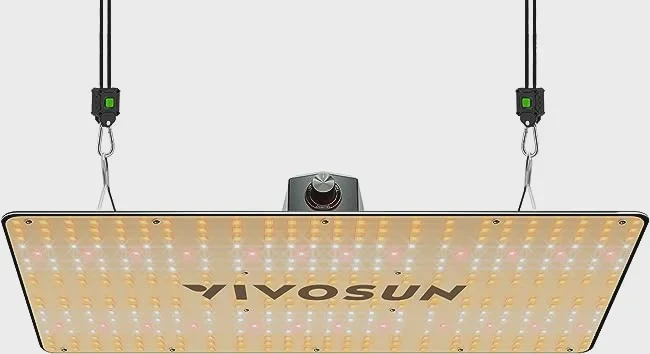
Model details: VIVOSUN continues to identify its VS2000 as a 200 W full-spectrum panel intended for a compact growing area. A VIVOSUN Canada product page was found; US pricing and stock were not independently established. Important: the old affiliate ASIN that this 2023 article called VS2000 now opens a VIVOSUN LumaLight 200W product title instead. We have removed that mismatched buy link rather than direct readers to a different model.
When it may fit: A compact grow-tent setup in which the manufacturer's light map meets the needs of the tomato canopy.
Cons and cautions: Do not confuse a VS2000 with VS1000E: their power, dimming and compatibility differ. Verify model revision and current US listing.
Manufacturer documentation or current model reference — verify revision
No original retailer link: the archived ASIN points to a different product. See the manufacturer source above and verify the exact VS2000..
Buying a grow light for tomatoes: seedlings or fruiting plants?
For tomato seedlings destined for the garden, you generally need far less lighting equipment than for producing ripe tomatoes in a room year-round. The University of Minnesota tomato-growing guide recommends starting seeds inside five or six weeks before transplanting, with bright overhead lighting that prevents leggy stems. Tomatoes need full sun once outdoors.
For seed-starting
Use a modest LED or fluorescent fixture that spreads light evenly over the flats, can be raised as seedlings grow, and runs on a timer. The UMN seed-starting reference suggests 12–16 hours of light, plus a dark interval, for typical seedlings. Adjust the height by the lamp manufacturer's instructions; strong grow-tent panels must not be placed as close as low-heat tray bars.
For fruit production indoors
Expect a larger and much more demanding project. Tomatoes need high usable light across the expanding leaf canopy, enough room for supports, a sufficiently large root zone, nutrient and water management, airflow, and attention to pollination. Assess daily light integral, canopy-level PPFD and coverage using documentation for the exact fixture. The Penn State Extension tomato guide discusses the plant's high light and temperature requirements. A bright bulb that keeps a seedling alive may not deliver a good indoor fruit harvest.
Compare lights by what matters
| Criterion | Practical check |
|---|---|
| Fixture size | Measure canopy footprint at the growth stage you intend to maintain. |
| PPFD and coverage | Require a manufacturer map with hanging height and measurement grid; do not rely on a central peak. |
| Spectrum | Balanced/full-spectrum light can support plant growth; standalone UV is not the primary illumination source. |
| Power cost | Use actual input watts, hours per day and local electricity rates to estimate running cost. |
| Heat and hardware | Account for suspension, airflow, water exposure, rated voltage and controller compatibility. |
| Current product | Match the full model name, revision, stock, regional warranty and total purchase price. |
Frequently asked questions
Do tomatoes require special red-and-blue grow lights?
Not necessarily. A suitable balanced-white/full-spectrum fixture with adequate intensity and coverage is a practical approach for seedlings and can be used for later stages when appropriately sized.
How many hours of light do young tomato plants need?
The UMN indoor-seed guidance commonly recommends about 12–16 hours daily for seedlings. A timer helps provide consistency and darkness each day. Fruiting plants require a more comprehensive assessment of intensity and daily light than just more clock hours.
Can a small clip-on lamp fruit a tomato plant?
For a mature crop, the canopy and overall light requirement may exceed a small clip-on light's capacity. Check measured canopy PPFD before assuming any advertised 'full spectrum' lamp is sufficient.
Is a large LED panel necessary for tomato seedlings?
Not usually. A properly positioned grow light that covers the seed tray evenly is often more practical for starting plants for later transplanting. Large panels make more sense for extensive indoor growing areas or fruiting plants with much greater light demand.
Sources for plant-light guidance: UMN Extension — Lighting for indoor plants and starting seeds; UMN Extension — Growing tomatoes; Penn State Extension — Tomatoes from seedlings to fruit. Manufacturer sources and limitations are linked within each product entry.