
Independent gardening guides. Some links earn us a commission at no cost to you. Read our affiliate disclosure
Newsletter
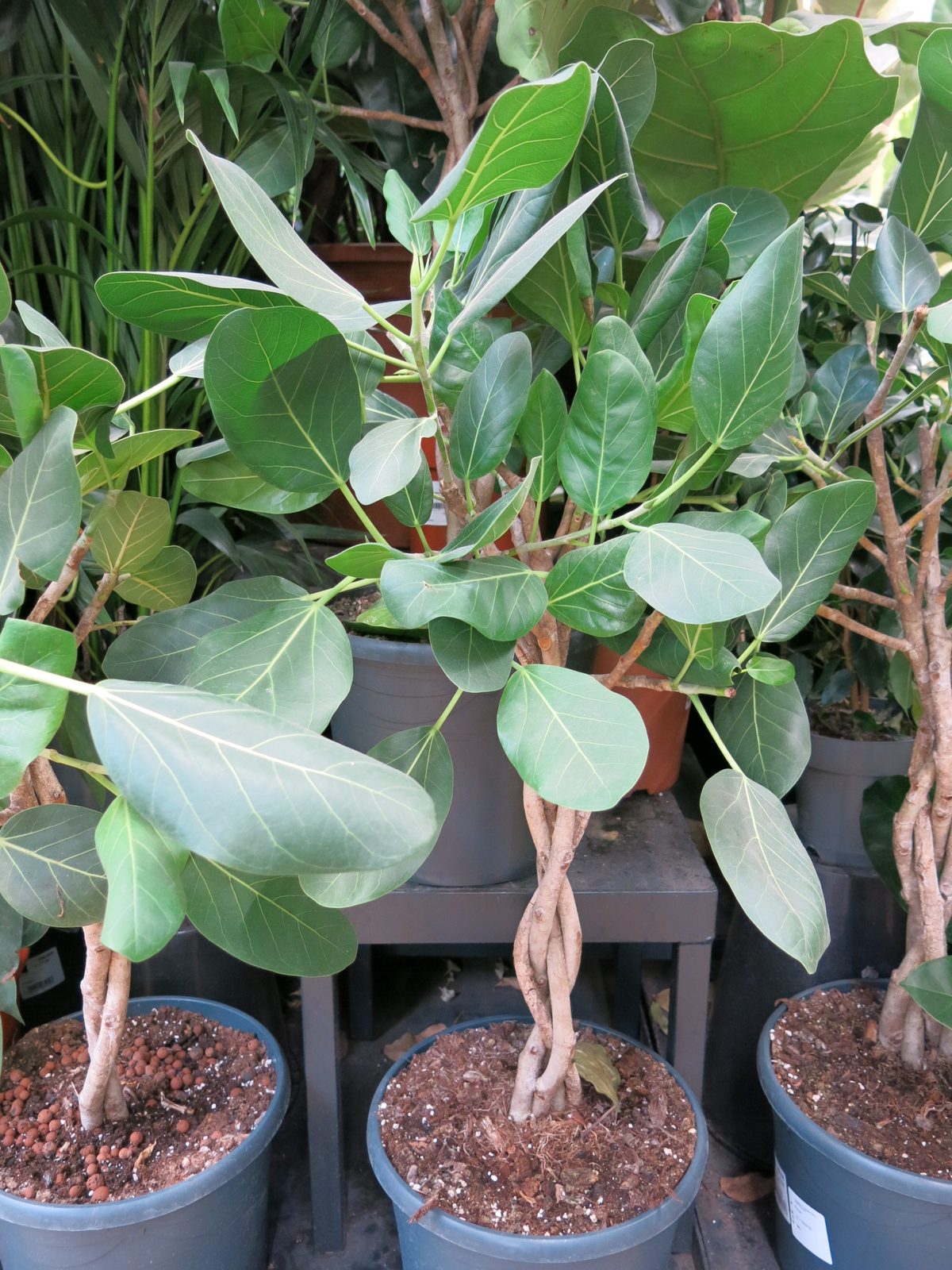
Ficus 'Audrey' (Ficus benghalensis 'Audrey')

Photo: Tangopaso, Public domain via Wikimedia Commons

Ficus 'Audrey'

Ficus benghalensis 'Audrey' · Moraceae

Also known as: Ficus Audrey, Audrey ficus, Audrey fig, Bengal fig, Banyan fig, Banyan tree, Indian banyan, Ficus benghalensis, Ficus bengalensis

A Bengal fig cultivar with oval leaves, pale veins and a smooth, pale trunk. Give it bright indirect light, a draining mix and shelter from cold drafts.

Light
Bright indirect light, Some direct sun
Care level
Beginner friendly
Where it grows
Indoors
Cats and dogs
Toxic to pets Source (opens in a new tab)

NC State Extension lists Ficus benghalensis, the species 'Audrey' belongs to, as a problem for cats and dogs, with low poison severity. If eaten by pets or people it can cause decreased appetite, drooling, nausea, vomiting and diarrhea. It lists the leaves and sap, and notes that the sap can irritate skin. If a pet chews this plant, contact your vet or an animal poison control service.

View My Garden

Check a problem with this plant

How to identify it

Ficus 'Audrey' is a houseplant form of the Bengal fig or banyan, Ficus benghalensis (family Moraceae). NC State Extension lists 'Audrey' as a cultivar of that species, and the RHS records the name as Ficus benghalensis 'Audrey'. In shops it is often labelled simply "Ficus Audrey".

NC State describes the species' leaves as leathery and elliptical to ovate with a pointed tip, smooth above and finely hairy underneath, and 'Audrey' as having a white trunk and glossy green leaves with deep veins. The RHS says the leaves open bright green and mature to deep green with paler veins. Illinois Extension calls it a relative of the fiddle-leaf fig, which has violin-shaped leaves.

Light

NC State says the Bengal fig thrives as a houseplant in bright, indirect sunlight. The RHS rates 'Audrey' for full sun under glass and recommends full or filtered light. For indoor figs in general, the RHS notes that some tolerate a few hours of morning or evening sun, especially in winter, and that small, pale new leaves often mean the light is inadequate.

Choose a bright spot near a window, away from cold drafts and sudden temperature changes, which NC State says the plant needs protection from.

Potting mix and drainage

NC State recommends moist but well-drained soil made from a good-quality potting mix with perlite and a neutral pH. The RHS suggests a peat-free, loam-based compost for 'Audrey'. Either way, use a pot with drainage holes, let the excess water drain after watering, and empty any water left standing in the tray, as NC State advises.

Root rot from overwatering is one of the problems NC State lists for this plant, so good drainage is essential. Iowa State Extension notes that all containers must have a drainage hole, because without one the soil stays wet and roots rot.

When to water

Let the mix dry partway down before you water. NC State advises watering when the top 2 to 3 inches of soil feel dry, then watering well, making sure it drains and emptying any water left in the tray. If the mix still feels damp at that depth, wait and check again later.

Both extremes show on the leaves. NC State says overwatering can lead to root rot, while underwatering causes dry, light brown spots. Illinois Extension notes that 'Audrey' tolerates environmental shifts better than the fiddle-leaf fig and can quickly bounce back from a period of under- or overwatering.

Humidity and temperature

NC State says the Bengal fig prefers temperatures between 65 and 80°F and humidity between 50 and 80%, and suggests a humidifier near the plant to keep humidity up. The RHS gives a minimum temperature of 15°C (59°F) for 'Audrey' grown under glass.

Protect it from cold drafts and sudden temperature changes, which NC State flags. NC State also lists cracked leaves from low humidity among this plant's problems, so a humidifier helps in dry, heated rooms.

Feeding

NC State suggests a liquid fertilizer during the growing season, from spring through summer. Follow the product label rate, and cut back when growth slows in autumn and winter; Iowa State Extension advises fertilizing houseplants only while they are actively growing.

Avoid overfeeding. For indoor figs, the RHS lists too much fertilizer among the causes of sudden leaf drop. If the plant is dropping leaves, check light, drafts and watering before adding fertilizer.

Propagation

NC State says the houseplant can be propagated by stem cuttings or air layering. The RHS recommends semi-ripe cuttings with bottom heat in spring or summer for 'Audrey'.

Air layering roots a section of stem while it is still attached to the parent plant. Iowa State Extension describes wounding the stem, packing moist sphagnum moss around the wound, wrapping it in clear plastic, and cutting the rooted top free once roots have formed. Wear gloves when cutting: NC State and the RHS both warn that the sap can irritate skin.

Growth and size

The wild Bengal fig is a large evergreen tree from South Asia that can grow up to 100 feet tall, with a wide-spreading crown and aerial roots that turn into extra trunks, according to NC State. Houseplants do not produce those aerial roots, and the plant rarely flowers indoors.

'Audrey' is grown for its foliage. NC State describes it as easy to grow and needing minimal care, with a smooth trunk and stems, and the RHS describes a bushy habit and says pruning is not usually required. If you do cut it back, wear gloves against the irritating sap.

Warning signs

  • Mix that stays soggy: NC State lists root rot from overwatering among this plant's problems. Check that the pot drains, empty the tray, and let the top 2 to 3 inches dry before watering again.
  • Dry, light brown spots: feel the mix. NC State links these to underwatering; water well once the top few inches are dry.
  • Brown and yellow spots that spread slowly: NC State links leaf spot to poor air circulation and excess moisture. Give the plant more space for air to move and avoid keeping it too wet.
  • Cracked leaves: NC State links these to low humidity. Raise humidity, for example with a humidifier.
  • Pests: NC State advises monitoring for spider mites, mealybugs, scale insects and fungus gnats. Check leaf undersides, stems and the surface of the mix, identify the pest, then use a product labelled for it and follow the label.

Sources

  1. NC State Extension Gardener Plant Toolbox: Ficus benghalensis (Ara Banyan, Banyan Tree, Bengal Fig, East Indian Fig Tree, Indian Banyan Tree, Strangler Fig) (checked October 11, 2026)
  2. Royal Horticultural Society (RHS): Ficus benghalensis 'Audrey' (checked October 11, 2026)
  3. Royal Horticultural Society (RHS): How to grow ornamental figs (checked October 11, 2026)
  4. University of Illinois Extension: Horticulturists' Favorite Houseplants (Candice Anderson and Ryan Pankau, 2021-02-19) (checked October 11, 2026)
  5. Iowa State University Extension and Outreach: How to care for houseplants (checked October 11, 2026)
  6. Iowa State University Extension and Outreach: How to Propagate Houseplants by Air Layering and Simple Layering (checked October 11, 2026)

Last reviewed