
Independent gardening guides. Some links earn us a commission at no cost to you. Read our affiliate disclosure
Newsletter
Rubber plant (Ficus elastica)

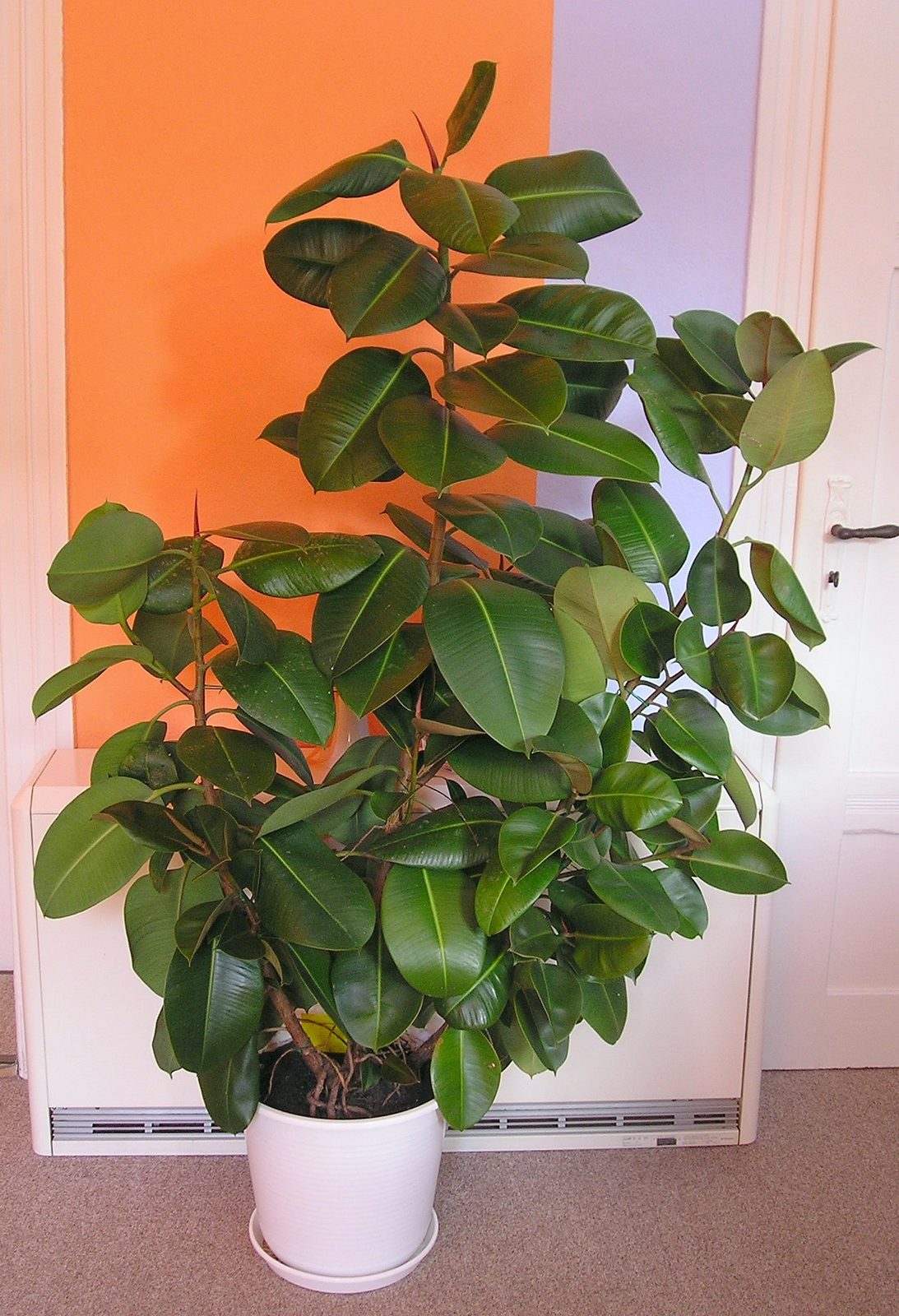
Photo: Maja Dumat, CC BY 2.0 via Wikimedia Commons

Rubber plant

Ficus elastica · Moraceae

Also known as: Rubber tree, Rubber fig, Indian rubber plant, India rubber plant, Ficus elastica, Burgundy rubber plant, Decora, Robusta, Tineke, Ruby, Red Ruby, Belize, Abdijan, Abidjan, Doescheri, Melany, Tricolor, Variegata, Yellow Gem

A sturdy fig with large, glossy leaves. It copes with lower light, does best in bright indirect light and a draining pot, and dislikes cold drafts.

Light
Low light tolerant, Medium light, Bright indirect light
Care level
Beginner friendly
Where it grows
Indoors, Outdoors in warm climates
Cats and dogs
Toxic to pets Source (opens in a new tab)

The ASPCA lists fig plants (Ficus sp.) as toxic to dogs and cats. This is a genus-level listing on a page titled "Weeping Fig", and it does not list clinical signs. NC State Extension's rubber plant page also flags it as a problem for cats and dogs. Clemson Extension notes that the sticky white sap may irritate skin, or the stomach if eaten, and advises keeping rubber plants away from pets and young children that eat plants. If a pet chews this plant, contact your vet or an animal poison control service.

View My Garden

Check a problem with this plant

How to identify it

Rubber plant (Ficus elastica, family Moraceae) has stiff, leathery, glossy leaves with a pointed tip, deep green above and paler beneath with a raised midrib. NC State Extension notes the pink or purple stipules and the milky sap that drips from cut leaves and once was used to make rubber.

NC State lists many cultivars, including 'Burgundy', 'Decora', 'Robusta', 'Tineke', 'Tricolor', 'Variegata' and 'Red Ruby', from dark leaves with deep red tones to cream, pink and gray variegation. The name "Indian rubber plant" is also used for weeping fig: the ASPCA page of that name covers Ficus benjamina, not this plant, so check the scientific name on the label.

Light

Rubber plant is one of the more adaptable figs for light. Clemson Extension says it prefers bright light but adapts to low light, and does best with morning light from an east window. NC State recommends bright indirect light or partial shade indoors, with protection from afternoon sun.

Clemson lists too little light among the causes of leaf drop. For indoor figs, the RHS adds that variegated forms need more light than plain green ones, and that small, pale new leaves often point to inadequate light. NC State notes that rubber plant prefers to stay in one location, so choose its spot with care rather than moving it often.

Potting mix and drainage

Plant in a well-drained, soil-based houseplant mix in a pot with drainage holes. NC State and Clemson both recommend this, and Clemson notes that root rot usually comes from poorly draining soil or watering too often.

Clemson suggests repotting, when needed, in late winter or early spring. For indoor figs, the RHS suggests moving up to a slightly larger container every couple of years in spring, using a loam-based or peat-free multipurpose compost. For a plant too large to repot, scrape off the top inch of compost and replace it with fresh mix. NC State notes that rubber plant can become heavy and is best suited to large spaces, which is worth keeping in mind when you choose a pot.

When to water

Check the mix before every watering. Clemson advises letting the soil dry slightly to the touch between waterings, and Iowa State Extension suggests watering when the soil is dry to the touch about an inch down. If it is still damp, wait.

When it is time, water thoroughly, let the excess drain, and empty the saucer, as Clemson advises. NC State says to avoid overwatering and to reduce watering while the plant is dormant, from fall to late winter, so expect to water less often then. Overwatering can cause leaf loss, and soil that stays too wet can turn leaves yellow.

Humidity and temperature

Clemson says rubber plants prefer humid air but tolerate the dry air common in homes. Keep it warm: NC State gives a temperature greater than 55°F, and Clemson advises avoiding temperatures below 55°F, sudden drops and cold drafts. Clemson gives 60 to 65°F at night and 75 to 80°F during the day as ideal.

Cold is the main risk. Penn State Extension describes cold injury on rubber plant below 40°F: large brown blotches on mature leaves, and young leaves that look puckered, distorted and brown. Keep plants away from air conditioners and cold drafts.

Feeding

Feed during spring and summer, while the plant is growing. Clemson recommends a water-soluble houseplant fertilizer during this period, with less frequent feeding for plants in lower light. Follow the product label rate.

For indoor figs, the RHS suggests a high-nitrogen feed from spring to late summer to encourage leafy growth, and lists too much fertilizer among the causes of sudden leaf drop. Iowa State Extension advises fertilizing houseplants only while they are actively growing and feeding less during the winter rest.

Propagation

Clemson says rubber plant can be propagated from stem or tip cuttings, or by air layering. Air layering suits large-leaved plants: Illinois Extension explains that big leaves lose moisture too quickly for cuttings to do well, and names rubber tree as a plant for which air layering works well. A section of stem is wounded, packed with moist sphagnum moss, wrapped in clear plastic and cut free once roots show through.

The RHS suggests air layering rubber plants in spring or late summer. Rooting is slow and can take several months, so be patient. Wear gloves, because the RHS notes that the sticky white sap may irritate skin.

Growth and size

In the wild, rubber plant is a tree that can reach 100 feet, with a spreading crown and aerial roots, and it often starts life growing on another plant. Indoors it rarely flowers and is usually kept at 2 to 10 feet with training or support, according to NC State. Clemson notes that indoor plants can grow tall and lanky.

You can shape it. NC State suggests pruning the main branches for a bushier habit, or leaving them for a tall, narrow, tree-like form. Clemson suggests staking, or pruning in spring to rejuvenate a leggy plant. Cut stems drip sap, so wear gloves. NC State notes that it is normal for some bottom leaves to turn yellow and drop.

Warning signs

  • Leaves dropping: check for cold drafts, a recent temperature drop, soggy mix, dry air or too little light, which NC State and Clemson list as causes. Fix the cause and keep the plant in one spot.
  • Yellow leaves: one or two old bottom leaves turning yellow is normal. If several yellow while the mix stays wet, let the top of the mix dry before watering again and check that the pot drains.
  • Brown blotches or puckered new leaves after a cold spell: Penn State links this to temperatures below 40°F. Move the plant somewhere warmer, away from air conditioners.
  • Pests on stems or leaves: NC State names mealybugs, scale and spider mites as rubber plant pests. Check stems and leaf undersides, identify the pest, then use a product labelled for it and follow the label.

Sources

  1. NC State Extension Gardener Plant Toolbox: Ficus elastica (Indian Rubber Plant, Rubber Plant) (checked October 11, 2026)
  2. Clemson Cooperative Extension, Home & Garden Information Center: Rubber Plant (HGIC 1510) (checked October 11, 2026)
  3. Royal Horticultural Society (RHS): How to grow ornamental figs (checked October 11, 2026)
  4. Penn State Extension: Ficus Diseases (Gary W. Moorman) (checked October 11, 2026)
  5. Clemson Cooperative Extension, Home & Garden Information Center: Indoor Plants: Cleaning, Fertilizing, Containers & Light Requirements (checked October 11, 2026)
  6. Iowa State University Extension and Outreach: How to care for houseplants (checked October 11, 2026)
  7. University of Illinois Extension: Air Layering (Houseplants) (checked October 11, 2026)
  8. ASPCA Animal Poison Control: Indian Rubber Plant (Scientific Name: Ficus benjamina) (checked October 11, 2026)
  9. ASPCA Animal Poison Control: Weeping Fig (Scientific Name: Ficus sp.) (checked October 11, 2026)

Last reviewed