
Snake plant, Dracaena trifasciata (formerly Sansevieria trifasciata), grows in upright clumps of stiff, thick, pointed leaves. Many varieties have horizontal bands of darker and lighter green; some cultivated forms add yellow edges or pale vertical markings. NC State Extension identifies the modern name and describes differences among 'Laurentii', 'Moonshine', 'Hahnii' and other cultivated forms. The tall leaf shape helps distinguish it from soft, arching spider plant leaves.
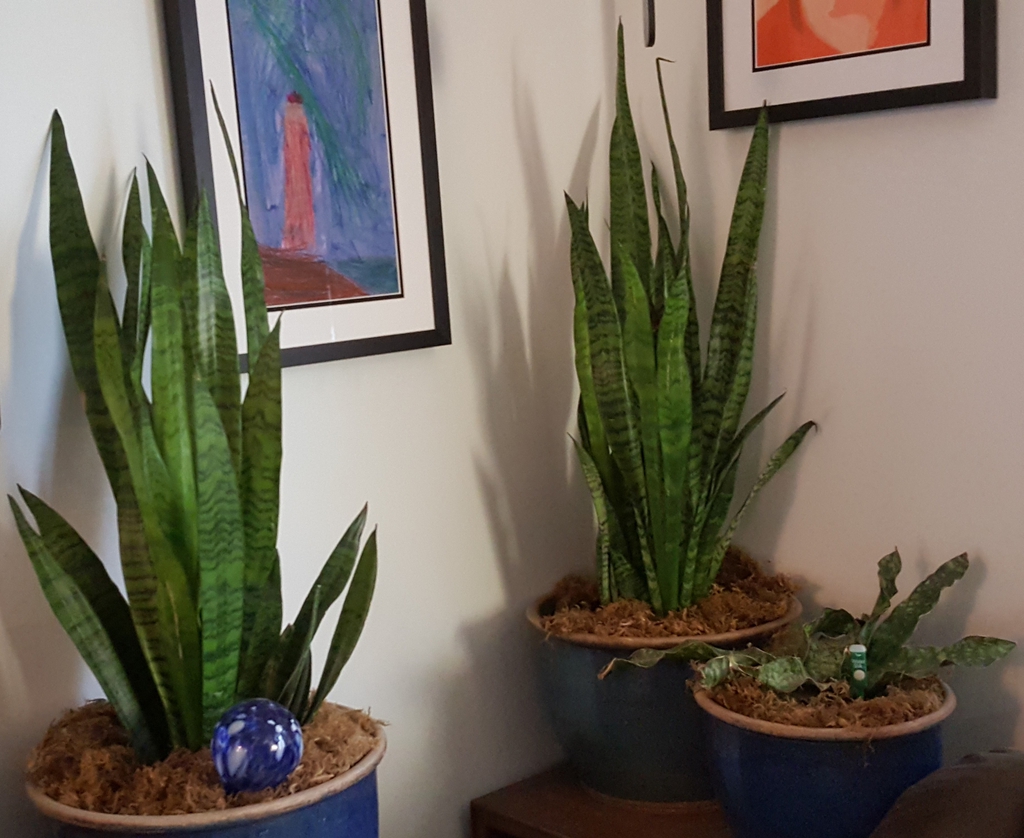
Photo: Lucy Bradley, CC0, via NC State Extension Plant Toolbox (https://plants.ces.ncsu.edu/plants/dracaena-trifasciata/). License: https://creativecommons.org/publicdomain/zero/1.0/. Rehosted without intentional crop.
Snake plant
Dracaena trifasciata · Asparagaceae
Also known as: Snake plant, mother-in-law's tongue, Sansevieria trifasciata (former scientific name), good luck plant
Snake plant grows upright, sword-shaped leaves and tolerates lower light. Use a draining pot and let the soil dry between waterings; toxic to pets.
- Light
- Low light tolerant, Medium light, Bright indirect light, Some direct sun
- Care level
- Beginner friendly
- Where it grows
- Indoors, Outdoors in warm climates
- Cats and dogs
- Toxic to pets Source (opens in a new tab)
ASPCA lists snake plant as toxic to both cats and dogs under its older name Sansevieria trifasciata; NC State Extension uses the current name Dracaena trifasciata. ASPCA identifies saponins and lists nausea, vomiting and diarrhea as possible signs. If a pet may have eaten part of this plant, contact a veterinarian or animal poison control service promptly; do not try home treatment.
How to identify it
Light
Bright indirect light is a reliable indoor choice, but snake plant tolerates less light. NC State Extension describes tolerance of very low light and of partial direct sunlight for part of the day. That does not mean it can grow in a room with no light at all. A brighter site can support more vigorous growth, while a dim site typically dries more slowly; adjust watering to the actual conditions.
Do not move a plant that has lived in a dim room straight into intense afternoon sun without gradual adjustment. Iowa State Extension explains how window intensity and distance change indoor light levels.
Potting mix and drainage
Use a draining container and a porous, well-drained houseplant or succulent potting mix. NC State Extension lists good soil drainage as essential and identifies overwatering as a cause of root rot. A nursery pot with drainage holes can sit inside a decorative outer pot, provided you empty any collected water.
Do not try to fix a pot without holes by putting stones at the bottom: Iowa State Extension explains that this does not prevent saturated roots. See whether snake plants need drainage holes for container options.
When to water
Let the potting mix dry between waterings, then water and drain. Check moisture below the surface rather than watering on a calendar; if the pot still feels damp or heavy, wait. When the mix has dried sufficiently, water until excess exits the drainage hole and empty the saucer. NC State Extension specifically advises letting snake-plant soil dry between spring-to-autumn waterings and warns about root rot.
In cool, dim winter conditions, the mix dries more slowly, so watering may be much less frequent. Ignore fixed intervals such as "every Sunday": the pot size, light, room temperature and growing medium determine how soon water is needed. Iowa State Extension explains the value of checking the mix and pot weight.
Humidity and temperature
Snake plant tolerates the lower humidity of many homes; a humidifier is usually unnecessary just for this species. NC State Extension reports tolerance of low humidity and cool conditions around 50°F (10°C), but cold tolerance should not be confused with a preferred growing temperature. Keep it indoors during freezes and away from cold drafts.
Outdoors year-round, consider it only in frost-free climates. NC State Extension's profile lists USDA hardiness zones 10a through 12b; a zone is not a prediction of this year's frost date.
Feeding
Snake plants need little fertilizer while growing slowly. If growth is active and the plant is established, apply a general houseplant feed at its labelled rate, not extra to compensate for low light. Iowa State Extension advises reducing or withholding houseplant fertilizer during winter rest, and notes fresh potting mix may already contain some nutrients.
Propagation
NC State Extension lists division and cutting methods for snake plant. For a mature clump, division is a straightforward way to start another plant: lift it, separate an offset with its own healthy roots, and pot in a free-draining mix. Do not keep newly disturbed roots continually wet.
Named cultivars differ in leaf pattern; if a specific patterned look matters, separate a rooted offset that already shows that pattern rather than assuming every cutting will match. Keep cuttings and trimmings out of reach of pets, as ASPCA lists the plant as toxic to cats and dogs.
Growth and size
Snake plant grows as an upright clump of fleshy, erect leaves. NC State Extension describes leaves that can reach about 4 feet (1.2 m), although compact 'Hahnii' forms remain much shorter. Small greenish-white flowers may appear on a mature plant, but bloom is uncommon indoors. It is grown for the leaf shape and pattern rather than dependable flowers.
Warning signs
- Soft, collapsing leaf bases or persistently wet mix: investigate saturated roots; NC State Extension warns that excess water can cause root rot. Stop watering while the mix is already wet, and correct drainage before making further changes.
- Mealybugs or fine webbing: inspect both sides of leaves for pests. NC State lists mealybugs and spider mites; identify the pest before selecting a treatment, and do not apply an unsourced chemical dose.
- Very slow growth: snake plant may tolerate dim light without growing vigorously. Compare actual light with the plant's established position before adding fertilizer or water.
- Pet chewed leaves: ASPCA classifies snake plant as toxic to cats and dogs. Contact a vet or animal poison service promptly if ingestion is suspected.
Related guides
Sources
- NC State Extension Gardener Plant Toolbox: Dracaena trifasciata: species identity, cultivation, zones and problems (checked October 12, 2026)
- ASPCA Animal Poison Control: Toxic and Non-toxic Plants: Snake Plant (Sansevieria trifasciata) (checked October 12, 2026)
- Iowa State University Extension and Outreach: How to Care for Houseplants (checked October 12, 2026)
Last reviewed