
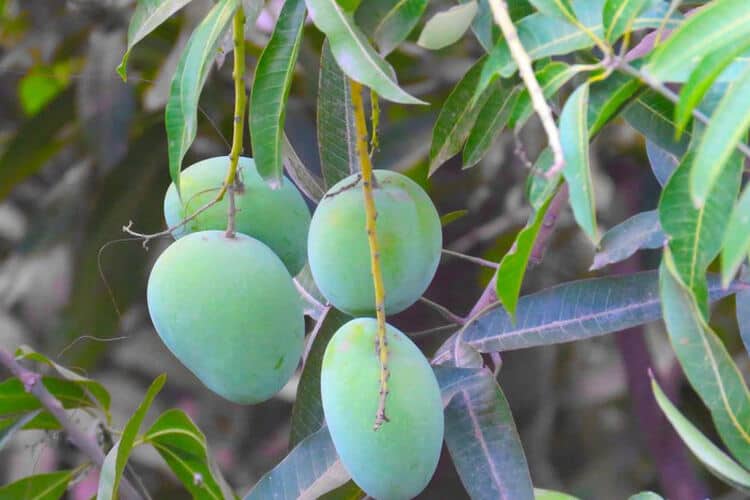
Fertilize a young mango tree to support establishment, but be much more restrained with a healthy mature tree that is already fruiting. In Florida, UF/IFAS recommends frequent small doses for newly planted trees and fewer applications as they mature; it emphasizes little or no nitrogen for many established bearing trees. Do not use the same growth-oriented fertilizer formula throughout a mango tree's life.
Young mango trees: small, measured applications
Newly planted trees grow new roots and canopy and may benefit from modest balanced nutrition once establishment begins. UF/IFAS suggests small feedings about every two to three months during a young tree's first year in Florida, increasing as the tree grows. That recommendation assumes Florida soil and climate; follow local guidance and the product's instructions elsewhere. A handful of high-nitrogen lawn feed is not a safe universal substitute.
Mature fruiting trees: avoid pushing leaves instead of fruit
For healthy bearing mango trees, fertilizer needs change. UF/IFAS advises drastically reducing or eliminating nitrogen while supplying potassium and selected micronutrients where required. Too much nitrogen can stimulate vigorous leaf flush and reduce fruit set or quality. Lawn fertilizer that reaches the mango's wide root area may already be contributing nutrients; factor this in before applying more near the trunk.
Match feeding to climate and crop cycle
Do not assume that every mango everywhere blooms and fruits in the same calendar month. Local rainfall, dry season, cultivar and location affect growth. In southern Florida, the growing season and harvest timing differ from tropical regions with monsoon patterns. Follow the locally appropriate mango production calendar and avoid unnecessary feeding immediately before a cold event or during prolonged root-zone flooding. Fertilizer cannot repair flowers damaged by frost or fungal infection.
Choose nutrients using evidence
- Identify tree age and whether it bears a normal fruit crop.
- Check a soil test, including pH and nutrient needs, and investigate chlorosis before buying trace-element blends.
- Use a locally recommended mango fertilizer ratio and calculate the amount from the label.
- Spread it in the intended feeding area; do not bury a concentrated pile next to the trunk.
- Water if required for the product and current soil condition; do not routinely waterlog the tree.
- Keep notes on flowering, leaf growth, fruiting and applications to adjust next season.
What about foliar micronutrients?
High-pH soils can tie up iron and some other nutrients, making leaf sprays or chelated forms appropriate in particular circumstances. Boron has a narrow range between deficiency and toxicity, so never add it by guesswork. Use a local diagnosis and label instructions rather than mixing your own high-strength “fruit boosters.”
Common mistakes and symptoms
Fast leafy growth but poor fruiting does not automatically mean the tree needs more nitrogen. Check shade, flowering weather, pollination, cultivar and disease pressure. Leaf yellowing can also result from irrigation or pH problems. Keep the grass-free, mulched area around the trunk to reduce mower injury without burying its flare. Other fruit trees have different schedules: for example, see citrus fertilizer guidance.