
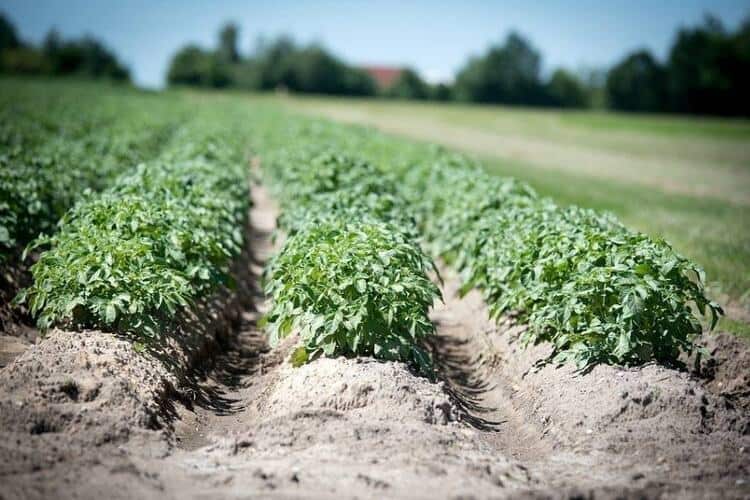
Do not stop watering potatoes just because a particular month arrives. While plants are green and setting or enlarging tubers, they need reasonably consistent root-zone moisture. For mature potatoes intended for storage, reduce irrigation as vines naturally yellow and die back and the crop approaches harvest; then allow skins to set. The timing depends on cultivar, planting date, weather and whether you want tender new potatoes or mature storage tubers.
Watering by crop stage
| Growth stage | Moisture priority |
|---|---|
| Emergence and early growth | Keep enough moisture for healthy shoot and root establishment without waterlogging |
| Tuber initiation and bulking | Avoid drought swings; this is a sensitive stage for tuber number, size and quality |
| Yellowing and natural vine decline | Reduce watering as the crop transitions toward maturity, accounting for rain and soil |
| Before mature storage harvest | Avoid unnecessary irrigation; assess skin set, soil condition and forecast |
Signs the crop is ready to dry down
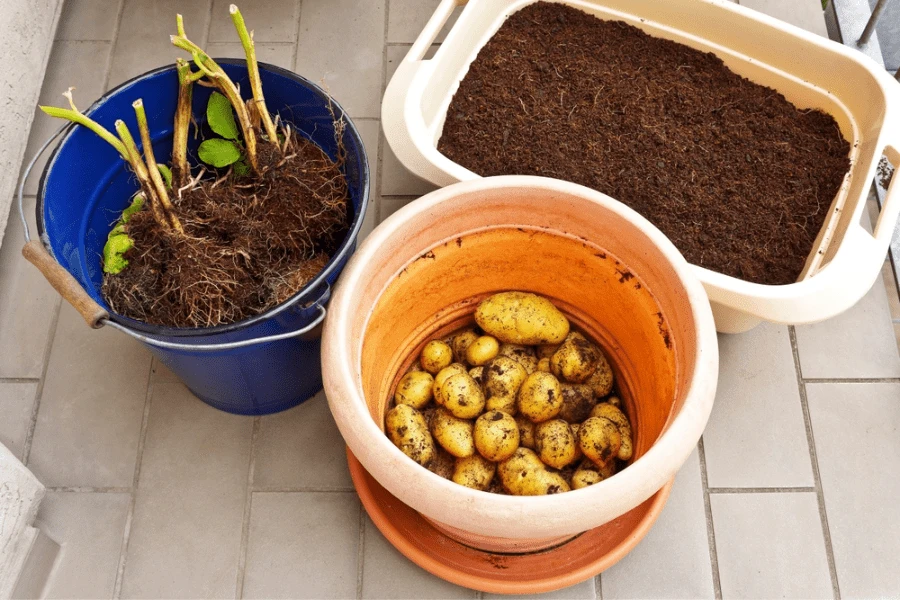
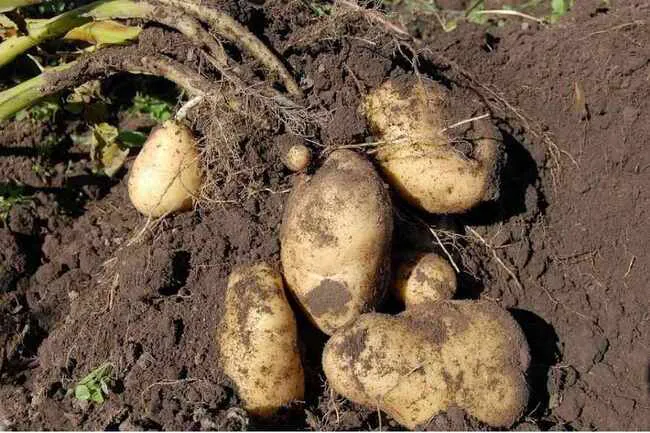
On many potatoes, tops gradually yellow, die and dry when the crop matures. Oregon State University Extension recommends reducing watering before harvest in its regional calendar and allowing vines to die back for storage potatoes. That advice should be applied to crop stage rather than treating “mid-August” as a universal date. If the canopy collapses suddenly from disease while tubers are immature, investigate instead of assuming normal maturity.
How to check skin set
- After the vines have largely died and the soil is workable, gently dig a representative tuber.
- Rub the skin lightly with a thumb. If it peels away easily, the tuber has not fully set its skin for long storage.
- If weather and plant health allow, wait and test again rather than bruising a large harvest.
- Harvest on a suitable dry day when soil is not waterlogged or sticking heavily to the potatoes.
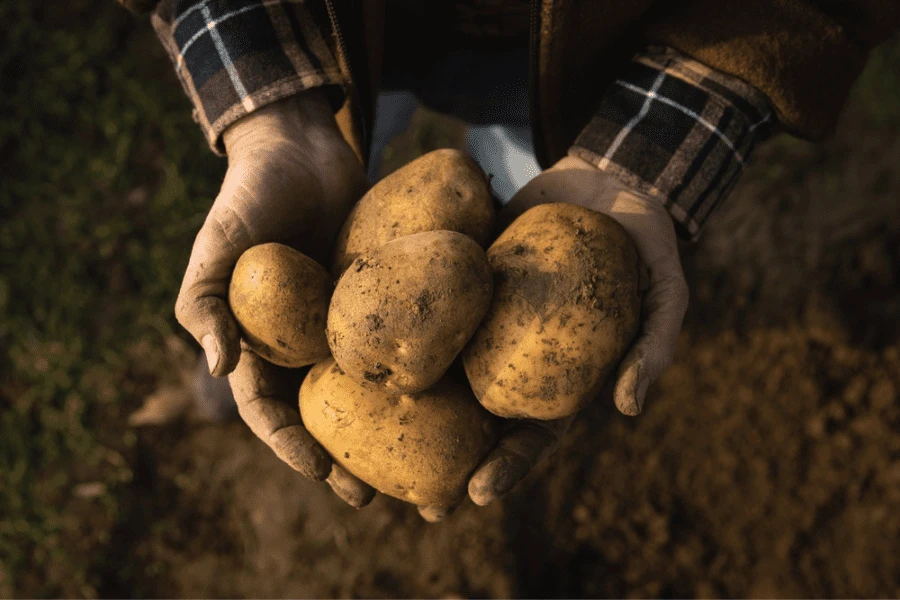
- Handle gently and store cured sound potatoes in suitable dark, cool conditions according to extension guidance.
New potatoes are an exception
New potatoes are intentionally dug while the skins are thin and plants may still be growing. They are best eaten promptly and don't need the same skin-set process as a mature crop intended for long storage. Keep growing plants adequately watered before an early selective harvest; don't starve the whole patch of water just to dig a few new potatoes.
What if there is heavy rain?
You cannot control rainfall, but you can avoid adding irrigation to already wet soil. Good drainage is important because saturated conditions can encourage tuber decay. Consider the local forecast and disease risk when choosing harvest timing; a short dry period after natural vine dieback is useful, but do not leave mature tubers in persistently warm, waterlogged ground.
Common mistakes
Do not withhold moisture while a vigorous crop is still bulking, then assume fertilizer will restore lost yield. Do not continue deep, frequent irrigation after the crop is mature simply to keep dead leaves green. And do not compare this timeline with sweet potatoes, which form storage roots rather than the same type of tuber. For planning use potato spacing and yield expectations.