
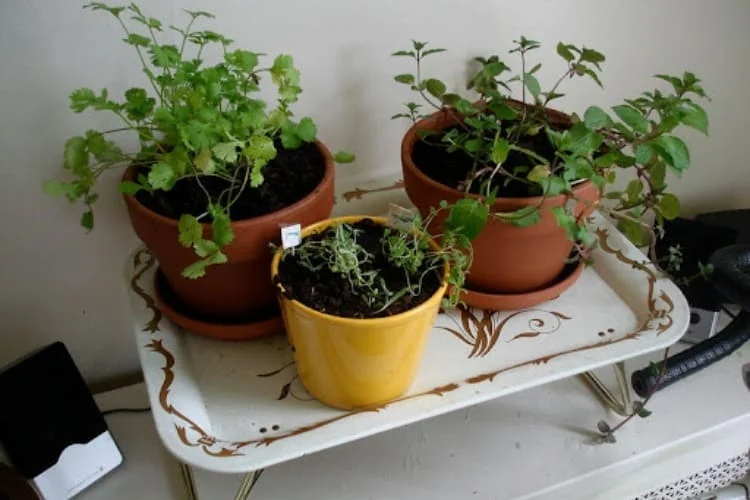
For most herbs on a kitchen shelf, start with a full-spectrum or balanced-white LED or fluorescent fixture that covers the whole growing area, plus a timer. A UV-only bar is not a substitute for plant-usable main lighting. University of Minnesota Extension describes total light periods of roughly 12–14 hours daily for hydroponic herbs and lettuce, while herb seedlings can need longer as they establish. Actual requirements depend on crop, intensity and ambient daylight.
Affiliate disclosure: This article contains some historical affiliate retailer links, which may earn Swipe Garden a commission on qualifying purchases. Affiliate links are marked rel="sponsored"; check that a link opens the exact intended model before ordering. Read our disclosure.
These fixtures serve different purposes: standard panels can provide primary growing light, while UV-only bars are supplemental and cannot replace a main grow light for herbs.
At-a-glance fixture comparison
| 2023-listed fixture | Verified status | Practical buying takeaway |
|---|---|---|
| VIPARSPECTRA XS1000 LED panel | Current manufacturer listing | A small shelf or compact tent that can support an overhead hanging panel and appropriate clearance. It is more substantial than a desk lamp for a handful of herb pots. |
| SANSI hydroponics growing system | Historical model; exact current kit unverified | People comparing all-in-one countertop growing kits rather than individual bulbs, but only after confirming what is in the box. |
| HYPHOTONFLUX 30 W UV-A supplemental bar set | Manufacturer listing: sold out; not a primary grow light | Specialized setups already using suitable general grow lighting and with a reason to study supplemental UV. |
| Cultiuana T50 UV supplemental bar | Current specialist product; not the usual herb-light choice | A specialized controlled-environment installation with an existing primary light. |
Fixtures and their intended uses
1. VIPARSPECTRA XS1000 LED panel
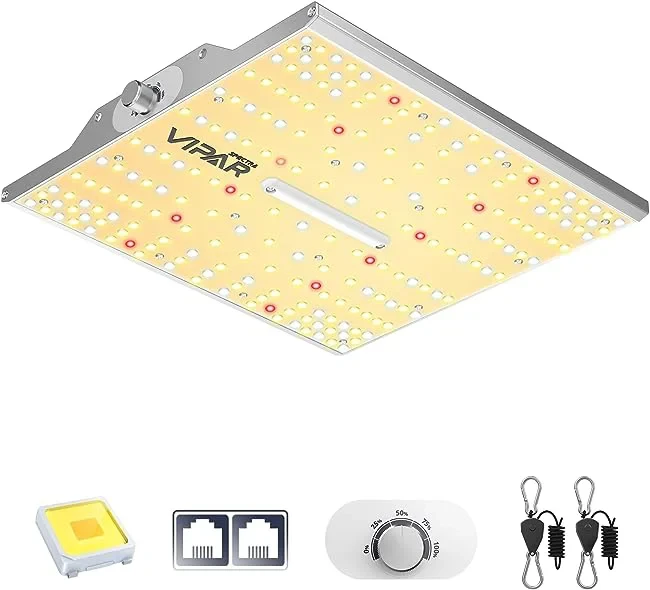
Model information: The manufacturer currently lists an upgraded XS1000 at 100 W, with dimming, full-spectrum diodes and an indicative 2.5 × 2.5 ft vegetative coverage area. Its direct listing showed $99.99 USD on October 10, 2026; that is not a guaranteed retailer price.
Who might consider it: A small shelf or compact tent that can support an overhead hanging panel and appropriate clearance. It is more substantial than a desk lamp for a handful of herb pots.
Limits and cautions: Confirm that a retailer's XS1000 is the same revision described on the manufacturer page. At short distances, an undimmed panel may provide more light than young herbs require.
Manufacturer information / current product reference
Retailer listing — check model, price and availability.
2. SANSI hydroponics growing system
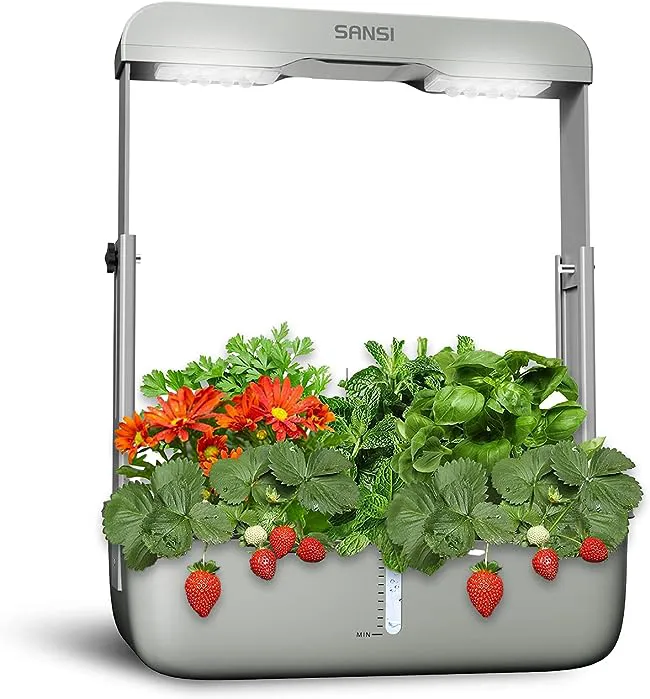
Model information: The original Amazon ASIN still resolves to a product titled SANSI Hydroponics Growing System with an indoor LED, pump and 4-liter water tank, confirming the historical product name. We could not establish a currently active matching manufacturer listing or independent proof of current stock, exact kit contents or warranty. Do not assume newer SANSI lamps are equivalent to this kit.
Who might consider it: People comparing all-in-one countertop growing kits rather than individual bulbs, but only after confirming what is in the box.
Limits and cautions: Before buying, verify reservoir/pump arrangement, power adapter, replacement sponges, nutrients, mounting height and whether the included light covers the plants as they mature.
Source gap: no confident current direct manufacturer match was established; treat the original listing as historical.
Retailer listing — check model, price and availability.
3. HYPHOTONFLUX 30 W UV-A supplemental bar set
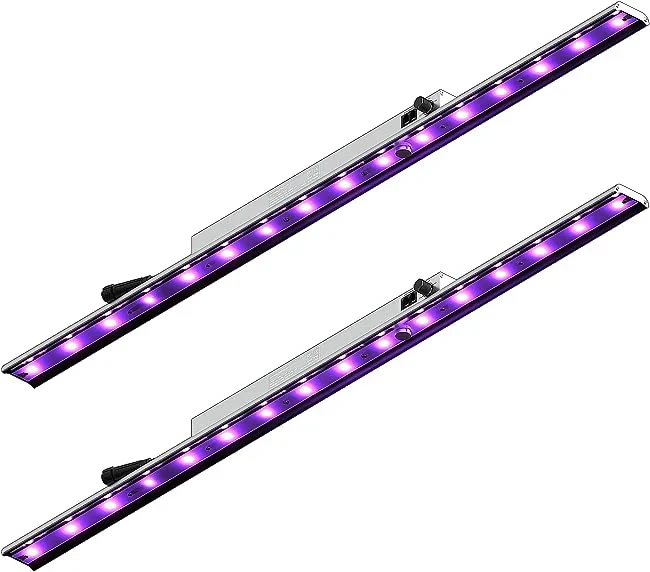
Model information: The manufacturer describes a 30 W UV-A supplemental system sold as two bars, with approximately 385 nm output. It was marked sold out on the official product page checked October 10, 2026.
Who might consider it: Specialized setups already using suitable general grow lighting and with a reason to study supplemental UV.
Limits and cautions: UV-A supplementation does not replace a white/full-spectrum fixture and is not normally required for a beginner growing culinary herbs. Follow eye, skin and electrical safety instructions.
Manufacturer information / current product reference
Retailer listing — check model, price and availability.
4. Cultiuana T50 UV supplemental bar
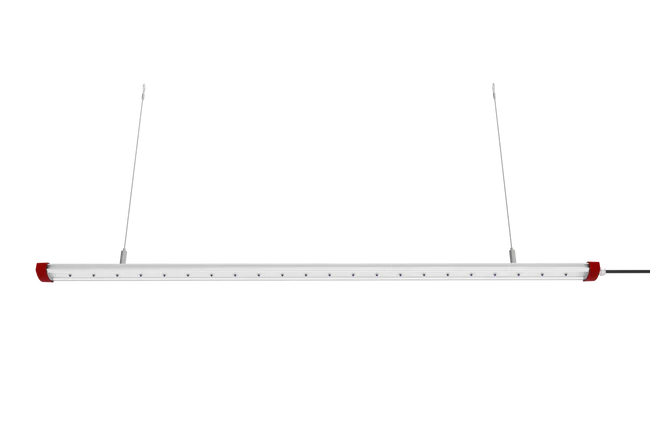
Model information: The manufacturer's T50 listing describes a 50 W, approximately 395 nm UV light bar and displayed $159.26 USD as of the October 10, 2026 check. It is sold as supplementary equipment rather than a standard fixture for general photosynthesis.
Who might consider it: A specialized controlled-environment installation with an existing primary light.
Limits and cautions: Buying a UV bar instead of a suitable primary lamp would not solve an ordinary herb shelf's need for broad usable photosynthetic light. Check UV exposure safety and fit before use.
Manufacturer information / current product reference
The previous purchase link was inactive on October 10, 2026; use the manufacturer's page above to check current availability..
Choosing a practical grow light for culinary herbs
First measure the shelf and the herb canopy
Coverage is more useful than advertised “equivalent watts.” A narrow beam may create one bright spot while leaving surrounding pots underlit. For several herbs, use a fixture with coverage appropriate to their combined canopy, leaving room to raise it as basil or parsley grows. For one plant, a compact adjustable light may be sufficient.
PPFD matters more than wattage
Photosynthetic photon flux density (PPFD) is plant-useful photon flux arriving at a particular surface. Read the seller's PPFD map with the measurement distance and area; do not compare isolated peak values taken at different heights. Watts describe electricity consumed, not how much light reaches leaves. University of Minnesota's guide explains light measurement and spectrum.
Use a timer, drainage and crop-specific care
A practical starting point for many established indoor culinary herbs is around 12–14 hours of useful daily light, adjusted for the fixture and window light. Provide a daily dark period. Containers need drainage, and more light may increase water use; check moisture rather than watering by a universal daily schedule. University of Minnesota's herb-growing guide covers container and feeding basics.
Do you need UV to grow herbs?
No. UV-A supplemental bars are specialty accessories, not core equipment for a beginner. A quality broad-spectrum fixture can support ordinary culinary herb growth without a separate UV lamp. UV devices introduce eye and skin exposure concerns and should never be used without the manufacturer's safety controls.
Quick setup checklist
- Pick the herbs and count how many containers will share the light.
- Measure the canopy footprint and available hanging height.
- Choose a fixture with credible distribution data and proper electrical ratings.
- Set a timer; include a regular dark period.
- Monitor leaf color, leaning, temperature and water use for the first two weeks.
- Check current model number, warranty and actual shipping cost before purchase.
Frequently asked questions
Can I grow herbs with white LED lights?
Often yes, provided the fixture delivers enough plant-useful intensity over the full growing area. Lighting output and placement matter more than a special purple color.
Is a 100-watt panel necessary for two small herb pots?
Not necessarily. A compact lamp may be easier to mount and more economical; compare canopy measurements rather than assuming more wattage is always better.
Which type of light is practical for a small herb shelf?
A balanced-white LED or full-spectrum fixture with even coverage and a timer is usually more practical for a small herb shelf than a large tent panel or a UV-only supplement. Choose by the herbs, shelf size and manufacturer light-output data.
Horticultural sources: UMN Extension — Lighting for indoor plants and starting seeds; UMN Extension — Growing herbs. Product availability and specifications are attributed individually to manufacturer pages.