
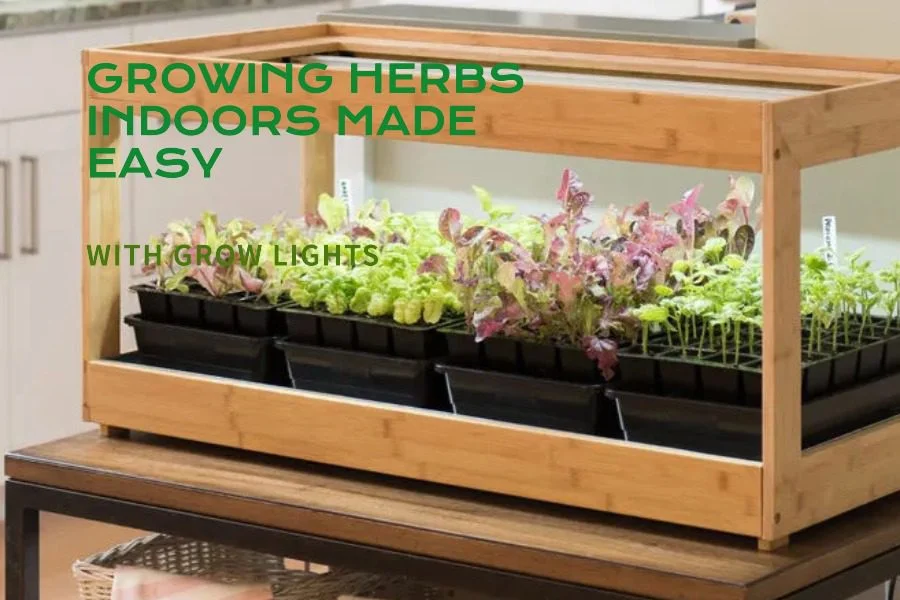
You can grow culinary herbs indoors with appropriate grow lights, drainage, water and a consistent day/night cycle. Choose the herbs first, then select a lamp sized to the growing area. Basil, parsley, chives, mint and other herbs differ in growth habit and moisture needs, so care should be adjusted rather than relying on one schedule. The University of Minnesota Extension recommends well-drained growing media and adequate light for herbs.
1. Choose which herbs to grow
Start with two or three herbs you regularly cook with. Basil tends to prefer warmth and bright light, while parsley and chives have different growth rates. Mint can spread vigorously and may be easier to manage in its own container. Group plants according to similar moisture and light needs, rather than putting all herbs in a single pot without checking compatibility.
2. Pick a growing location
Use a stable shelf, countertop or compact growing rack with access to a safe electrical outlet. Make space for lights to be raised as plants grow. Protect the setup from splashing water, cold window drafts and overheating. Ensure lamps and cords are mounted according to manufacturer instructions and intended indoor ratings.
3. Select LEDs or fluorescent fixtures
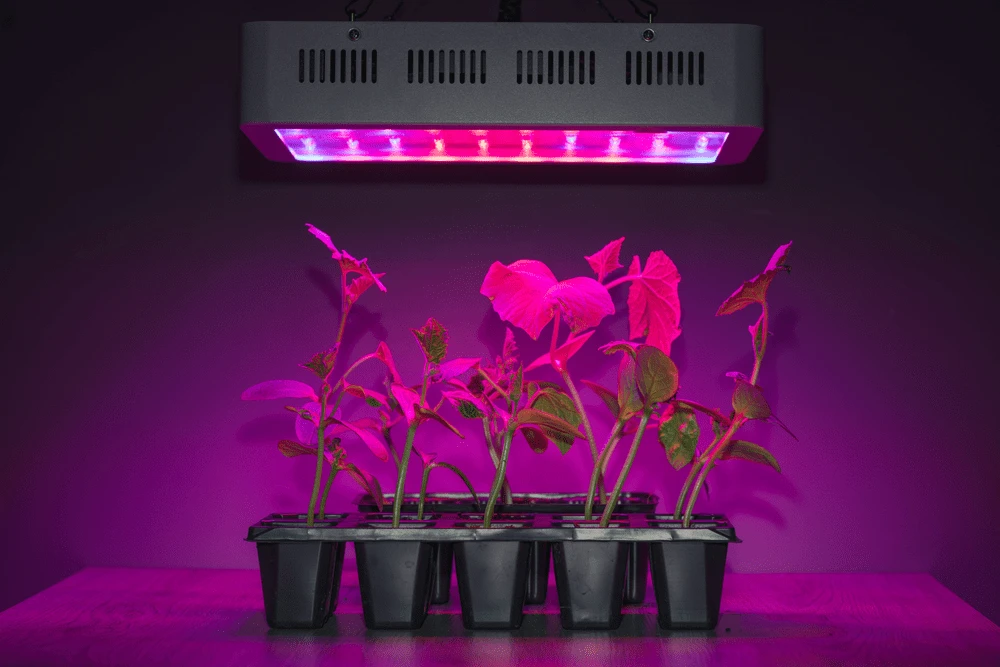
Modern full-spectrum or balanced-white LEDs and suitable fluorescent fixtures can both provide usable growing light. Manufacturer labels may report wattage, PPF or PPFD; watts measure power draw, while PPFD describes plant-usable photons arriving at the leaf surface. Compare useful light at the canopy and fixture coverage, not wattage alone. Read the University of Minnesota's indoor-lighting guide.
Start with the manufacturer's recommended installation and plant distance. As a general extension reference, hydroponic herbs and lettuce under suitable artificial lighting may use a fixture roughly 6–12 inches above the canopy, but stronger panels can require greater clearance. Monitor leaf response and temperature rather than following one distance for all lights.
4. Set a consistent light schedule
Use an outlet timer and give plants darkness each day. The University of Minnesota guide describes about 12–14 hours of total light daily for hydroponic lettuce and herbs under suitable fixtures; some setups or species may differ. Seedlings often need a longer period, commonly 12–16 hours depending on the source and crop. Continuous 24-hour lighting is not the default recommendation.
5. Use pots with drainage and suitable mix
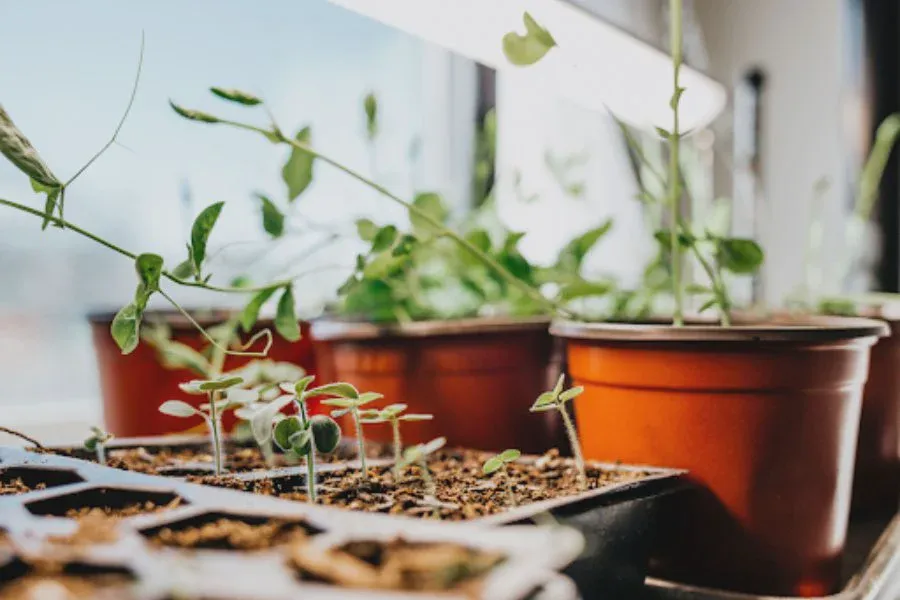
Choose containers with holes so excess water can escape. Use a clean potting mix suitable for containers, not dense garden soil alone. A tray can catch drips, but empty standing water to avoid prolonged saturation. If seedlings are grown first, transplant once sturdy enough and after checking the variety's growing requirements.
6. Water according to the plants and the pot
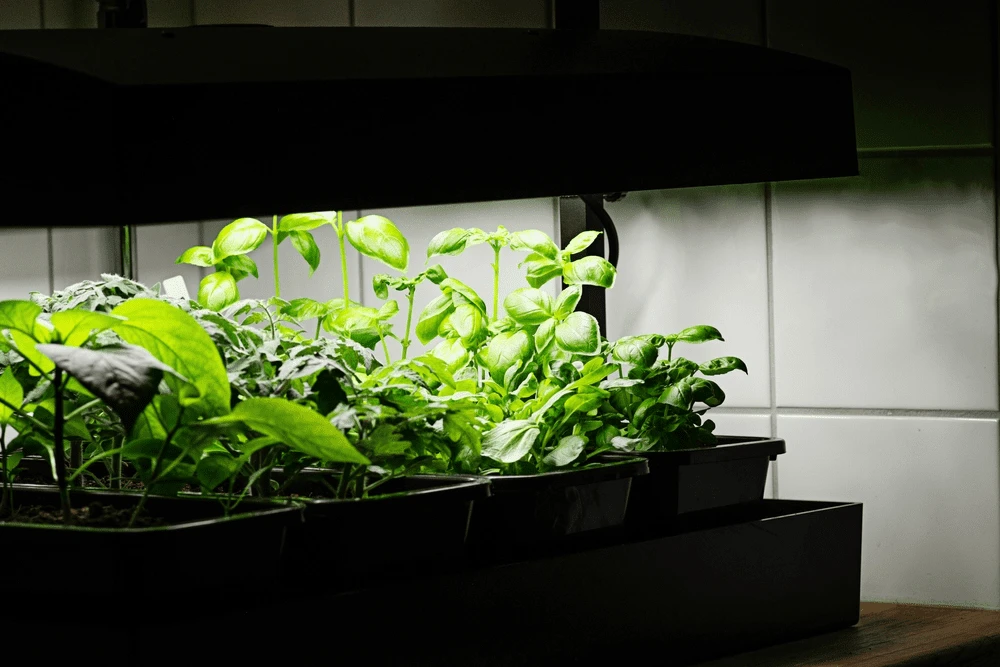
Check the top layer of growing medium and lift the pot to assess moisture. Water when the medium is drying appropriately for the herb; avoid leaving roots in standing water. Warm conditions, small pots, larger leaves and greater airflow can increase water needs. Avoid a universal instruction to water every day or soak all herbs at fixed intervals.
7. Monitor growth and harvest carefully
Rotate plants for even coverage if light distribution is uneven. Watch for stretching, pale leaves or leaf scorch; these can indicate inadequate or excessive lighting, among other problems. Begin harvesting gradually after sufficient growth, usually by removing healthy shoot tips or leaves without stripping the entire plant. Keep equipment clean and check occasionally for pests.
Indoor herb growing checklist
- Identify herb types and their light and temperature needs.
- Use a suitable LED or fluorescent lamp with documented canopy coverage.
- Provide a timer and a daily dark interval.
- Select containers with holes and a well-draining potting mix.
- Check moisture and inspect new growth weekly.
- Raise fixtures as plants grow and avoid heat damage.
- Harvest in moderation so plants can regrow.
Common questions
Can ordinary white LEDs grow herbs?
Some can supplement growth, but the success depends on light intensity, spectrum, distance and hours per day. The word “LED” alone tells you too little; consult product data and observe the plants.
Do herbs need UV grow lights?
UV-only supplementary fixtures are not a general requirement for ordinary home herb growing. A suitable broad or balanced spectrum and adequate canopy intensity matter more than marketing UV claims.
Why are my indoor herbs growing tall and weak?
Stretching can indicate insufficient light reaching the plants, especially when lamps are too dim or far away. Check the manufacturer's height guidance, light duration and growing temperature; also consider variety and crowding.
Sources: UMN — Growing Herbs; UMN — Lighting for Indoor Plants; UMN — Starting Seeds Indoors.