
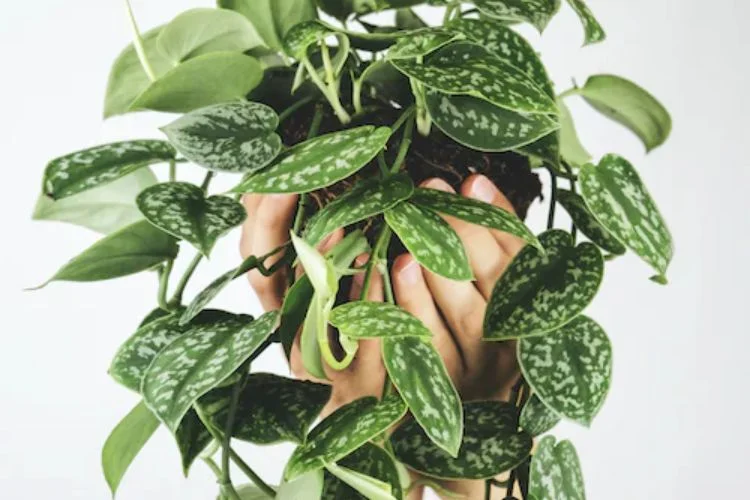
Pothos grows well in a clean, all-purpose indoor houseplant potting mix that retains some moisture while allowing air and excess water to move through. You do not need an expensive pothos-specific product. Start with a reliable soilless mix and a draining pot; add coarse perlite or other structural material only if your conditions keep the roots too wet.
Golden pothos (Epipremnum aureum) is a climbing tropical houseplant. North Carolina State Extension recommends a well-drained growing medium and allowing the medium to dry out between watering sessions. Choosing the mix is only part of healthy root care: watering, light, pot size and temperature all influence how long the root zone stays damp.
Compare your options
| Option | When it fits | Advantage | Limitation |
|---|---|---|---|
| Standard indoor potting mix | Most household pothos pots | Balanced moisture retention and convenience | Some mixes compact over time; watch actual drying time |
| Indoor mix with coarse perlite | A plant staying overly wet in a suitable draining pot | Creates more air-filled spaces when blended appropriately | May require more frequent moisture checks |
| Indoor mix with composted bark | Larger pothos or a climbing support system | Adds structural texture and can keep mix open | Very coarse blends may need more frequent watering |
| Outdoor garden soil | Not recommended for indoor containers | Often inexpensive or free | Can compact and drain poorly around houseplant roots |
What a good mix should feel like
A suitable potting mix should be loose enough for roots to grow and for water to move through. It should also hold some moisture, so the plant does not wilt immediately after watering. Potting mixes often combine ingredients such as peat or coir for water retention and perlite or bark to improve texture and aeration. The exact recipe matters less than how the mix performs in your pot.
Balance moisture with drainage
Pothos can tolerate lower light, but a plant in a dark room generally uses water more slowly than one growing quickly in bright indirect light. A mix that works in one room may stay wet too long in another. Check moisture in the growing medium rather than watering on a set weekly schedule.
Use the right container
Drainage holes matter. A decorative planter without holes can be used outside a draining nursery pot, but collected water must be emptied. A very large container with little root mass is another common source of prolonged wet mix. Move up only one or two pot sizes when the roots are crowded.
When fresh mix is worth the effort
Repot if roots are tightly circling, the plant dries unusually quickly, or the mix has become dense and drains poorly. Yellow foliage alone is not proof of a soil problem; also examine light, watering and plant pests. Roots that are mushy or rotting indicate a need to assess water and drainage immediately.
Practical steps
- Choose a high-quality indoor mix that is fresh and not compacted or waterlogged.
- Check whether the nursery pot has unobstructed drainage holes and is reasonably sized for the current root system.
- Gently loosen excessively circling roots if repotting is necessary. Keep most healthy roots intact.
- Set the pothos at the same planting depth, fill around the roots and avoid compressing the mix heavily.
- Water until excess drains; empty the saucer or cachepot and let the medium dry appropriately before watering again.
- Adjust your watering as daylight, plant size and pot material change; do not assume one mix stays moist for the same number of days everywhere.
Frequently asked questions
Does pothos need a special aroid mix?
Not necessarily. A quality general houseplant mix is often sufficient. A coarse aroid-style mix may be useful where drainage and aeration need improvement, but it is not a requirement for every pothos.
Can pothos grow in coco coir alone?
Coir can retain moisture but may require management of nutrients and aeration if used on its own. A balanced indoor potting mix is simpler for most growers.
Does adding sand always improve drainage?
No. Fine sand can make some potting mixes denser. If you need to improve structure, choose suitable coarse materials and judge the final mix by its drainage and water retention.
How often should I replace the soil?
There is no universal yearly schedule. Repot or refresh mix when roots need space, the structure breaks down or drainage no longer works well.
References and related guides
- Iowa State University Extension — How to Care for Houseplants
- NC State Extension — Golden pothos
- Penn State Extension — Repotting Houseplants
- Grow lights for pothos
Affiliate disclosure: Some links on Swipe Garden may earn a commission from qualifying purchases.