
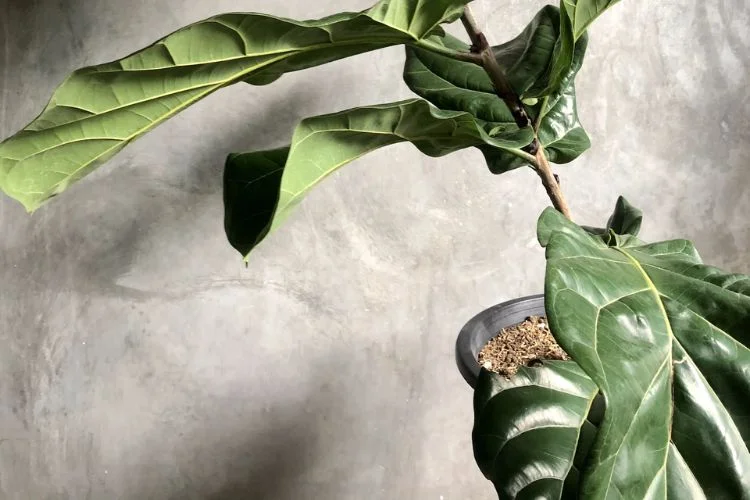
For a fiddle-leaf fig, choose a clean indoor potting mix that holds enough moisture for roots but drains readily and does not collapse into a dense, airless mass. A quality commercial houseplant mix often works; a little coarse perlite or suitable bark can help when a mix stays soggy for too long. The right mix depends on the pot, room temperature and how you water.
Fiddle-leaf figs prefer well-drained growing conditions and are sensitive to overwatering. North Carolina State Extension identifies well-drained soil as important for Ficus lyrata. In indoor containers, the goal is an appropriate balance of air and water around roots rather than the single 'best' ingredient or brand.
Compare your options
| Option | When it fits | Advantage | Limitation |
|---|---|---|---|
| General indoor houseplant potting mix | Most fiddle-leaf figs in draining pots | Convenient, balanced starting point | Quality varies; some mixes compact as they age |
| Houseplant mix with added coarse perlite | Rooms where the existing mix stays saturated | Improves the proportion of larger air spaces | Can dry faster; adjust watering rather than copying a calendar |
| Houseplant mix with suitable bark | Large containers needing more structural texture | Can maintain air spaces if proportions are appropriate | Too much coarse material may reduce available moisture |
| Garden soil used directly in a pot | Not recommended | No advantage for ordinary indoor potting | Becomes compacted and poorly drained in containers |
Understand the ingredients, not the brand
Many indoor potting mixes contain peat, coir, composted bark, perlite or similar materials. Peat and coir hold moisture; coarser materials help create air spaces. Each component behaves differently, and the correct mixture balances moisture retention with oxygen for the roots. Avoid assuming that any single ingredient guarantees good drainage.
How the pot changes the mix
A large plastic pot may hold moisture longer than a smaller unglazed terracotta pot. If your plant stays wet for many days, the issue may be an oversized pot, poor drainage, low light or watering too frequently—not simply the brand of mix. Choosing a more porous medium helps only when container size and care are appropriate.
When to replace old potting mix
Over time, some organic mixes break down and become dense. Warning signs include persistent waterlogging, poor drainage, sour odors or a mix that has shrunk dramatically from the sides of the pot. Inspect roots before repotting. Healthy roots are typically firm; remove only clearly dead, mushy root material and avoid unnecessary disturbance.
Avoid gravel under the root zone
A coarse drainage layer does not compensate for missing pot holes. Iowa State Extension advises that rocks at the bottom of a pot can create a wetter zone above the layer. Start with a draining container, suitable indoor mix and a water-and-drain routine that allows oxygen back into the root zone.
Practical steps
- Check how the current mix behaves after a normal watering: does water escape promptly, and does the root zone dry in a reasonable period?
- Choose a general houseplant mix with consistent texture and no obvious signs of contamination or foul odor.
- If the environment stays persistently damp, consider a modest proportion of coarse perlite or bark rather than making the entire mix very coarse.
- Use a clean pot with real drainage holes. Do not add gravel to the bottom.
- Place the fiddle-leaf fig at the same depth it grew before; gently settle fresh mix around roots.
- Water thoroughly, allow all excess water to drain, and monitor moisture rather than following a fixed interval.
Frequently asked questions
Can I use cactus soil for a fiddle-leaf fig?
A very coarse cactus mix may dry too quickly for some indoor fiddle-leaf figs. A balanced houseplant mix is a more flexible starting point; amend based on actual drainage.
Is perlite required?
No. It can improve aeration, but a good premixed houseplant medium may already have suitable structure and drainage.
Why is my new mix staying wet?
Check light, temperature, watering frequency, pot size and drainage holes before adding more coarse ingredients. Persistent saturation has several possible causes.
Should I use garden soil indoors?
Not as a standalone medium. Iowa State Extension warns that unamended garden or field soil can become compacted and poorly drained in containers.
References and related guides
- Iowa State University Extension — How to Care for Houseplants
- NC State Extension — Fiddle-leaf fig
- Penn State Extension — Repotting Houseplants
- Choosing a fiddle-leaf fig pot
Affiliate disclosure: Some links on Swipe Garden may earn a commission from qualifying purchases.