
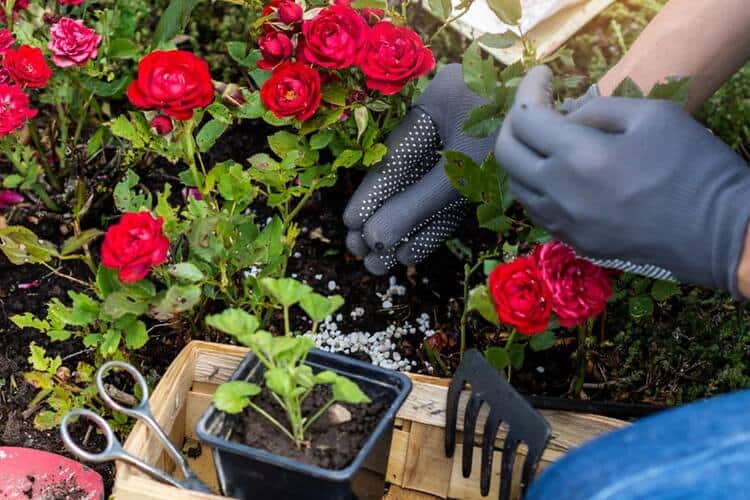
Yes, some plain rose fertilizers can be used on other plants. Rose food supplies nutrients such as nitrogen, phosphorus and potassium that other plants also need. However, it is not automatically suitable for every flower, shrub, houseplant or vegetable. Read the guaranteed analysis, application directions and restrictions first. Products sold as combined “rose food and insect control” may contain pesticides and must never be treated as ordinary general-purpose fertilizer, particularly around food crops.
Start by reading the entire product label
Check whether you have a fertilizer-only product or a combination treatment. A fertilizer lists its nutrient analysis, usually three numbers representing nitrogen (N), phosphate (P₂O₅) and potash (K₂O). The label explains where it can be used and how concentrated it is. Some products promoted for roses contain systemic insecticides or fungicides; these are plant-protection products with crop-specific legal restrictions, not interchangeable feeding products.
An Ask Extension answer about rose food on vegetables specifically warns that some rose fertilizers include systemic pesticides unsuitable for edible plants. If a product does not explicitly allow use on the crop you grow, do not experiment with it. When uncertain about a combination product, consult its current label or your local extension office before using it.
Which plants might benefit?
Other ornamentals and flowering shrubs
A nutrient-only rose food may suit many flowering ornamentals where the label permits and its nutrient balance matches the soil. That includes some other roses and shrubs or flowering container plants. A specialized fertilizer is rarely necessary merely because the package displays a particular flower.
Vegetables and herbs
Do not assume all rose products are safe to put near edible crops. First exclude any combination pesticide product not labeled for the intended edible use. For ordinary fertilizer without pesticides, compare the crop's needs with the analysis and follow recommended rates. Too much nitrogen can favor foliage over fruiting in some crops, so adding nutrients without evidence of need is not necessarily helpful.
Houseplants, succulents and seedlings
Container plants have limited soil volume and can be damaged by overly concentrated feeding. Some succulents and slow-growing indoor plants need much less fertilizer than an actively blooming rose. Use the rates intended for that type of plant, or a suitable general-purpose houseplant product instead of guessing a conversion from the rose label.
The nutrient ratios do not guarantee more flowers
Nitrogen supports leafy growth, phosphorus plays several roles in plant energy and roots, and potassium helps physiological processes. Every essential nutrient matters, but adding more of one nutrient does not automatically create more blooms. An unnecessary phosphorus application can create nutrient imbalance and runoff concerns. Roses themselves are not a reason to use a high-phosphorus product unless the growing medium actually needs it.
For garden beds, a soil test can reveal nutrient and pH needs. University of Maryland Extension recommends soil-test-guided fertilization for roses. This is a better starting point for mixed beds than assuming all plants need a rose-food formula.
Use leftovers safely: a decision checklist
- Confirm the product is fertilizer-only; check active ingredients and warnings.
- Verify the label allows the intended plant and location, especially if it produces food.
- Compare the N–P–K analysis against the plant's needs and any soil-test results.
- Use the label rate for that application; do not combine fertilizers simply to “boost” the effect.
- Apply to appropriate moist soil or potting mix, keep granules off leaves when directed, and prevent runoff into drains and waterways.
- Stop if tips scorch or growth becomes unusually weak or lush; do not add another dose until the cause is identified.
For container feeding, the University of Minnesota Extension's container guide explains the trade-off between slow-release and soluble fertilizers, including the risk of salt buildup.
Frequently asked questions
Can I use rose fertilizer on tomatoes?
Only when the product is fertilizer-only or otherwise specifically labeled for edible crops, and the nutrient levels suit the soil and crop. Rose food containing pesticides not labeled for tomatoes is not an acceptable shortcut. Do not guess from brand name alone.
Does rose food make hydrangeas or other flowers bloom better?
Not necessarily. Flowering depends on the plant's light, pruning season, genetics, water and soil fertility. Test the soil when practical, and correct deficiencies rather than overfeeding.
Should I mix rose food with general fertilizer?
Usually not without a specific measured reason. Doubling up can raise soluble salts. Read what overfertilization looks like and how to feed potted roses for a safer approach.