
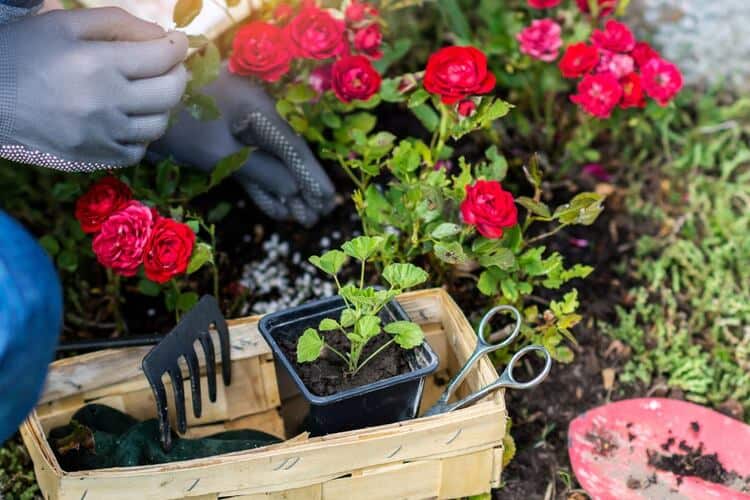
Feed potted roses during active growth using a measured fertilizer labeled for container roses or flowering plants. A slow-release product can offer steady nutrition, while a water-soluble feed permits smaller, more frequent applications. Neither requires guessing tablespoons, adding extra phosphorus, or mixing kitchen scraps into the pot. Container size, watering and the product's concentration determine the safe rate.
Check the potting mix before you feed
A recently purchased potting mix may already contain fertilizer. Check its packaging and any coated granules before adding more. Roses should grow in a container with drainage holes and a porous medium that stays reasonably moist without becoming waterlogged. If a plant has yellow foliage because roots are drowning, more fertilizer will not repair it.
Compared with ground soil, potting media have limited nutrient reserves, and frequent irrigation washes soluble nutrients away. University of Minnesota Extension's container guidance explains why regular, correctly measured feeding may be needed and why overfeeding still causes damage.
Choose slow-release or liquid fertilizer
Controlled or slow-release granules
These release nutrients over time, often in response to moisture and temperature. Follow the container's stated amount and duration. Do not add another full dose just because several weeks have passed if the previous product is still releasing nutrients.
Water-soluble liquid or powder
These supply nutrients more quickly and can be useful for actively growing roses in frequently watered pots. Mix precisely to the label's concentration for containers. Some growers use a more diluted solution more often, but the total application must remain appropriate. Do not double the concentration in an attempt to force new buds.
A general complete fertilizer may be suitable; a packet marked specifically for roses is not always essential. Product N–P–K figures are not proof that one formula produces more blooms in every pot.
When to start, continue and stop feeding
Begin when a dormant rose starts active growth in spring, assuming roots are established. During the flowering season, follow the chosen fertilizer's labeled repeat interval while looking at foliage and vigor. When growth slows for a freezing winter, stop feeding well ahead of frost. Oregon State Extension advises a spring start and a late-summer stop for its regional rose-care program.
In warm climates where the rose remains active through a mild winter, feeding decisions differ from those in colder climates, but unnecessary feeding during slow growth still carries risk. Do not copy a fixed “August 15” date across hemispheres and hardiness zones. See seasonal rose feeding guidance.
Five steps for an even application
- Confirm the pot has an open drain hole and that the rose isn't wilting from waterlogged roots.
- Read the specific product's label for pot volume, dilution, frequency and application technique.
- Lightly moisten excessively dry potting mix with plain water when the product instructs it; do not fertilize roots that are bone-dry and stressed.
- Measure the fertilizer accurately, distributing granules or diluted liquid as directed without piling it against the stem.
- Water as directed, allow runoff to drain, empty the saucer, and record the date and type used.
Check the plant over the next growth cycle. A white crust on the soil or crispy leaf edges may indicate mineral or fertilizer salt buildup. Avoid adding another dose if those appear.
Do banana peels, tea leaves or Epsom salts replace fertilizer?
Kitchen scraps and homemade infusions have unpredictable nutrient composition and do not supply a reliably balanced feed. Undecomposed peels can attract pests and are better handled in a proper compost system. Vinegar is not a safe general fertilizer, and Epsom salt is magnesium sulfate: it should not be added routinely without a confirmed magnesium need.
For roses in pots, a clearly labeled complete product is more predictable and easier to measure. The risk of too much fertilizer is explained in the overfeeding guide; a soil or medium test may be useful if the plant repeatedly shows symptoms.
Water and sunlight still determine flowering
Roses generally require substantial direct sunlight during their growing season. Soil that repeatedly dries into a hard mass can injure roots, while chronically wet mix excludes oxygen. Check moisture frequently in hot weather and water deeply enough to wet the entire root ball when needed, rather than giving a small daily splash.
Fertilizer cannot compensate for a dark balcony or a root-bound pot. Correct light, drainage, watering and cultivar expectations before increasing feeding. For mixed containers, see which plants can use rose food.