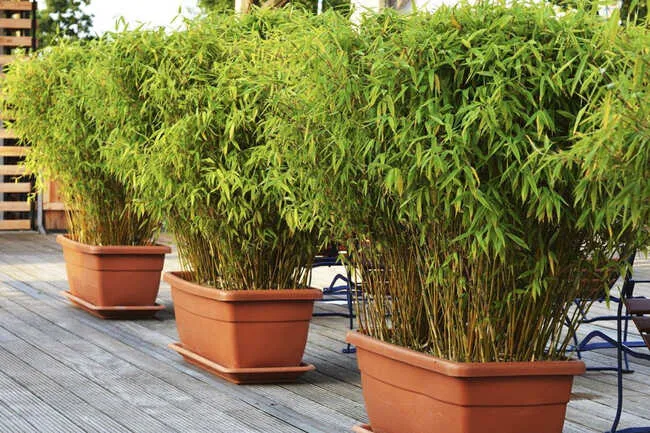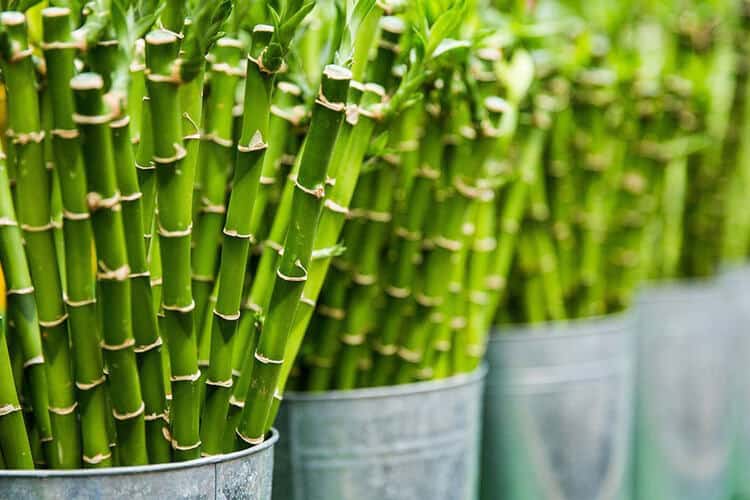
Potted bamboo may need fertilizer during growth, but identify the plant before feeding. True bamboo is a grass. Lucky bamboo, the slender cane often sold in water-filled vases, is actually Dracaena sanderiana. They differ in root environment, growth rate and suitable fertilizer concentration.
Which plant do you have?
True bamboo develops grass-like culms and is commonly grown outdoors in large soil containers; plants labeled lucky bamboo have green canes with widely spaced strap-shaped leaves and are often grown indoors in decorative water vessels. North Carolina State Extension confirms lucky bamboo is a Dracaena, not a bamboo grass. Do not use a heavy outdoor bamboo or lawn fertilizer in a small lucky-bamboo vase. The label's intended growing system matters as much as its NPK numbers.
Fertilizing outdoor true bamboo in pots
A large actively growing bamboo grass can deplete available nutrients in the finite potting mix, especially after repeated watering. Choose a fertilizer labeled for appropriate ornamental container use and follow its directions for the plant size and season. Yellow leaves are not uniquely a sign of deficiency: root crowding, drought, waterlogging and low light also cause decline. Overfeeding can damage roots. University of Minnesota Extension explains that container fertilizer may leach through drainage holes and why proper label rates matter.
Feeding lucky bamboo in soil
A water- or soil-grown Dracaena grows much more slowly than a vigorous outdoor bamboo grass. Plants in fresh compost may need little additional feeding, particularly in weak indoor light. If feeding is warranted during active growth, use a suitable houseplant fertilizer conservatively according to its label. Avoid using granular outdoor feeds without confirming suitability. Brown leaf tips can arise from salts or water quality; do not assume adding more fertilizer will solve them.
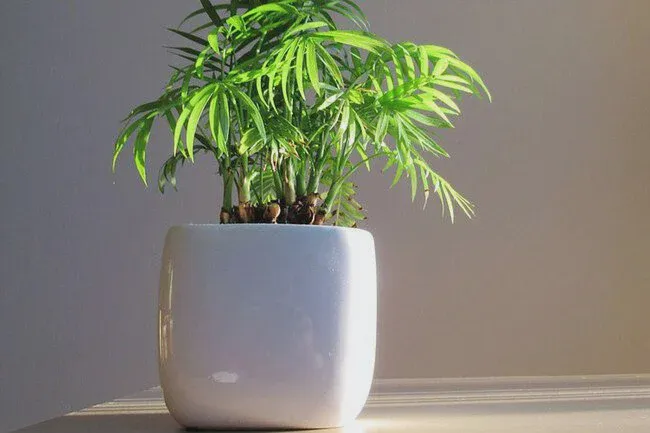
Feeding lucky bamboo grown in water
Use a weak soluble fertilizer appropriate for this plant and the vessel, as NC State advises, rather than soil fertilizer stakes. Refresh chlorine-free water regularly, keep roots submerged while avoiding prolonged immersion of soft stems, and clean the container if water becomes cloudy. A yellow stem that is soft at the base can reflect decay, so inspect roots and water condition before feeding. See fertilizing lucky bamboo in water for details.
Practical checklist
- Identify lucky bamboo versus true bamboo.
- Determine whether it grows in soil or water.
- Choose an appropriate fertilizer and read the instructions for dilution and rate.
- Feed only as indicated during actual plant growth; avoid calendar-based overuse.
- Check light, roots, water quality and salts before treating yellow leaves as a nutrient deficiency.
See whether bamboo fertilizer suits other plants for NPK and label compatibility.
Sources
NC State Extension: Dracaena sanderiana and University of Minnesota Extension: Fertilizing Containers.