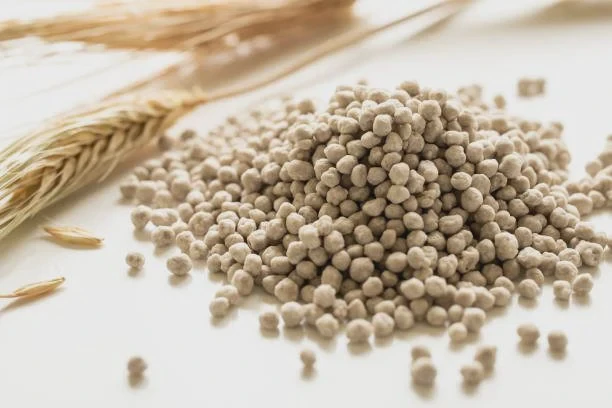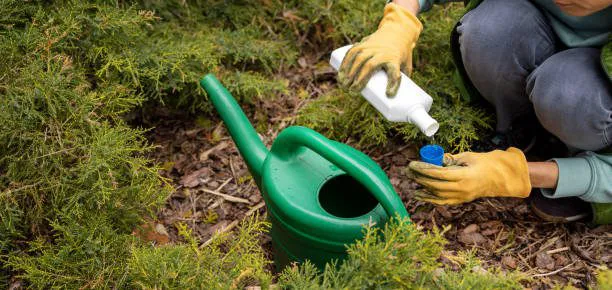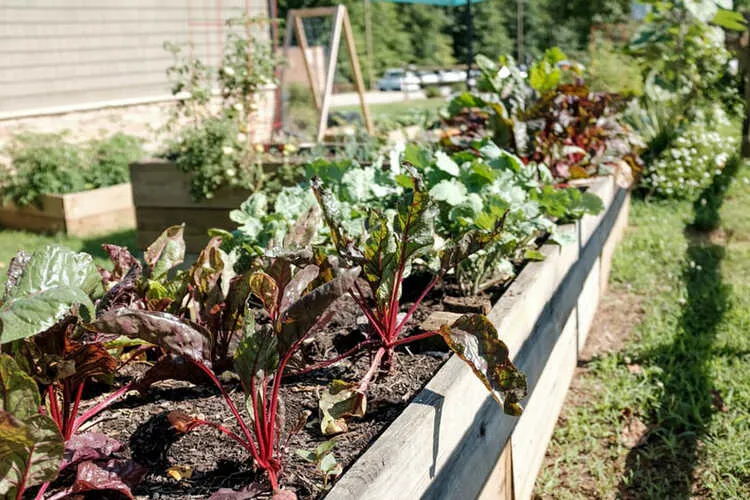
Granular fertilizer has no single dissolving time. Some soluble granules release nutrients after watering, while coated controlled-release pellets meter nutrients over weeks or months. Dry organic granules may need soil microorganisms to decompose before much nitrogen becomes available. The product label is more reliable than an arbitrary two-week or two-month estimate.
Three kinds of granular fertilizer behave differently
| Type | What releases nutrients | What to expect |
|---|---|---|
| Water-soluble granules | Soil moisture dissolves soluble nutrient compounds | Availability can begin comparatively soon after watering |
| Controlled-release coated pellets | Moisture and temperature regulate passage through a coating | Feeding continues over the labeled release period; the shell may remain visible |
| Organic meal or granular material | Microbial activity and breakdown in soil | Rate depends strongly on temperature, moisture and formulation |
Does the granule need to disappear before it works?
Not necessarily. A controlled-release pellet can release nutrients through its coating while still looking intact. A soluble granule may disappear yet release nutrients that roots cannot use quickly because the soil is cold, waterlogged or dry. Distinguish the visible particle's appearance from the nutrients actually available in the root zone.
What changes the release rate?
- Water: most granules need moisture to initiate dissolution or release; dry granules can sit on the surface without doing much.
- Soil temperature: microbial decomposition and many coated products respond to temperature.
- Material and coating: different products are engineered for different release patterns.
- Placement: granules spread unevenly or sitting on foliage can cause local injury; follow label placement directions.
- Plant activity: roots need suitable light, oxygen and moisture to use available nutrients.
How to apply granular fertilizer safely
- Check whether the product is for lawns, beds or containers and measure the stated application area or pot volume.
- Use the recommended rate, not an extra handful for 'fast growth.'
- Spread or incorporate granules as directed, keeping them off sensitive leaves and stems when indicated.
- Water in according to the label unless the product has different post-application instructions.
- Wait through the labeled interval before reapplying; do not dose again just because pellets remain visible.
Why isn't my plant growing faster?
Nutrition may not be limiting. Poor light, cold roots, overwatering, compaction, pests or nutrient imbalance can stop growth even when fertilizer is present. For garden soil, a soil test helps target missing nutrients; for containers, examine root health and media moisture first.
Liquid versus granular: which should you choose?
Use a soluble feed where measured, immediate application suits the plant. A controlled-release formula can reduce frequent mixing, but may behave differently as soil warms or cools. Organic materials can be good soil-building tools but often deliver nutrients more gradually. Always check the label's application interval, total nutrient content and suitability for the plant.