The fertilizer that improves growth fastest is the one that corrects a real nutrient shortage without creating a new imbalance. Nitrogen often supports leafy growth when nitrogen is limiting, but adding extra nitrogen to an already well-fed plant does not make it grow indefinitely faster. Adequate light, water, oxygen, temperature and healthy roots still set the pace.
What the N-P-K numbers do—and do not—mean
Nitrogen (N) contributes to chlorophyll and proteins, phosphorus (P) to energy transfer and growth, and potassium (K) to water regulation and other plant functions. A label such as 10-10-10 reports percentages by weight of nitrogen, phosphate and potash; it does not promise ten days to greener leaves. A stronger formula requires a correspondingly smaller application for the same nutrient dose.
How quickly will different forms supply nutrients?
| Fertilizer type | Release pattern | Most useful when |
|---|---|---|
| Water-soluble liquid | Nutrients are available relatively quickly when roots function properly | You need measured nutrition for actively growing containers or crops |
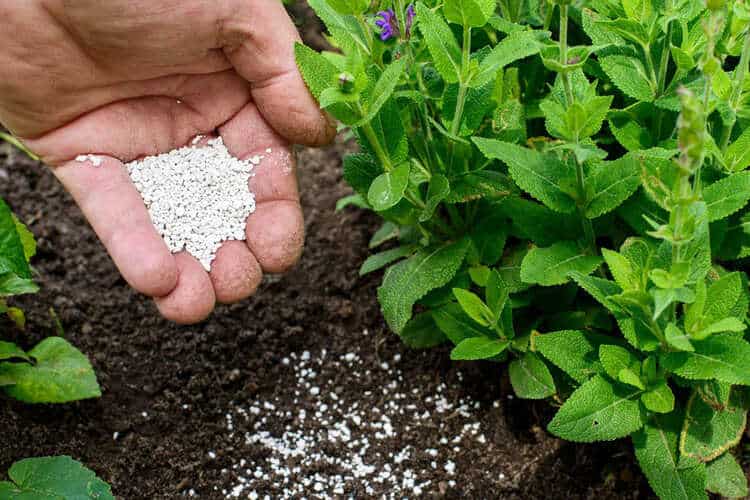
| Readily soluble granules | Moisture dissolves nutrients in the root zone | Label suits the crop, soil and area application |
| Controlled-release pellets | Gradual release over the labeled interval | Steadier feeding and fewer applications are desirable |
| Organic meals and compost | Release varies with microbial breakdown; compost also builds soil | Longer-term soil management and nutrient needs align |
Five reasons plants remain slow even after fertilizing
- Not enough light: plants cannot make enough energy for the growth rate you want.
- Wet or poorly aerated roots: oxygen shortage impairs nutrient uptake.
- Dry roots: drought limits water movement and growth.
- Wrong temperature or season: cool soil or dormancy slows plant processes regardless of the fertilizer.
- Root pests, disease or pH imbalance: available nutrients can remain unused when the root system cannot function.
How to choose a growth-supporting fertilizer
Start with the growing conditions. A soil test is the preferred tool for outdoor beds or lawns; for container plants, inspect roots, potting media and existing nutrients first. If tests and symptoms suggest nitrogen shortage, choose a product that supplies nitrogen at the appropriate rate for the crop. If phosphorus and potassium are already high, an all-purpose N-P-K feed may add nutrients that are not needed.
Does more fertilizer make flowers or fruit faster?
Not reliably. Overfertilizing can stimulate unwanted leafy growth, burn roots and increase nutrient loss to waterways. Plant maturity, cultivar, day length, adequate light and water often matter more to flowering and fruit set than adding a 'bloom booster.' Higher-phosphorus formulas are unnecessary when the soil already supplies enough phosphorus.
Safe application checklist
- Match fertilizer to crop and growing stage.
- Measure the correct area or container size and follow the label's rate.
- Water granules in when required; do not mix unapproved products.
- Avoid applying during severe heat, drought, prolonged waterlogging or dormancy.
- Keep a record; wait for real new growth before considering additional feeding.
What about homemade fertilizers?
Compost can be a useful soil amendment, but banana peels, coffee grounds or grass clippings do not form a precise substitute for a tested fertilizer formula. Raw ingredients need appropriate composting and can attract pests or change soil moisture when added directly to pots. Use homemade compost maturely and judiciously rather than chasing miracle growth recipes.
Best answer: correct an identified deficiency and optimize the growing environment. That outperforms guessing which fertilizer has the highest number on the package.