
Independent gardening guides. Some links earn us a commission at no cost to you. Read our affiliate disclosure
Newsletter
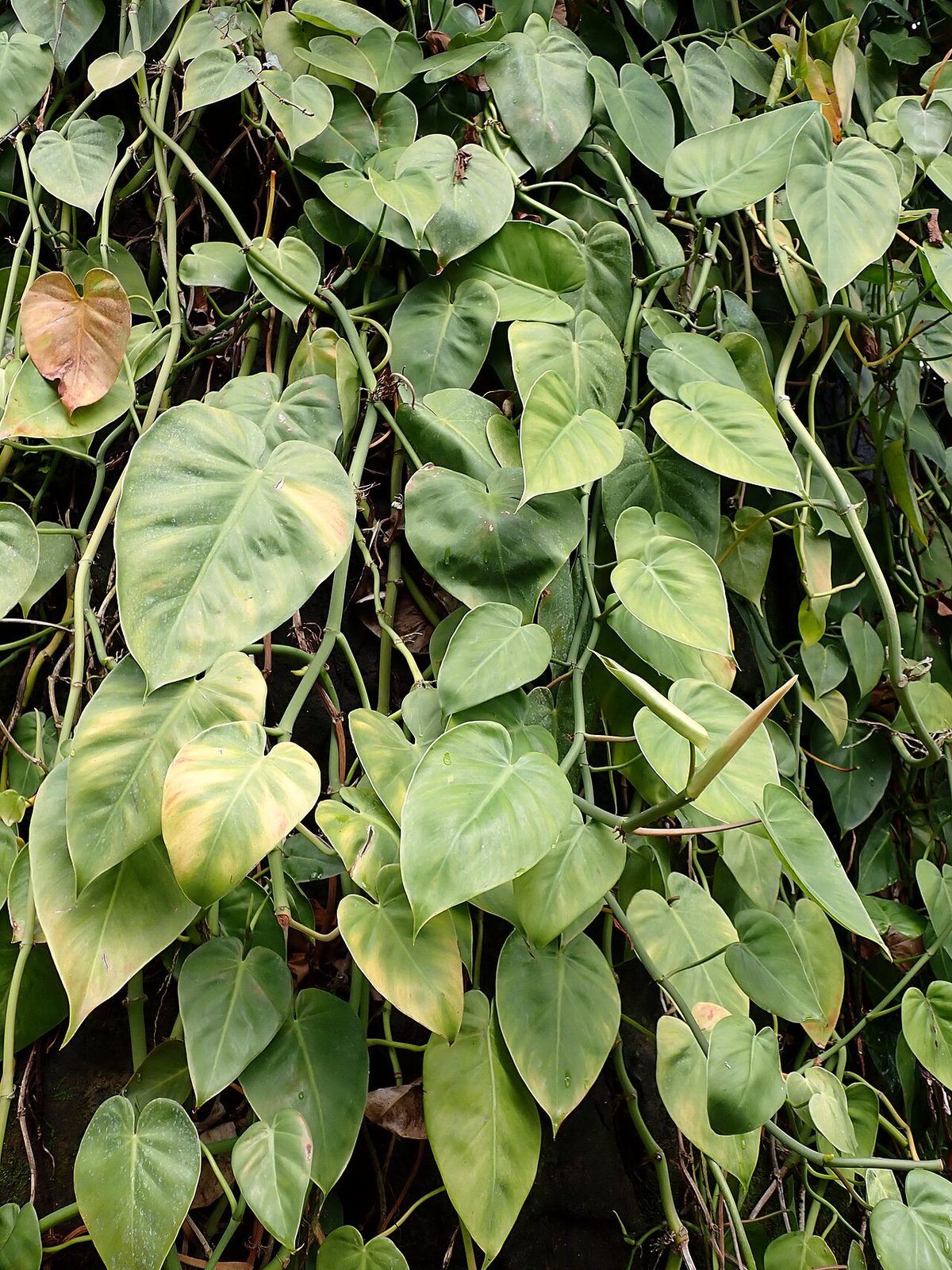
Heartleaf philodendron (Philodendron hederaceum)

Photo: Krzysztof Ziarnek, Kenraiz, CC BY-SA 4.0 via Wikimedia Commons

Heartleaf philodendron

Philodendron hederaceum · Araceae

Also known as: Heartleaf philodendron, Heart-leaf philodendron, Sweetheart plant, Parlor ivy, Cordatum, Philodendron scandens, Philodendron oxycardium, Philodendron micans, Velvet philodendron, Philodendron Brasil, Brasil philodendron, Lemon Lime philodendron

Heartleaf philodendron is a fast, trailing vine with glossy heart-shaped leaves that copes with lower light. Toxic to cats and dogs if chewed.

Light
Low light tolerant, Medium light, Bright indirect light
Care level
Beginner friendly
Where it grows
Indoors
Cats and dogs
Toxic to pets Source (opens in a new tab)

ASPCA lists heartleaf philodendron (Philodendron hederaceum) as toxic to dogs, cats and horses because it contains insoluble calcium oxalates. Signs it lists: oral irritation, pain and swelling of the mouth, tongue and lips, excessive drooling, vomiting and difficulty swallowing. NC State adds that the plant can cause contact dermatitis, so the sap may irritate skin. If a pet chews this plant, contact your vet or an animal poison control service.

View My Garden

Check a problem with this plant

How to identify it

Heartleaf philodendron (Philodendron hederaceum) is a trailing or climbing vine with glossy, heart-shaped leaves on slender green stems that carry aerial roots. New leaves open bronze and soon turn green. NC State gives two features that separate it from golden pothos (Epipremnum aureum): conspicuous stipules on new growth, which fall away messily from older growth, and leaf stalks that are not grooved.

Cultivars of the same species include 'Brasil', with a yellow to light green central stripe and dark green margins, and 'Lemon Lime', with bright yellow to chartreuse leaves. P. scandens, P. oxycardium and P. micans are older names for this species. For a lookalike comparison, see Lemon Lime philodendron vs neon pothos.

Light

NC State says heartleaf philodendron prefers medium light but tolerates low light, and can survive long periods in very low light. Clemson Extension adds that it grows well under ordinary room light or near a north, east or west window.

Tolerating low light is not the same as thriving in it: the RHS notes that philodendrons kept too dark become leggy and produce fewer, smaller leaves. Give it bright, indirect light where you can, and keep it out of direct summer sun, which the RHS warns can scorch the leaves. In a dim room, a grow light can help; see grow lights for indoor plants.

Potting mix and drainage

NC State lists good drainage and moist soil for this species, and Clemson Extension recommends a general-purpose potting soil. Use a pot with drainage holes.

The RHS suggests repotting philodendrons in spring once the roots are densely packed, into a loose, free-draining, slightly acidic mix. Choose a pot only a few centimetres wider than the root ball: a much bigger pot stays wet for longer, which can lead to root rot. Clemson notes that root rot usually follows a mix that does not drain quickly or watering too often.

When to water

Check the mix before you water instead of following a calendar. Push a finger into it: the RHS advises waiting until the top of the compost has dried out, and Iowa State Extension suggests watering when the mix feels dry about an inch down. If it still feels wet, wait and check again in a day or two.

When it is time, water thoroughly until the excess drains out, then empty the saucer; never leave the pot standing in water. Clemson Extension's aim is soil that stays evenly moist but never soggy, and NC State advises slowing down on watering in winter, when growth slows. Root rot can develop in overly wet soil.

Humidity and temperature

Heartleaf philodendron is forgiving about air moisture. NC State says it tolerates dry air, although it prefers medium relative humidity. Clemson Extension gives 70 to 85°F by day and 65 to 75°F at night as good growing temperatures for heartleaf philodendron, and the RHS advises keeping philodendrons above 59°F (15°C). Keep the plant away from cold draughts and hot radiators (RHS).

Feeding

Feed only while the plant is actively growing. The RHS suggests a general houseplant fertiliser during the growing season, roughly spring to early autumn, and Iowa State Extension notes that most houseplants rest in the short days of winter and need less fertilizer then. Follow the product label rate.

More is not better. Clemson Extension notes that too much fertilizer can make leaf tips curl and turn brown. After repotting, little or no fertilizer is usually needed for the first few months, because most potting mixes contain some (Iowa State).

Propagation

NC State lists stem cuttings for this species, and the RHS says trailing and climbing philodendrons root easily this way from spring to late summer. Take a piece of stem about 4 inches (10 cm) long, cutting just below a leaf joint (node), and strip off the lower leaves. The cutting can root in a glass of water before you pot it into a free-draining mix. Clemson Extension adds air layering as another option. Wear gloves, because the sap can irritate skin.

Growth and size

A fast-growing vine (NC State lists its growth rate as rapid) that trails from a shelf or hanging basket, or climbs when given support. Its slender stems carry aerial roots and can reach 4 feet or more, and NC State gives leaf lengths of 3 to 6 inches. Clemson Extension notes it can be trained up a moss-covered board or totem; the RHS suggests a moss pole kept moist so the stems root into it. Straggly plants can be cut back in spring, just after a leaf node, to encourage fuller growth (RHS).

Warning signs

  • Yellow lower leaves or dying tips: Clemson Extension links this to too little light or overwatering. Check whether the mix is still wet; if so, let the top dry before watering again, and move the plant to brighter, indirect light.
  • Yellowing with soggy mix, or a collapsing plant: a possible sign of root rot from overwatering or poor drainage (RHS). Check that water drains freely and the pot is not oversized, and water only when the surface has dried.
  • Long bare stems and small leaves: usually too little light (RHS). Move it closer to bright, indirect light and trim straggly stems in spring.
  • Curled, brown leaf tips: possibly too much fertilizer (Clemson). Review your feeding against the label. See why philodendron leaves curl.
  • Sticky residue, webbing or specks: check leaf undersides for aphids, spider mites, mealybugs and scale (NC State).

Related guides

Sources

  1. ASPCA Animal Poison Control: Heartleaf Philodendron (Philodendron hederaceum) (checked October 11, 2026)
  2. NC State Extension Gardener Plant Toolbox: Philodendron hederaceum (checked October 11, 2026)
  3. Royal Botanic Gardens, Kew (WCVP / POWO data, shown on Kew's ColPlantA): Philodendron hederaceum (Jacq.) Schott (checked October 11, 2026)
  4. Royal Horticultural Society: How to grow philodendrons (RHS Growing Guide) (checked October 11, 2026)
  5. Clemson Cooperative Extension, Home & Garden Information Center: Philodendron (HGIC 1509, revised 2016) (checked October 11, 2026)
  6. Iowa State University Extension and Outreach: How to Care for Houseplants (checked October 11, 2026)

Last reviewed