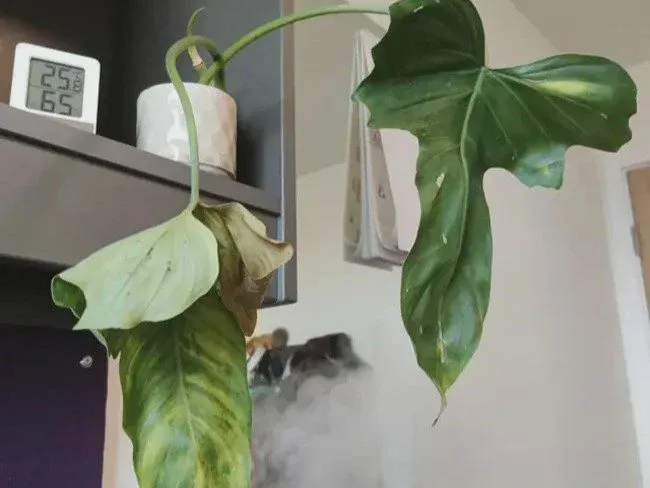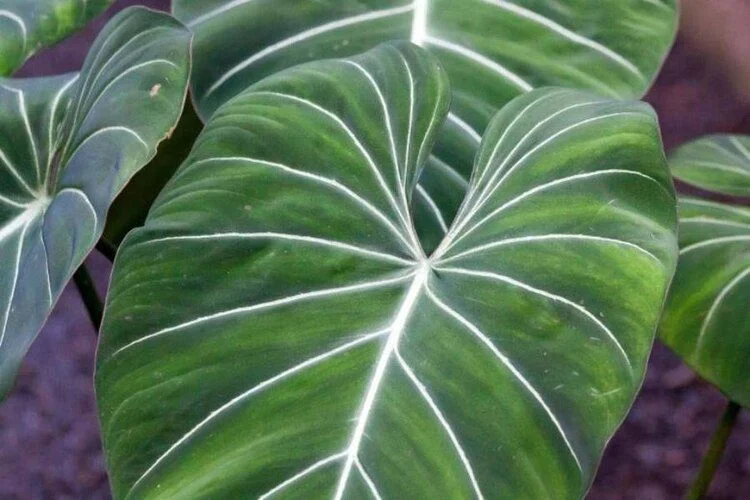
Philodendron leaves can curl from water stress, heat, cold or pest damage—and a young leaf emerging tightly rolled is often perfectly normal. The first step is to identify whether mature foliage is changing shape or a new leaf is still unfurling. Then examine the potting mix and recent conditions before changing watering or spraying anything.
A new curled leaf may be healthy
Many climbing philodendrons produce new leaves that emerge as folded or rolled tissue and expand gradually. Do not forcibly unroll them; damage to a tender new leaf can leave permanent tears. If the leaf opens over time while older foliage stays firm and the plant is growing, treatment may be unnecessary. Mature leaves curling after a sudden move, or new leaves repeatedly emerging deformed, deserve closer inspection.
Dry mix and dehydrated roots
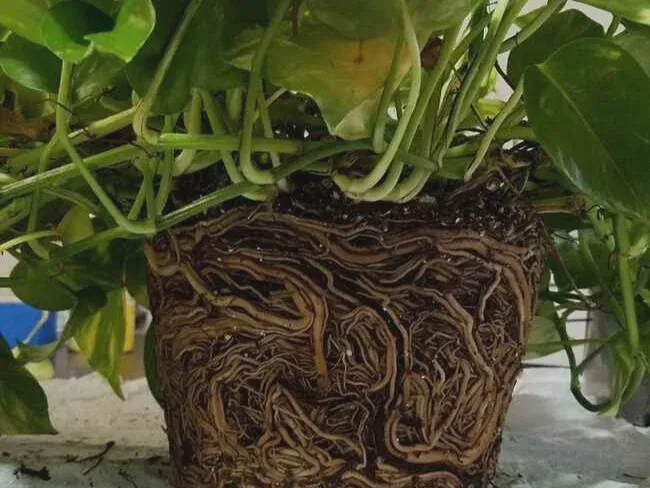
A very light pot, dry mix deep below the surface, limp foliage and crispy edges suggest inadequate water. Rewet thoroughly, allowing runoff through drainage holes, then empty the saucer. If the mix has pulled away from the pot wall, water may run around it without penetrating; check the actual root ball before assuming the plant was watered. Change irrigation based on light, pot size and season rather than using a strict every-seven-days schedule. Browned areas will not reverse even when the cause is corrected.
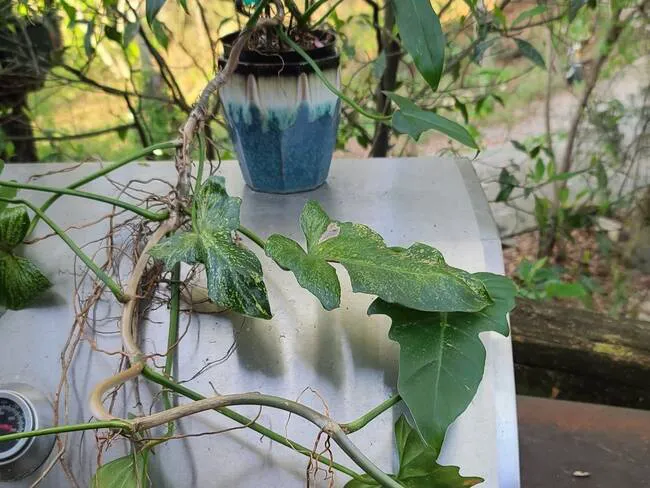
Soggy roots can cause similar curling
Waterlogged roots cannot obtain adequate oxygen or take up water normally, even when the soil seems wet enough. Look for a constantly heavy pot, yellowing leaves, a sour smell or mushy roots. Stop adding water to saturated mix and ensure drainage. Only disturb the roots if severe decline warrants inspection; healthy firm roots should not be pruned simply because a leaf is curled. Use a modest pot and airy organic growing medium rather than deep compacted garden soil.
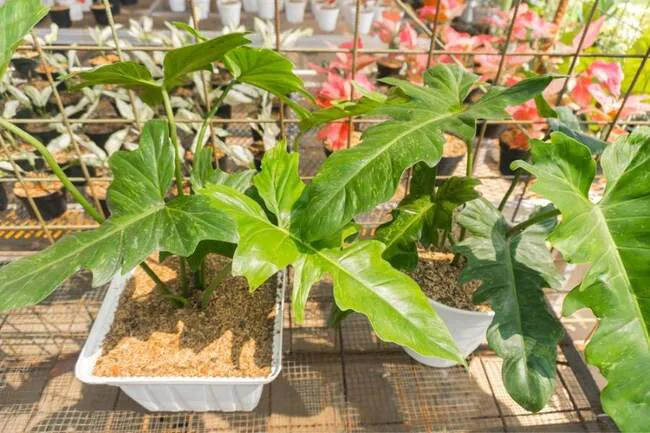
Light, temperature, humidity and salts
Most common climbing philodendrons benefit from bright filtered indoor light, warmth and protection from drafty doors or hot heaters. Harsh midday sun can scorch sensitive leaves, while deep shade slows growth. Very low indoor humidity may contribute to crisp leaf margins, but a pebble tray or misting cannot repair wet roots. Fertilizer excess can cause root injury and tip burn; if salts are suspected, check product rates and drainage before feeding again. The RHS philodendron guide discusses light, roots and growing conditions for this diverse genus.
Look closely for pests
Thrips can scar emerging leaves, sometimes leaving silvery marks and tiny dark specks. Spider mites can create fine stippling and webbing; mealybugs may hide at leaf nodes. Check with a magnifier and isolate plants where an infestation is confirmed. Start with mechanical removal and use only products approved for the pest and indoor houseplants, following label instructions. Routine homemade neem-detergent sprays are not a safe substitute for identification.
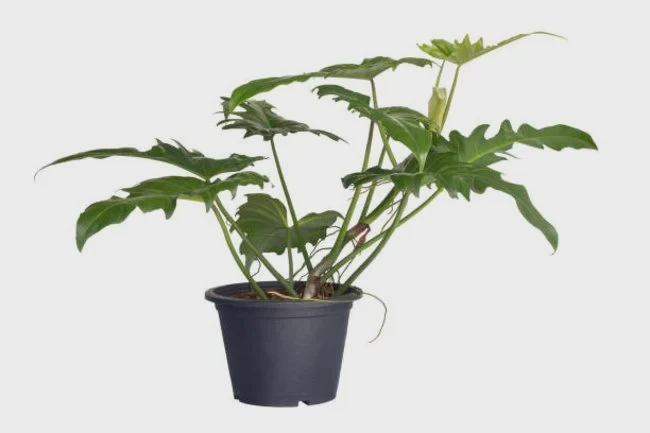
A practical recovery plan
- Check whether the curling leaf is merely a new leaf unfurling.
- Measure root-zone moisture by touch and the pot's weight.
- Drain standing water or rehydrate a truly dry root ball as indicated.
- Check filtered light, cold drafts and heat sources.
- Inspect both leaf surfaces for pests and assess fertilizer history.
- Monitor healthy new growth rather than expecting all old scars to disappear.
Species-specific care: Red Emerald philodendron and Golden Dragon.
Safety and references
Philodendron tissues contain irritating calcium oxalates and must not be chewed by pets or children; sap can irritate skin. Read NC State Extension: Philodendron and Royal Horticultural Society: Philodendron Growing Guide for root, leaf, propagation and care information.