
Jade plant is a branching succulent, not a rubber tree. Its oval, fleshy green leaves grow along thickening stems; older plants become woody and tree-like. NC State Extension identifies it as Crassula ovata, from South Africa, in the stonecrop family. You may see the older name Crassula argentea on plant labels. 'Money plant' is an ambiguous common name, so check the leaf shape and scientific name before using a care guide.
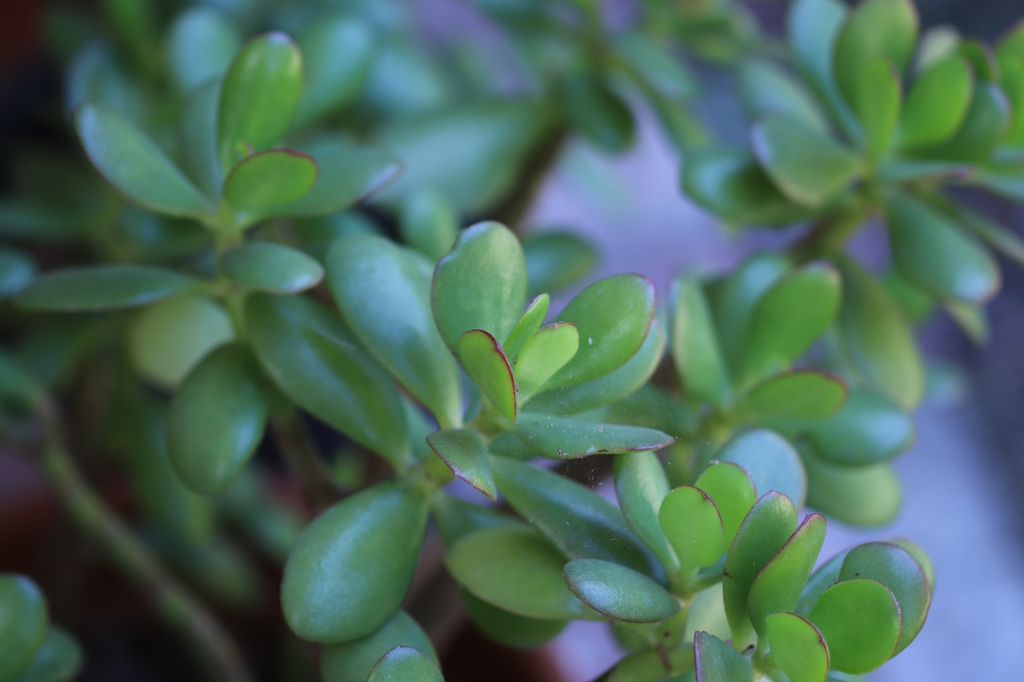
S.G.S., Crassula ovata (shape), CC0 1.0 via NC State Extension Plant Toolbox: https://plants.ces.ncsu.edu/plants/crassula-ovata/. Original https://eit-planttoolbox-prod.s3.amazonaws.com/media/images/Crassula_ovata_I_S.G_RiJMAw4vdt31.jpg. License: https://creativecommons.org/publicdomain/zero/1.0/.
Jade plant
Crassula ovata · Crassulaceae
Also known as: Jade tree; money plant; Crassula argentea (older scientific name)
Jade plant is a branching succulent with plump oval leaves. Grow it in bright light, use a freely draining pot and let the mix dry before watering. ASPCA lists jade as toxic to cats and dogs.
- Light
- Bright indirect light, Some direct sun
- Care level
- Beginner friendly
- Where it grows
- Indoors, Outdoors in warm climates
- Cats and dogs
- Toxic to pets Source (opens in a new tab)
ASPCA lists jade plant as toxic to cats and dogs using the older name Crassula argentea; NC State lists that name as a synonym of Crassula ovata. Do not describe jade as pet-safe. If a pet chews the plant, contact a veterinarian or animal poison service.
How to identify it
Light
Choose a bright window, with some afternoon protection if sunlight is intense. NC State recommends a sunny indoor position with afternoon shade. Give a plant that has been in shade time to adjust before exposing its leaves to strong sun. Changes in leaf colour alone cannot establish how much usable light a plant receives. Consult the indoor light guide if growth stalls.
Potting mix and drainage
Use an open-draining potting mix and a container with a real drain hole. NC State specifies well-drained, loam-containing soil. A succulent-friendly mix may be suitable when water flows through rather than standing around the roots. Empty the outer cachepot or saucer after watering. Iowa State Extension cautions that gravel at the bottom is not a substitute for a drainage hole. Repot only when needed, rather than on a calendar.
When to water
Check the potting mix first; water only once it has dried. Push a finger or wooden probe below the surface, or compare the pot's weight with its weight soon after watering. NC State advises moderate watering when the soil is dry and less frequent watering from autumn into late winter. When the mix has dried and the plant needs water, soak thoroughly and let excess drain. Do not use an automatic weekly schedule: pot size, light, season and mix change how quickly it dries. See how to check pot moisture.
Humidity and temperature
Jade is usually grown as an indoor succulent outside frost-free areas. NC State lists outdoor hardiness zones 11a–12b, which describe typical winter climate, not today's weather. Keep it sheltered from freezing and avoid placing it against a chilled window. An exact indoor humidity target is not established by these sources; use light, moisture and drainage checks instead of chasing a percentage.
Feeding
For a potted plant that is growing well, modest feeding during active growth is usually enough. Use the product label for a houseplant or succulent fertilizer; do not guess a fixed dose. If the mix stays wet, leaves drop or light is poor, check the growing conditions before adding nutrients. Iowa State Extension gives general guidance for container-grown houseplants. No species-specific fertilizer schedule has been verified here.
Propagation
Jade can be propagated from a leaf or stem cutting. NC State lists both strategies. Start with a healthy piece and an appropriately draining rooting medium; avoid keeping the medium soggy. Rooting speed depends on conditions, so check for roots and new growth rather than relying on a fixed number of days. A fallen leaf is not a cutting success until it actually develops a rooted plantlet.
Growth and size
Over time jade forms a branching, woody-stemmed succulent shrub; it is not a fast vine. NC State describes specimens several feet tall outdoors, while pots indoors often stay smaller and may rarely flower. Give the plant a stable bright position and turn the pot occasionally for balanced growth. Its growth rate depends on light, pot size and general care; assess several conditions before treating slower indoor growth as a problem.
Warning signs
- Leaf drop with wet mix: examine drainage and roots; NC State associates excess water with leaf fall and root rot.
- Shrivelling leaves: assess how dry the full pot is before watering, because damaged roots can also limit uptake.
- Visible insects or webbing: NC State lists aphids, scale, spider mites and mealybugs as occasional pests. Inspect the plant, isolate it if needed and identify the pest before choosing controls.
- Sun-affected patches: consider recent changes in exposure, but do not diagnose from one spot alone.
Related guides
Sources
- NC State Extension: Crassula ovata – identity, care, propagation and pests (checked October 15, 2026)
- ASPCA: Toxic and Non-toxic Plants: Jade Plant (Crassula argentea) (checked October 15, 2026)
- Iowa State Extension: How to Care for Houseplants (checked October 15, 2026)
Last reviewed