
Independent gardening guides. Some links earn us a commission at no cost to you. Read our affiliate disclosure
Newsletter
Tree philodendron (Philodendron bipinnatifidum)

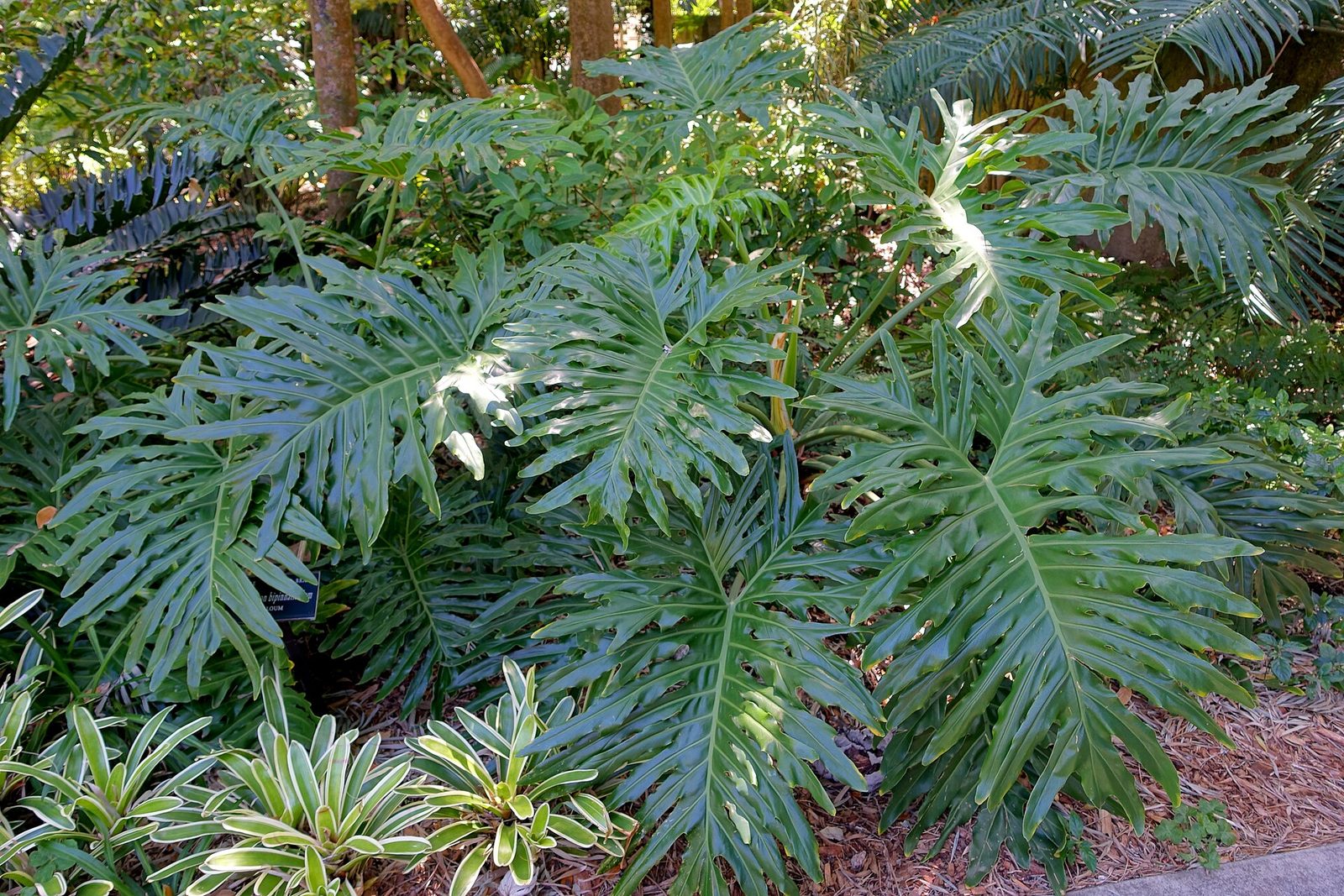
Photo: Daderot, CC0 via Wikimedia Commons

Tree philodendron

Philodendron bipinnatifidum · Araceae

Also known as: Tree philodendron, Lacy tree philodendron, Selloum, Philodendron selloum, Thaumatophyllum bipinnatifidum, Split-leaf philodendron, Cut-leaf philodendron, Horsehead philodendron

Tree philodendron, often sold as selloum, is a big self-heading plant with deeply lobed, glossy leaves. Needs room and bright light. Toxic to pets.

Light
Medium light, Bright indirect light
Care level
Moderate
Where it grows
Indoors, Outdoors in warm climates
Cats and dogs
Toxic to pets Source (opens in a new tab)

ASPCA's Tree Philodendron page, listed under the synonym Philodendron selloum, says it is toxic to dogs and cats because of calcium oxalate crystals. Signs it lists: oral irritation, intense burning and irritation of the mouth, lips and tongue, excessive drooling, vomiting and difficulty swallowing. NC State also lists it as a problem for cats and dogs and notes that the sap can irritate skin. If a pet chews this plant, contact your vet or an animal poison control service.

View My Garden

Check a problem with this plant

How to identify it

Tree philodendron is a large, self-heading plant with glossy, leathery, deeply lobed leaves on long, smooth stalks. NC State's identification hints are gigantic, glossy, deeply lobed leaves, a short stem with large sheathing stipule-like structures, and distinctive leaf scars ringed with stiff scales on the stem. It is native to eastern Bolivia, southern and southeastern Brazil and northeastern Argentina (Kew).

The name is confusing. It is often sold as Philodendron selloum, which Kew treats as a synonym. In 2018 it was moved to Thaumatophyllum bipinnatifidum (IPNI), and that name is still on many labels. Kew's current checklist, however, accepts Philodendron bipinnatifidum and lists Thaumatophyllum bipinnatifidum as a synonym (Kew record).

Light

NC State says tree philodendron prefers high light but tolerates low light conditions, and warns that low light, along with overwatering, makes leaves smaller with fewer or no lobes. Clemson Extension recommends medium to bright light near an east, west or south window.

NC State also notes that full sun can cause leaf scorch, so indoors give it plenty of light without strong sun beating on the leaves. Outdoors in warm climates, UF/IFAS lists part shade to part sun.

Potting mix and drainage

NC State recommends moist, well-drained soil high in organic matter, and UF/IFAS says it needs fairly rich, moisture-retentive soil to look its best. In a container, use a free-draining potting mix and a pot with drainage holes, sized for a plant that will get large.

Salt is a particular weakness. NC State says it does not tolerate salt buildup and suggests flushing the soil regularly, letting rain fall on it outdoors, or watering with distilled water. UF/IFAS also rates its salt tolerance as poor.

When to water

Check the mix before you water instead of following a calendar. Iowa State Extension suggests watering when the mix feels dry about an inch down; if it still feels wet, wait and check again in a day or two.

This plant sits between two problems. NC State warns that root rot can occur in overly damp soil, but that it does not tolerate drought. Clemson Extension's aim for philodendrons is soil that is evenly moist but never soggy: water thoroughly until the excess drains, empty the saucer, and never leave the pot standing in water.

Humidity and temperature

NC State says tree philodendron prefers moderate humidity, and Clemson Extension notes that philodendrons tolerate the low humidity of most homes. It is a warm-climate plant: NC State says container plants kept outside in warm weather should be moved indoors when temperatures dip below 60°F. Indoors, keep it away from cold draughts and hot radiators (RHS).

Feeding

Feed only while the plant is actively growing. The RHS suggests a general houseplant fertiliser during the growing season, roughly spring to early autumn, and Iowa State Extension notes that most houseplants rest in winter and need less fertilizer then. Follow the product label rate.

Over-feeding is a real risk for this species, because NC State says it does not tolerate salt buildup. Clemson Extension also notes that too much fertilizer can make philodendron leaf tips curl and brown.

Propagation

Tree philodendron has a short, stout stem and a self-heading habit (NC State), so it is not propagated like a trailing vine. UF/IFAS says it is propagated by division of the offshoots or from seed. Clemson Extension notes that some philodendrons produce offsets and that air layering is another method used for philodendrons. Wear gloves when cutting or dividing it, because the sap can irritate skin (NC State).

Growth and size

This is a big plant. NC State gives a size of 4 to 10 feet tall and 6 to 10 feet wide, with leaves up to 4 feet long. It reclines or creeps with age, will climb with aerial roots if given support, and sends aerial roots down from the trunk. UF/IFAS describes landscape plants eventually developing a tree-like trunk and notes that most people forget how large it can grow.

Clemson Extension warns that it will be too large for most homes, and that the long leaf stalks of self-heading types are brittle, so keep it out of traffic paths. It rarely blooms as a houseplant (NC State).

Warning signs

  • New leaves smaller, with fewer or no lobes: NC State links this to low light and overwatering. Check how wet the mix stays, and move the plant to brighter light.
  • Yellow lower leaves: Clemson Extension links this to too little light or overwatering. Let the top of the mix dry before watering again, but don't let it dry out completely, as it does not tolerate drought (NC State).
  • Scorched patches: possibly full sun (NC State). Move it out of strong direct sun.
  • Curled, brown leaf tips: possibly too much fertilizer (Clemson); this plant is also sensitive to salt buildup (NC State). Review feeding against the label. See why philodendron leaves curl.
  • Specks, webbing or sticky residue: check for aphids, mealybugs, scale, banded greenhouse thrips and spider mites (NC State).

Related guides

Sources

  1. ASPCA Animal Poison Control: Tree Philodendron (Philodendron selloum) (checked October 11, 2026)
  2. NC State Extension Gardener Plant Toolbox: Philodendron bipinnatifidum (checked October 11, 2026)
  3. Royal Botanic Gardens, Kew (WCVP / POWO data, shown on Kew's ColPlantA): Philodendron bipinnatifidum Schott ex Endl. (checked October 11, 2026)
  4. International Plant Names Index (Kew, Harvard, ANBG): Philodendron bipinnatifidum Schott ex Endl. (basionym of Thaumatophyllum bipinnatifidum) (checked October 11, 2026)
  5. UF/IFAS Extension (EDIS FP473): Philodendron selloum: Selloum (checked October 11, 2026)
  6. Clemson Cooperative Extension, Home & Garden Information Center: Philodendron (HGIC 1509, revised 2016) (checked October 11, 2026)
  7. Royal Horticultural Society: How to grow philodendrons (RHS Growing Guide) (checked October 11, 2026)
  8. Iowa State University Extension and Outreach: How to Care for Houseplants (checked October 11, 2026)

Last reviewed