
Independent gardening guides. Some links earn us a commission at no cost to you. Read our affiliate disclosure
Newsletter
Xanadu philodendron (Philodendron xanadu)

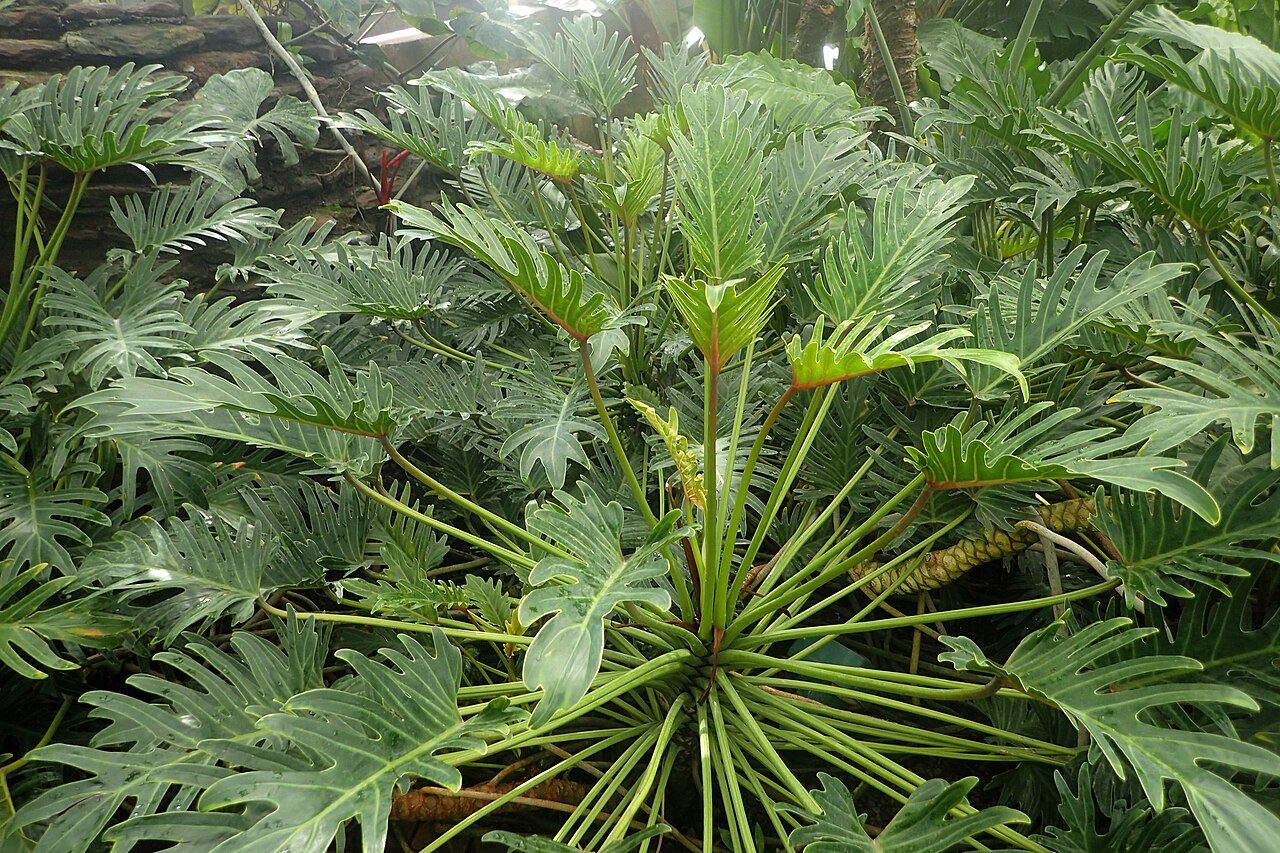
Photo: Krzysztof Ziarnek, Kenraiz, CC BY-SA 4.0 via Wikimedia Commons

Xanadu philodendron

Philodendron xanadu · Araceae

Also known as: Xanadu philodendron, Philodendron 'Xanadu', Winterbourn philodendron, Philodendron 'Winterbourn', Thaumatophyllum xanadu, Philodendron bipinnatifidum 'Xanadu'

Xanadu philodendron forms a dense, compact mound of glossy, deeply lobed leaves. Easy to grow in bright, indirect light, but toxic to cats and dogs.

Light
Bright indirect light
Care level
Beginner friendly
Where it grows
Indoors, Outdoors in warm climates
Cats and dogs
Toxic to pets Source (opens in a new tab)

NC State Extension's Philodendron xanadu page lists it as a problem for cats, dogs and children, with low poison severity and calcium oxalate as the toxic principle. In its human-poisoning entry it says that if the leaves or stems are eaten or chewed, the lips, tongue and mouth can swell, with mouth pain and drooling, and that the sap can irritate skin. All parts are listed as poisonous. If a pet chews this plant, contact your vet or an animal poison control service.

View My Garden

Check a problem with this plant

How to identify it

Xanadu philodendron is a dense, compact, mounding plant with glossy, leathery, deeply lobed green leaves on long stalks. NC State gives leaves up to 12 to 18 inches long, and UF/IFAS says each leaf is divided into 15 to 20 lobes. It has a stout, unbranched stem and large aerial roots (NC State).

The name causes confusion. It was sold for years as the cultivar Philodendron 'Xanadu' before it was formally named a species, Philodendron xanadu, from a plant grown in Florida (IPNI). Kew's checklist accepts that name with Thaumatophyllum xanadu as a synonym, and NC State lists Thaumatophyllum xanadu as a former name. Older extension sheets differ: UF/IFAS writes Philodendron × 'Xanadu' without naming parents, and Clemson calls it P. bipinnatifidum 'Xanadu'. NC State says the name 'Winterbourn' is not registered and shows no distinguishing features.

Light

Indoors, NC State says Xanadu prefers bright but indirect light. The RHS advises keeping philodendrons out of direct summer sun, which can scorch the leaves, and notes that with too little light they become leggy and produce fewer, smaller leaves.

Outdoors in warm climates the plant is more flexible. NC State lists full sun to partial shade, and UF/IFAS says it is well adapted to the shade of tall trees and makes a tall ground cover for shaded, damp spots.

Potting mix and drainage

NC State recommends moist, rich, well-drained soil high in organic matter, and UF/IFAS says Xanadu needs fairly rich, moisture-retentive soil to look its best. In a container, use a free-draining potting mix and a pot with a drainage hole; Iowa State Extension notes that a layer of gravel at the bottom does not make up for a missing hole.

Choose a pot only a little larger than the root ball, because a much bigger pot stays wet for longer and can lead to root rot (RHS). NC State says container plants may need repotting every one to two years. UF/IFAS rates its salt tolerance as poor.

When to water

Check the mix before you water instead of following a calendar. Iowa State Extension suggests watering when the mix feels dry about an inch down; if it still feels wet, wait and check again in a day or two. The RHS gives similar advice for philodendrons: wait until the top of the compost has dried.

When you do water, water thoroughly until the excess drains, then empty the saucer so the pot never stands in water. NC State warns that overwatering makes the leaves turn yellow and should be avoided. UF/IFAS rates its drought tolerance as moderate, so it copes with a short dry spell better than with soggy mix.

Humidity and temperature

Indoors, NC State says Xanadu prefers some humidity and temperatures of 65 to 75°F. Across the genus, the RHS says philodendrons like moderately humid air but are happy in the lower humidity of most homes, should be kept above 15°C (59°F), and should sit away from hot radiators and cold draughts.

Outdoors it is a warm-climate plant. NC State lists USDA zones 9b to 11b, but UF/IFAS gives zones 10 to 11 and says it can be grown outside only in south Florida and the warmest parts of central Florida, so our tools use the narrower range, zones 10 to 11.

Feeding

Feed only while the plant is actively growing. The RHS suggests a general houseplant fertiliser during the growing season, roughly April to September, and Iowa State Extension notes that most houseplants rest in the short days of winter and need less fertilizer then. Fresh potting mix usually contains a little fertilizer, so little or none is needed for the first few months after repotting (Iowa State). Follow the product label rate.

Don't overdo it. UF/IFAS rates Xanadu's salt tolerance as poor, and Clemson Extension notes that too much fertilizer can make philodendron leaf tips curl and brown.

Propagation

Published extension advice on propagating philodendrons is general rather than specific to Xanadu. Clemson Extension says philodendrons can be propagated from stem cuttings or by air layering, and that some produce offsets. The RHS notes that stem cuttings are easiest on climbing or trailing philodendrons, whereas Xanadu is a compact, mounding plant with a stout, unbranched stem (NC State).

Wear gloves when cutting it, because NC State and the RHS both say the sap can irritate skin.

Growth and size

Xanadu has a dense, mounding, spreading habit and a medium growth rate (NC State). Size estimates differ a little: NC State gives 3 to 5 feet tall and 3 to 5 feet wide, UF/IFAS gives 2 to 4 feet tall and 4 to 6 feet across, and Clemson Extension describes it as a low grower about 3 feet tall and 5 feet wide. UF/IFAS compares its texture and form to the much larger tree philodendron, without the large size.

Outdoors it can bloom with a dark red spathe around a creamy white spadix, but NC State says indoor plants typically do not bloom.

Warning signs

  • Yellowing leaves: NC State links this to overwatering, and Clemson adds too little light. Check whether the mix is still wet; let the top dry before watering again and give brighter, indirect light.
  • Leggy growth with fewer, smaller leaves: often too little light (RHS). Move it somewhere brighter but out of direct summer sun.
  • Leaf spots: NC State says it is vulnerable to fungal leaf spots. Check for overwatering and wet leaves.
  • Curled, brown leaf tips: possibly too much fertilizer (Clemson). Review feeding against the label. See why philodendron leaves curl.
  • Specks, webbing or sticky residue: check leaf undersides for aphids, mealybugs, scale, thrips and spider mites (NC State).

Related guides

Sources

  1. NC State Extension Gardener Plant Toolbox: Philodendron xanadu (Winterbourn Philodendron, Xanadu Philodendron) (checked October 11, 2026)
  2. Catalogue of Life (ChecklistBank), plant sector from Kew's World Checklist of Vascular Plants (WCVP) 16.0, 2026-06-04: Philodendron xanadu Croat, Mayo & J.Boos (checked October 11, 2026)
  3. International Plant Names Index (Kew, Harvard, ANBG): Philodendron xanadu Croat, Mayo & J.Boos, Aroideana 25: 63 (2002 publ. 2003) (checked October 11, 2026)
  4. International Plant Names Index (Kew, Harvard, ANBG): Thaumatophyllum xanadu (Croat, Mayo & J.Boos) Sakur., Calazans & Mayo, PhytoKeys 98: 65 (2018) (checked October 11, 2026)
  5. UF/IFAS Extension (EDIS FP474): Philodendron x 'Xanadu': 'Xanadu' Philodendron (checked October 11, 2026)
  6. Clemson Cooperative Extension, Home & Garden Information Center: Philodendron (HGIC 1509, revised 2016) (checked October 11, 2026)
  7. Royal Horticultural Society: How to grow philodendrons (RHS Growing Guide) (checked October 11, 2026)
  8. Iowa State University Extension and Outreach: How to Care for Houseplants (checked October 11, 2026)

Last reviewed