
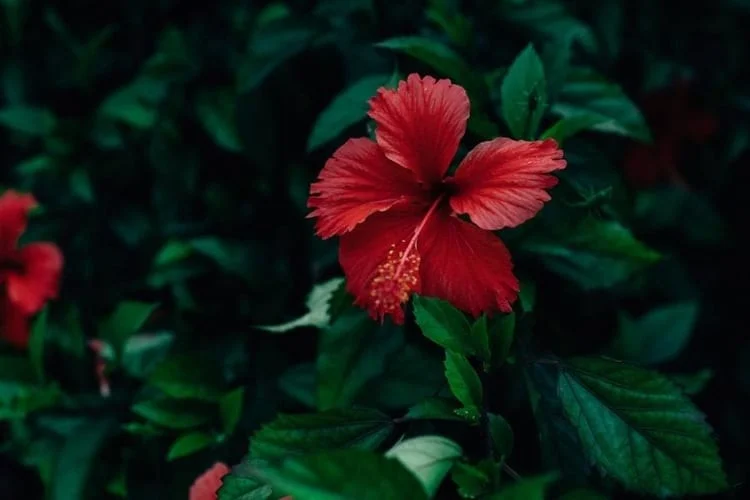
Why a hibiscus wilts—and the first check
Hibiscus can wilt from either drought or waterlogged roots. Both make leaves lose firmness because they cannot maintain adequate water uptake. Heat, cold drafts, insect feeding and stem disease can also contribute. Begin by checking the soil and drainage instead of assuming every drooping plant needs another watering.
Feel several inches into the potting medium and assess the weight of the container. A dry, lightweight pot suggests drought, while wet medium in a heavy pot with wilting foliage requires a root and drainage check. University of Maryland Extension recommends watering according to actual moisture rather than a universal calendar.
Dry soil: water the whole root ball
If the medium is dry, water slowly from above until the root ball is adequately moistened and runoff appears through drainage holes. Very dry potting mix can pull away from the pot wall and repel water, so the first pour may run past the roots. Apply water in stages until the root ball absorbs it, then let the pot drain completely.
A tropical hibiscus in a sunny, windy spot may use water much faster than the same plant indoors during winter. Check moisture again before the next irrigation. Occasional temporary droop in extreme midday heat can improve after cooling, but severe or repeated wilting still deserves investigation, especially if soil is already damp.
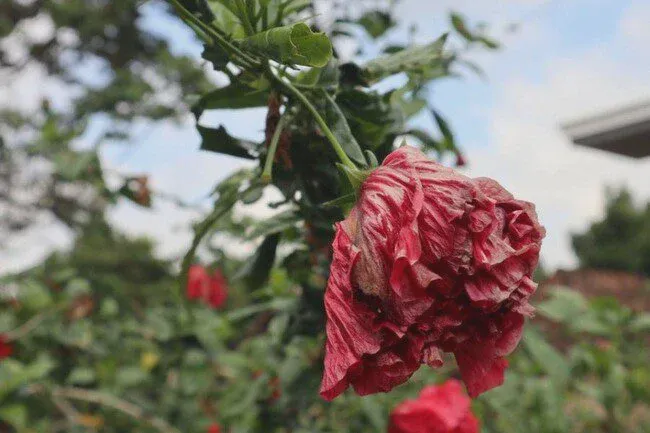
Wet soil: roots may not be working
Roots require oxygen. Persistent saturation reduces air around roots and can encourage root-rotting organisms. University of Maryland Extension explains why overwatered plants sometimes wilt like thirsty plants: damaged roots cannot absorb enough water, even though the pot is wet.
Empty saucers and decorative outer containers, confirm the drainage holes are open and stop watering unnecessarily. If the plant continues wilting while the mix is wet, inspect the root ball carefully. Healthy roots are typically firm; decayed roots may appear dark, mushy or easily torn apart. Remove clearly dead roots with clean tools and repot into appropriate fresh free-draining medium only if damage or severe compaction warrants it.
Repeated soaking is the wrong response to soggy soil. Follow the overwatering rescue guide for more detail.
Hot sun, cold drafts and moving stress
Tropical hibiscus prefers warmth and strong light, but a sudden jump from indoor shade to intense outdoor sun can stress leaves. Increase exposure gradually. Conversely, cold window glass, near-freezing air, air-conditioning vents and abrupt shifts between indoors and outdoors can make leaves droop or fall.
University of Minnesota Extension warns that tropical hibiscus is sensitive to sudden temperature and humidity changes. Keep a recovering plant in a stable bright location with normal air movement, not beside a heater or chilled doorway. Do not attempt to fix a cold-stressed plant with a large fertilizer dose.
Pests, stems and disease
Look under the foliage and around tender new growth for aphids, spider mites, mealybugs and whiteflies. Tiny speckles, fine webbing, distorted shoot tips or sticky residue may help identify infestations. If one stem wilts while the rest remain healthy, inspect that section for mechanical injury or a dark sunken lesion.
Some vascular and stem diseases can cause wilting, but not every wilting hibiscus has Fusarium or Verticillium. Diagnosis may require a plant clinic to examine tissue. Maryland Extension lists root damage, watering conditions and stem problems as separate causes of wilt. Do not use homemade antibiotics, peroxide drenches or a pesticide intended for another disease without first identifying the problem.
A practical six-step rescue check
- Measure soil moisture below the surface and judge the pot's weight.
- If truly dry, water the whole root ball; if wet, stop adding water and correct drainage.
- Check for soft stem bases, pests, webbing or discolored roots when symptoms suggest them.
- Keep a tropical hibiscus bright and warm, protected from intense sudden sun and cold air.
- Avoid heavy pruning or fertilizer while the roots are in distress.
- Watch for firm stems and healthy new leaves over the growing period.
Dead foliage may not recover its appearance. The more useful sign is that new wilting stops and fresh growth remains healthy. A severely rotten stem base or nearly destroyed root system may make recovery unlikely.
Questions about wilting and flowers
Why does my hibiscus droop after I water it?
If the soil was already wet, extra water could be making the root zone worse. Check drainage and root firmness rather than repeatedly soaking it. If it was extremely dry, water may have run down the pot wall without wetting the root ball; rehydrate gently.
Is a wilted hibiscus flower normal?
Individual tropical hibiscus blooms usually last about a day; spent blossoms close even on healthy plants. See how long flowers last. Limp leaves and stems, however, need a separate soil and environmental check.
What if leaves are fine but the plant has no buds?
Flowering depends on light, warmth, season and recent pruning. Consult why hibiscus may not bloom.