
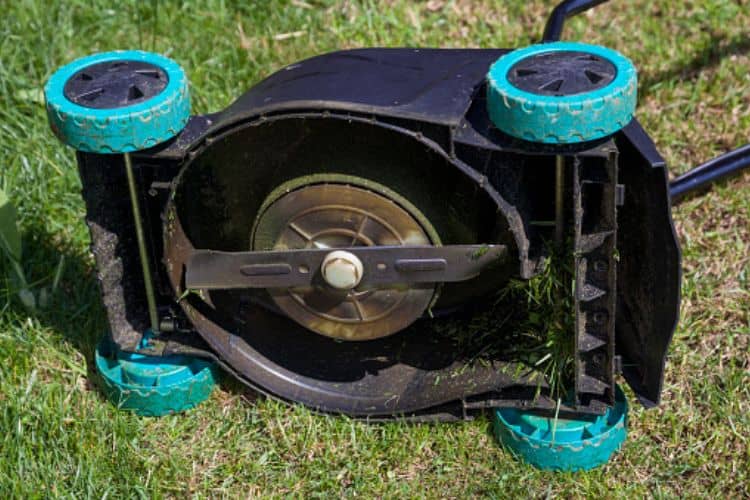
Quick answer: For thick grass, first choose a sharp mower blade that is specified for your exact deck and model. Blade length by itself is not enough to establish compatibility. Once you have verified the correct mounting pattern, rotation direction and original part number, compare standard, high-lift and mulching designs only if the manufacturer accepts them for your setup. Thick grass may also call for a higher first cut and a slower, safer mowing pace.
Affiliate disclosure: Swipe Garden may earn commissions on qualifying purchases through some links on the site. These selection guidelines are not paid endorsements.
Standard, high-lift or mulching: which blade type?
| Blade type | Typical use | Potential benefit | Important limitation |
|---|---|---|---|
| Standard or medium-lift | General cutting on compatible discharge decks | A versatile default for many mowing conditions | Does not fit every brand or mounting system |
| High-lift | Approved bagging or side-discharge decks | Can move clippings efficiently when airflow and engine power are appropriate | May demand more power; not necessarily suited to mulching |
| Mulching | Decks designed or equipped for mulching | Recuts clippings and returns small pieces to the lawn | Tall or wet grass can clump; requires compatible deck and attachments |
| Specialty aftermarket | Only mower models specifically listed as compatible | May suit some owners' clipping preferences | Advertising terms are no substitute for verified part fit and safety data |
How to find a compatible replacement
- Record the mower model and serial number. Find the manufacturer's identification plate and deck size.
- Consult the correct operator or parts manual. Find the blade part number and explicitly approved equivalents.
- Check mounting geometry. Center and outer mounting holes, blade profile and rotation must match exactly.
- Check the deck setup. Bagging, side discharge and mulching arrangements can have different approved blades or components.
- Check seller information. Buy only when the exact compatible model and part are identified. A “universal” label is not sufficient proof.
A Toro operator manual illustrates why blade replacement and tightening requirements are machine-specific. It applies only to the listed Toro models, not all mowers.
How to cut tall, dense or overgrown grass
Use a sharp, balanced blade
Sharp blades make cleaner cuts, while dull edges can leave ragged, torn tips. The University of Minnesota's mowing guidance emphasizes sharp blades, regular mowing and suitable mowing height. Its usual lawn-height examples concern cool-season turf; don't apply them automatically to a low-cut bermudagrass lawn.
Raise the deck for the first pass
Trying to remove too much growth in one pass can clog a deck and overload the motor. Where practical, aim to remove no more than about one-third of the leaf height at a time. For severely overgrown grass, mow higher first, then make a later pass toward the height appropriate for the species and mower.
Match pace and conditions
Slow down when the engine or motor labors. Dense wet grass can clump badly and can also make footing unsafe. Mow when conditions are suitable, keep the discharge path and guards in their prescribed condition, and follow local rules for clipping disposal.
Sharpen, repair or replace?
| What you notice | What to do |
|---|---|
| Dull but otherwise intact blade | Sharpen and balance in accordance with the mower manual, or ask a service shop |
| Bent, cracked, severely worn or mounting-hole damage | Replace with the specified compatible part; never weld or straighten a damaged blade |
| New vibration after blade service | Stop and check fitting, balance and fastener installation before further operation |
| Rough grass finish despite a good blade | Investigate cutting height, grass moisture, machine condition or excessive clipping volume |
Critical safety before removing a mower blade
Never put a hand under a deck while the mower can start. Stop the machine and isolate its power source as the specific manufacturer's manual directs. This may mean removing a key and battery, disconnecting a spark plug, or other prescribed isolation. Use approved blade-holding procedures and protective equipment, but do not rely on gloves alone. Fit the specified fasteners and tighten to the correct model's torque instructions; torque values from an unrelated mower are unsafe.
If you cannot establish compatibility or complete safe installation and balance checks, use a qualified equipment service shop. Mower blades can cause serious injury.
Frequently asked questions
Will high-lift blades always cut thick grass better?
No. More lift can benefit particular compatible discharge or bagging systems, but it can increase load on a mower and may not be approved for mulching. Match the deck first.
Can I put a mulching blade on any deck?
No. The mower may need a compatible mulching kit and an approved blade. Follow the parts manual rather than assuming a common blade size is sufficient.
Is blade type the reason my lawn turns brown?
Sometimes dull blades worsen the appearance of cut tips, but drought, dormancy, mowing height and other turf stresses also cause browning. Diagnose the lawn before buying hardware.
More lawn-care help
See mulching versus regular blades, understanding mower blade orientation (always defer to the owner's manual), and bermudagrass turning brown.