
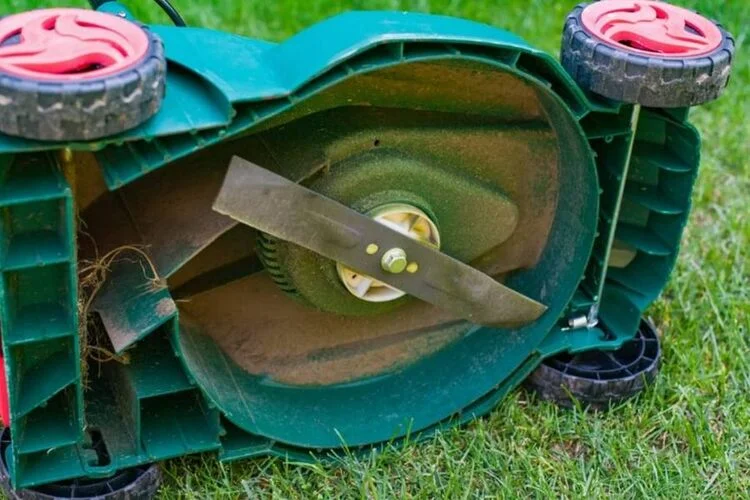
Quick answer: A mulching blade helps recut grass clippings inside a compatible mower deck before they drop back into the turf. A standard or high-lift blade is often designed to move material toward a discharge opening or collection bag. The best blade is the one approved for your exact mower and intended cutting mode.
Mulching versus regular blades at a glance
| Consideration | Mulching blade | Standard / high-lift blade |
|---|---|---|
| Main job | Retain and recut clippings | Cut and help discharge or bag clippings |
| Typical profile | Additional curves or cutting surface | Lift wing for moving cut material |
| Good conditions | Frequently mown, relatively dry grass | Approved discharge or bagging setup |
| Heavy growth | Can leave clumps when overloaded | May evacuate thick clippings more readily |
| Compatibility | Needs a compatible deck and configuration | Needs a compatible deck and configuration |
How a mulching blade works
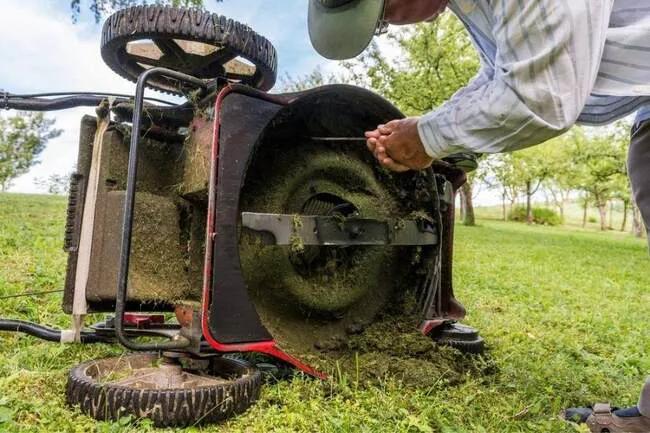
Mulching is a system, not only a blade shape. A suitable blade, deck, plug and sometimes baffles circulate grass so it is cut into smaller pieces. These pieces settle in the lawn and decompose, returning nutrients. If the discharge opening is left open on a mower approved for it, much of the material may leave before the recutting is complete.
How a regular blade works
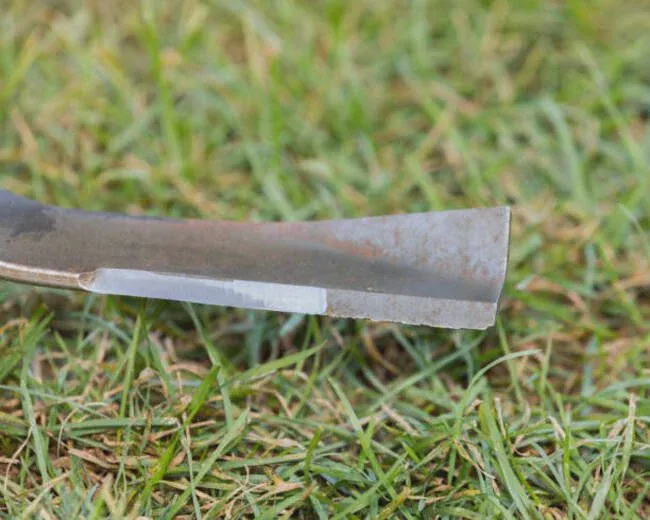
Standard and high-lift blades often produce airflow that moves clippings through a discharge chute or up toward a collection bag. A higher-lift model is not necessarily better: the mower engine, deck, blades and bagging system must be designed to work together. Some mower systems also use combination blades for more than one mode.
When each blade is a better fit
- Routine dry-lawn maintenance: An approved mulching setup is convenient when the clippings are short enough to settle between grass leaves.
- Fast-growing or tall grass: Use the manufacturer's appropriate discharge or collection mode if the mulch setup creates heavy clumps. Never mow dangerous wet slopes.
- Bagging: Choose the blade recommended for the specific collection system rather than assuming any high-lift blade is interchangeable.
- Leaf recycling: A model designed for mulching leaves may break them into smaller pieces, but thick leaf layers can still smother the lawn.
Do mulching blades prevent thatch or replace fertilizer?
Returning cut grass can reduce the amount of fertilizer needed, but it does not eliminate the need for soil-informed nutrient management. Penn State Extension explains that grass leaf clippings break down readily and do not contribute appreciably to thatch. Oregon State University Extension recommends mowing often enough to remove no more than about one-third of grass height in one pass.
How to choose the correct replacement
Find your mower's model and serial number, then verify the approved part number, length, hole pattern, rotation, blade clearance and mounting hardware in the manufacturer manual. A blade fitting the spindle hole is not proof it is safe. Isolate the mower's power before maintenance and tighten hardware only to the torque specified for your particular model. Our blade orientation guide explains the key checks.
Frequently asked questions
Can a normal blade return grass clippings?
Yes. Both side-discharge and mulching mowers can leave clippings on the turf, but a dedicated mulching system tends to chop them more finely.
Can I replace a regular blade with a mulching blade?
Only when that replacement is approved for your exact mower. Some systems require a mulching plug or baffles as well. Read whether a mulching kit is needed.
Is a mulching blade always better for a large lawn?
No. Results depend more on mowing frequency, grass volume, deck design and operator preference than on lawn area alone. See mulching versus side discharge.