
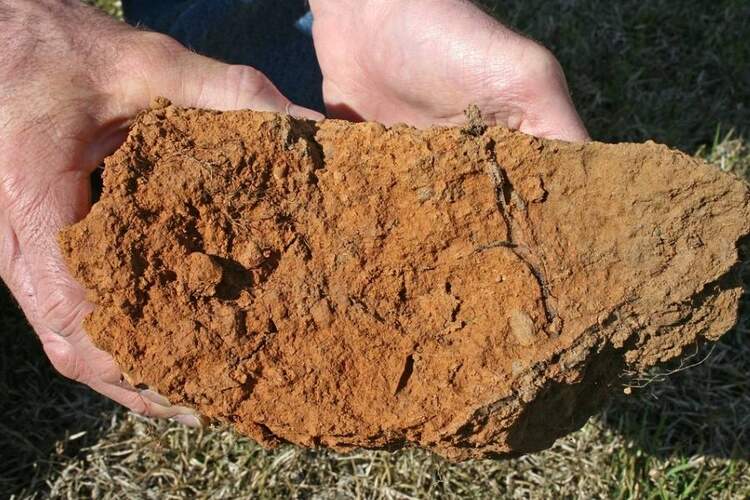
You can improve clay soil without a rototiller by keeping the soil covered, reducing foot traffic and steadily adding suitable organic matter. The goal is to improve structure, root channels and water movement, not to turn clay instantly into sand or change its inherent texture. Compaction and drainage problems may need separate fixes.
Start by checking the actual problem
Clay naturally holds nutrients and water well, but can drain slowly and compact when handled wet. After rain, look for standing water, surface crusting and hard footpaths. Dig a small test hole after the soil is workable: if water remains trapped by a hardpan or site grading, surface compost alone may not solve the drainage issue. Consider a soil test for pH and fertility before adding lime, gypsum or fertilizer.
Five no-till improvements
- Stop working wet soil. Avoid digging, walking or rolling equipment over beds when soil is sticky; this can squeeze pore spaces and worsen compaction.
- Create permanent paths. Put feet and wheelbarrows on paths, not planting zones. Raised or mounded beds help define traffic-free growing areas.
- Spread mature compost. On an established bed, use a measured surface layer appropriate for the soil and crop. Oregon State University Extension describes annual surface applications for existing beds, but warns that too much compost can add excess nutrients.
- Mulch exposed soil. Apply leaves, straw or other suitable mulch, keeping it away from stems and trunks; replenish as it decomposes.
- Keep living roots in place. Appropriate cover crops and diverse roots help maintain biological activity and can improve aggregation over seasons.
Do you ever need to loosen the ground?
Severe compaction can justify limited intervention. A broadfork or garden fork can open channels without fully turning and pulverizing the profile. University of Minnesota Extension describes broadforking as a less disruptive alternative to intensive tillage. Avoid breaking wet clay into sticky clods, and protect loosened soil from renewed traffic.
Does adding sand fix clay?
Sprinkling a small amount of sand into a clay bed is not a reliable drainage fix and may increase density. Oregon State University Extension cautions that adding sand alone to silt or clay can worsen compaction. Organic matter, better site drainage and carefully designed beds are more dependable approaches for a home garden.
Compost and gypsum: what each actually does
Mature compost supplies organic matter that supports soil organisms and aggregation. Gypsum is a calcium sulfate amendment, not a universal clay-breaker; it is mainly appropriate where a diagnosed soil-chemistry problem justifies it. Likewise, lime changes pH and should be guided by a soil test. Avoid blanket prescriptions for either.
What progress should you expect?
Improvement is gradual. Over successive seasons, the soil may become easier to work and better at taking in water as roots, organic matter and soil organisms build structure. Track how long standing water lasts after rain, ease of planting, and plant root growth rather than judging success by a single tilling session.
When surface improvement is not enough
Persistent ponding from grading, impermeable subsoil or a high water table requires assessment of the site's drainage. A raised bed or revised planting location may be more effective than repeated compost additions. Consult a local extension office or drainage professional before major excavation.