
Independent gardening guides. Some links earn us a commission at no cost to you. Read our affiliate disclosure
Newsletter
Slipper orchid (Paphiopedilum)

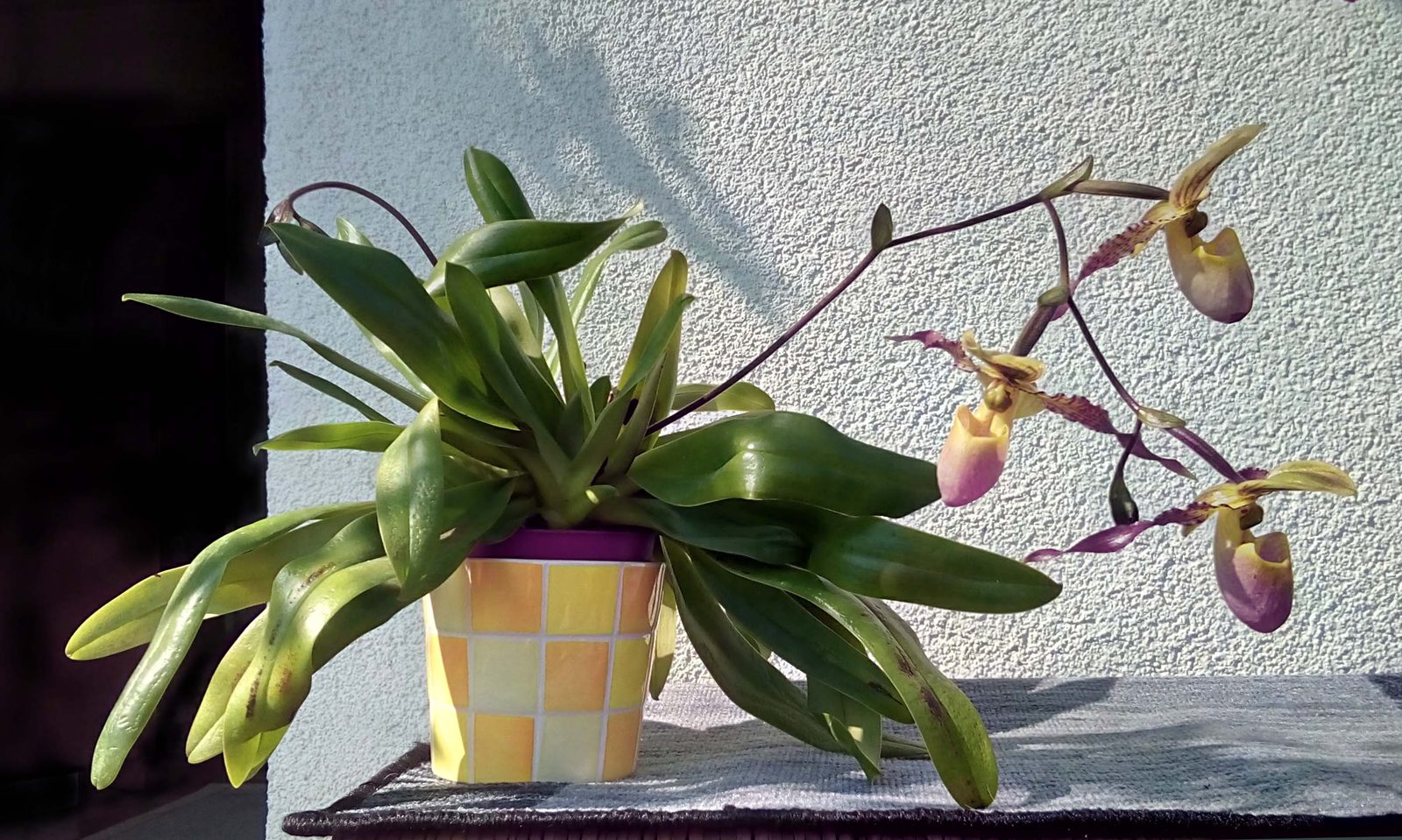
Photo: Fiszka, CC0 via Wikimedia Commons

Slipper orchid

Paphiopedilum · Orchidaceae

Also known as: Slipper orchid, Lady slipper orchid, Tropical lady slipper, Paphiopedilum, Paph, Paphiopedilum Maudiae, Maudiae

Paphiopedilum slipper orchids have a pouched lip and no pseudobulbs, so keep the mix lightly moist. Mottled-leaved types need more warmth than plain ones.

Light
Medium light, Bright indirect light
Care level
Moderate
Where it grows
Indoors
Cats and dogs
Pet safety unknown

We couldn't confirm whether this plant is safe for pets. Keep it out of reach and ask your vet.

View My Garden

Check a problem with this plant

How to identify it

Slipper orchids are Paphiopedilum, a genus of about 109 species and thousands of hybrids from India and China through South-East Asia to New Guinea. Most grow in the ground rather than on trees. Care differs between species and types, so note which kind you have.

  • Each flower has a pouch-shaped lip, often with spots, stripes or contrasting veins. Most bear one waxy, long-lasting flower per growth.
  • No pseudobulbs: each new growth is a fan of leaves.
  • Leaves are plain green or mottled. Mottled-leaved types are usually warm-growing and plain green ones cooler-growing; AOS adds multifloral, strap-leaved types, which also like warmth.

NC State calls them the tropical cousins of the native North American lady's slippers, Cypripedium, which are a different genus.

Light

Slipper orchids need less light than many orchids. The American Orchid Society (AOS) says most thrive with two to three hours of shaded sunlight a day, and suggests an east, north or west window giving one to four hours of direct sun. NC State notes they tolerate low light and shade.

Adjust with the seasons. The RHS advises a shaded position in spring and summer, protected from direct sunshine, then bright, unshaded light in winter.

Read the leaves: AOS says a reddish tinge on the leaf edges means the plant needs more shade, while a plant that does not rebloom may not be getting enough light.

Potting mix and drainage

Use a special orchid mix for terrestrial orchids that holds moisture yet drains well, not ordinary potting soil. AOS says most mixes are fine or medium fir bark with additions such as perlite, coarse sand and sphagnum moss.

  • Choose a pot just large enough to hold the roots comfortably; the RHS warns against a larger pot than necessary.
  • Repot after flowering, before the mix breaks down. NC State says these orchids dislike broken-down mix and suggests fresh mix at least once a year; AOS gives about every two years for mature plants and yearly for smaller ones.
  • Set the junction of roots and stem about ½ inch below the surface of the mix.
  • Some species and their hybrids, nicknamed "limeys", need alkaline conditions; for these, AOS suggests adding unpolished marble or calcite chunks, or horticultural-grade oyster shell.

When to water

Slipper orchids have no pseudobulbs to store water, so they need watering more often than many orchids and should not dry out completely. AOS advises keeping the mix moist but not sopping wet, and watering indoors as soon as the mix starts to dry.

  • Push a finger or wooden skewer into the mix and water when it is just beginning to dry.
  • Lift the pot: after a few waterings you will be able to tell by its weight whether it needs water. If in doubt, wait a day.
  • In winter, the RHS suggests watering less, but never letting the compost dry out completely.

Water the mix rather than the plant, and keep water out of the leaves and crown, because moisture there can cause rot. Let the pot drain fully, and take care not to overwater, which rots the roots.

Humidity and temperature

Temperature depends on the type:

  • Plain green-leaved types are cool growers. The RHS gives a growing range of 10–25°C (50–77°F) and a winter minimum of 10–13°C (50–55°F).
  • Mottled-leaved types need more warmth: the RHS suggests a minimum night temperature of 18°C (65°F) and days of 20–30°C (68–86°F), with high humidity.

AOS says that indoors, normal room temperature is usually fine. Protect plants from cold, which can cause rot.

For humidity, AOS suggests moderate levels with good air movement. Don't mist the plant; the RHS recommends standing the pot on an upturned saucer in a tray of damp pebbles instead.

Feeding

AOS advises feeding on a regular schedule year-round, and the RHS suggests a proprietary orchid fertiliser at the application rate on the packet, fed less often or more weakly in winter. Follow the product label rate: AOS notes that slipper orchids come from very rainy habitats and warns against mixing too strong a dose.

Salts can build up in the mix over time. If you notice salt build-up on the plant or the mix, AOS suggests flushing the pot through with rainwater or distilled water.

Propagation

Slipper orchids are propagated by division. The RHS suggests doing this after flowering, separating an offshoot with a good root system from the edge of a large clump and potting it on individually. AOS says large plants can be pulled or cut apart into clumps of three to five growths; smaller single-fan divisions will grow but may not flower at first.

Plant each division with the junction of roots and stem about ½ inch below the surface of fresh mix. See How to propagate orchids: division, keikis and backbulbs.

Growth and size

Slipper orchids are compact: the RHS gives a height and spread of 15–30 cm (6 in–1 ft). Each growth forms a fan of leaves and usually produces one flower on an upright stalk, though some species and hybrids carry several flowers per stem. Over time, the fans build into a clump.

Flowering time varies. The RHS says slipper orchids usually flower in winter but can bloom at any time of year; each flower lasts up to three months, and tall stems may need a stake. When the flowers are finished, AOS suggests cutting the spike down to the level of the leaves; a new growth should flower within about a year.

Warning signs

  • Rot at the base of the leaves or in the crown. Check whether water has been sitting in the leaf fan, or the plant has been cold. Water the mix only, keep the leaves and crown dry, and keep the plant away from cold.
  • Limp leaves. Check the mix and the roots. A dry mix means the plant needs water more often, since it has no pseudobulbs to fall back on. A wet, broken-down mix and soft roots point to overwatering; repot into fresh mix.
  • Reddish leaf edges. Too much light; give more shade.
  • No flowers. Possibly too little light; move it somewhere brighter but shaded from hot sun.
  • Insects on the plant. Look closely at each watering. If you find pests, use a product labelled for that pest and follow the label.

Related guides

Sources

  1. NC State Extension Gardener Plant Toolbox: Paphiopedilum (checked October 11, 2026)
  2. American Orchid Society: Paphiopedilum Culture Sheet (checked October 11, 2026)
  3. American Orchid Society: Novice Culture Sheet: Paphiopedilum (PDF) (checked October 11, 2026)
  4. American Orchid Society: Novice Culture Sheet: Watering Know-how (PDF) (checked October 11, 2026)
  5. Royal Horticultural Society: Paphiopedilum (slipper orchid) (checked October 11, 2026)
  6. ASPCA Animal Poison Control: Lady Slipper (Impatiens spp.) (checked October 11, 2026)

Last reviewed