
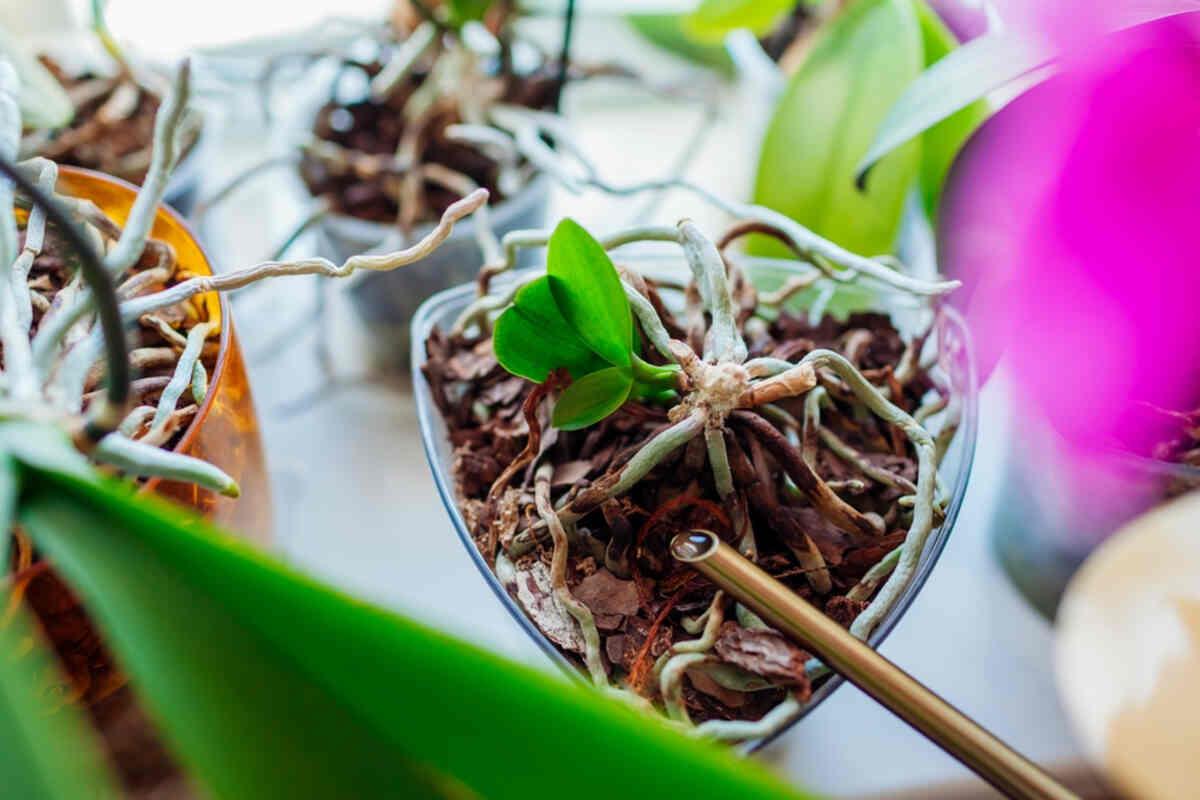
The best way to propagate an orchid depends on how the species grows. For many home growers, the practical methods are dividing a mature, multi-growth orchid; separating a healthy keiki (a young plantlet); or growing a viable backbulb. Orchid seeds require specialized sterile conditions, and an ordinary detached orchid leaf is not a reliable way to produce a new plant. The American Orchid Society (AOS) distinguishes division, backbulbs and offshoots as the common vegetative approaches.
Start by identifying your orchid
Look for the botanical name on the label. Phalaenopsis moth orchids grow upward from a single central stem (monopodial growth), so dividing the crown is usually inappropriate. Many Cattleya, Cymbidium and Oncidium orchids have several growths connected by a rhizome (sympodial growth), making division possible when a plant is mature and vigorous.
If the orchid is blooming or recently stressed, focus on healthy care first. Propagation requires viable growing tissue, suitable timing, and appropriate aftercare, not merely a leaf or any length of flower spike.
Method 1: Divide a mature, multi-growth orchid
Works for: healthy mature sympodial orchids with enough established shoots or pseudobulbs, including some cattleyas and cymbidiums. Do not divide an immature plant that lacks reserves.
- Inspect the rhizome and count viable pseudobulbs or active growths; the AOS advises retaining groups with several pseudobulbs, commonly three or four rather than single weak pieces.
- Choose a suitable time, often when flowering is over and roots are starting new growth; timing varies by genus.
- Remove the orchid from the pot and gently loosen old media. Use a clean, sharp tool to separate the rhizome into healthy sections.
- Pot divisions in an orchid medium appropriate to that species, keeping the growing points above the media.
- Follow species-specific watering and humidity guidance while roots become established; avoid leaving fresh divisions saturated.
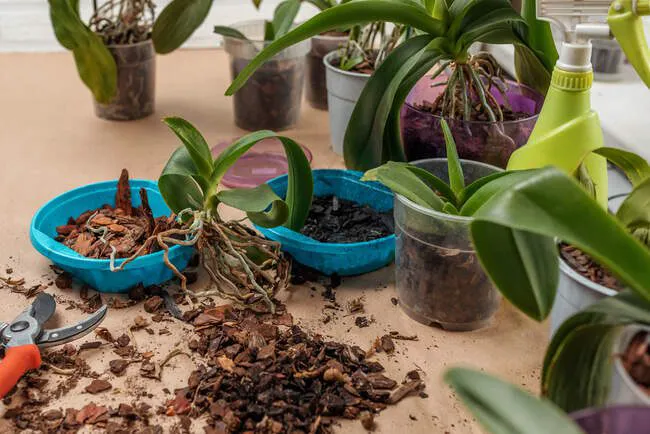
Important: You cannot propagate a typical Phalaenopsis by splitting an ordinary leaf from its crown. Misidentifying its growth form can severely damage the plant.
Method 2: Pot up a keiki (baby orchid)
Works for: orchid species and hybrids that naturally produce new plantlets, including some Phalaenopsis and Dendrobium. A keiki is a small separate plant with its own leaves and roots, not an unrooted piece of a flower.
- Look for a plantlet attached to a flower stalk or cane. Confirm it has its own healthy roots before attempting separation.
- Wait until the young roots are adequately developed for potting; avoid cutting tiny, unrooted keikis just because leaves have formed.
- Use sanitized tools to separate the plantlet while avoiding damage to its roots.
- Pot it in an appropriately small container with airy orchid media, keeping the base at the correct height.
- Provide gentle light and suitable humidity while the new plant establishes. Adjust watering to the small pot and root system.
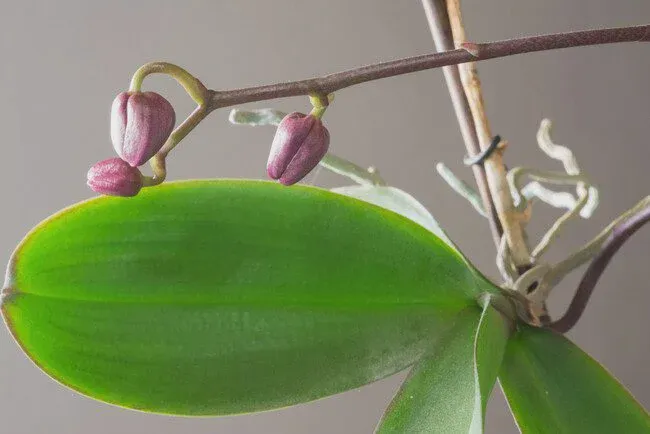
The AOS propagation overview and video library include keiki removal and potting demonstrations.
Method 3: Encourage growth from viable backbulbs
Works for: certain sympodial orchids with living old pseudobulbs and dormant buds. The pseudobulb needs viable tissue and a dormant “eye”; a dried or rotted piece cannot be made to root by prolonged soaking.
- Select healthy, firm pseudobulbs associated with a species known to respond to this method.
- Keep buds above a suitable orchid medium or lightly moist sphagnum, following genus-specific directions.
- Maintain appropriate warmth, air circulation and humidity without waterlogging the tissue.
- Watch patiently for a shoot and roots. Progress varies widely; do not expect a fixed number of days.
- Pot up once the new growth can support itself.
See the detailed AOS description of backbulb propagation.
What about stem cuttings, water propagation or leaves?
Some Dendrobium and other cane-forming orchids can be propagated from viable stem material with nodes under appropriate conditions, but “take any orchid stem cutting” is not a universal method. Commercial micropropagation and seed culture are specialized processes; they cannot be replicated by simply placing a flower spike in a glass of water. Water can help hydrate roots in appropriate circumstances, but “water propagation” does not make an unviable orchid leaf or flower stem capable of forming a new plant.
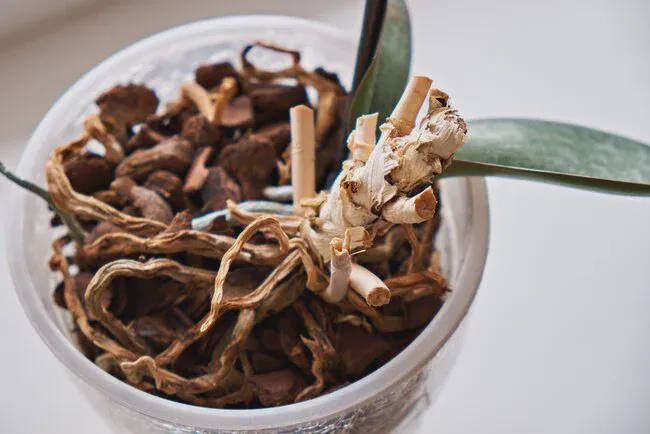
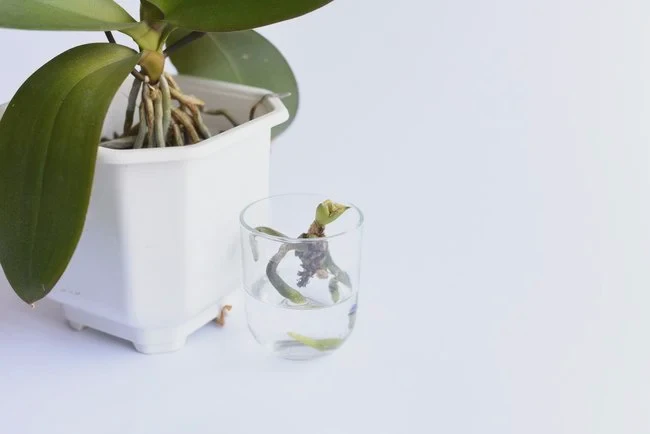
Detached orchid leaves alone are generally not a practical propagation method for common houseplant orchids. Advice promising a new plant from any orchid leaf without appropriate meristem tissue is misleading. Likewise, do not cut the flower spike of a healthy moth orchid expecting that the piece alone will become a new orchid.
Common propagation mistakes
- Dividing an undersized or stressed plant.
- Trying to root an ordinary Phalaenopsis leaf without viable growing tissue.
- Separating a keiki before it has sufficient roots.
- Using shared, unclean tools between diseased plants.
- Overwatering newly divided orchids in dense or decomposed media.
Frequently asked questions
Can you propagate an orchid from a leaf?
Not reliably for common hobby orchids. Choose a method suited to the orchid's natural growth and viable plant structures.
Can you grow a new orchid from an old flower spike?
A spike alone is not an all-purpose cutting. A natural keiki growing on a spike may be separable when it has its own roots, but a bare discarded spike is not equivalent to a rooted young orchid.
Should you divide every orchid after flowering?
No. Dividing is mainly for mature multi-growth species; many orchids are best repotted without division, and single-crown types such as Phalaenopsis should not be split casually.
Sources: AOS — How Orchids Are Propagated; AOS — Propagation; AOS — Orchid Parts and Why They Matter.