
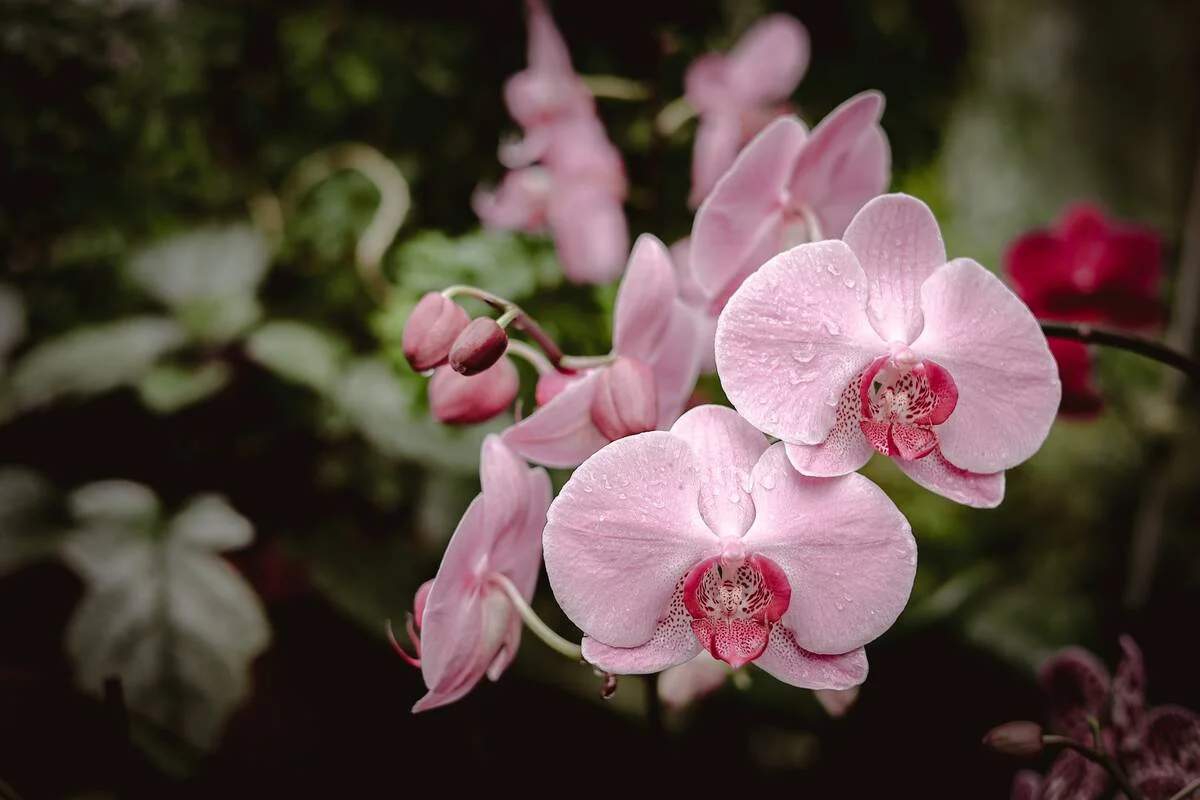
Water a potted orchid when its roots and growing medium indicate that water is needed, then let the pot drain freely. For common moth orchids (Phalaenopsis), the medium should approach dryness between thorough waterings without being left completely parched for long periods. Watering every Sunday regardless of potting mix, air movement and room temperature can cause root trouble.
The American Orchid Society (AOS) explains that many epiphytic orchids need both moisture and air around their roots; prolonged saturation can cause decay, making leaves wilt even when the pot is wet.
How to tell when an orchid needs water
- Feel the growing medium beneath the surface or use a clean wooden skewer. Check moisture inside, not just on top.
- Notice pot weight: a dry container often feels lighter than it did just after watering.
- Inspect visible roots in clear pots if present, but do not rely on root color alone without the media condition.
- Consider the genus. Some cattleyas dry more fully between waterings; Phalaenopsis and vandas lack large storage organs and can need water sooner.
Orchid pots with bark dry differently from moss-filled containers. Smaller containers and warmer, drier rooms also change how quickly water is used.
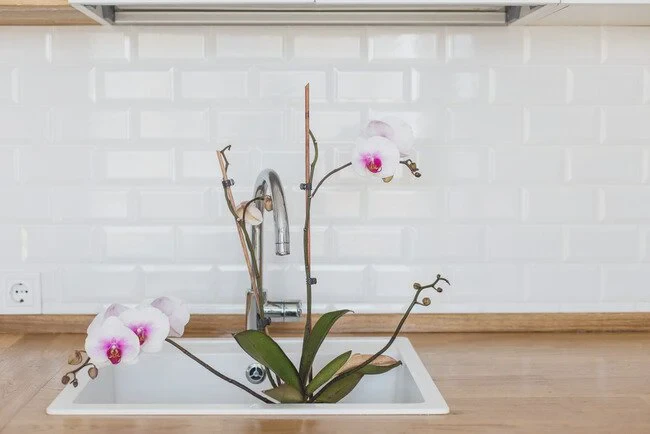
Method 1: Water through the pot in a sink
- Remove the nursery pot from any decorative outer container without drainage.
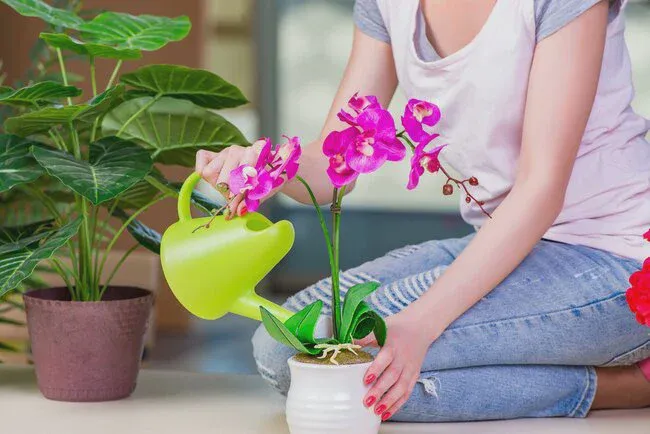
- Use room-temperature or tepid water. Pour gently over the potting medium until water passes through the drainage holes, keeping water out of the center of leaf crowns where possible.
- Allow complete drainage. If the mix is unusually dry and water runs straight through, a second slow pass can help it absorb moisture.
- Wait until dripping stops before returning the plant to a decorative container. Never leave collected water at the bottom.
Method 2: Soak a single orchid pot briefly when the medium resists water
For a very dry, water-repellent bark mix, a short, controlled soak can help re-wet the medium. Use a clean individual container, do not submerge the leaves or crown, and let the pot drain completely. Avoid sharing a soak bucket among orchids because water may spread diseases. Soaking a plant overnight or leaving it permanently in water is not a routine cure for shriveled roots.
The AOS cautions that a plant with root rot can look dehydrated because damaged roots cannot absorb water. If leaves remain shriveled despite moist medium, inspect root health before watering more. Read AOS advice on orchid dehydration.
How often should you water an orchid?
There is no universally correct “twice a week” or “every seven days” rule. The AOS Phalaenopsis culture sheet gives examples ranging from very frequent watering in hot, dry conditions to less often in cooler settings. Check the medium and roots instead of relying on an arbitrary calendar.
Water quality and temperature
Many orchids tolerate ordinary room-temperature tap water, though local hardness and dissolved salts vary. Avoid using water from a sodium-based household softener; concentrated sodium can harm roots. The AOS notes tap water, rainwater and spring water are suitable for many orchids depending on quality. Water early in the day and keep good airflow so leaves dry by night.
Four mistakes to avoid
- Leaving the orchid standing in water: prolonged wetness can deprive roots of air and lead to rot.
- Overwatering based on leaf wrinkles alone: wilted leaves can indicate dry roots or damaged, rotten roots that cannot absorb water.
- Using a communal soaking basin: potentially spreads plant pathogens between pots.
- Watering the crown at night or substituting ice for assessment: trapped crown moisture encourages decay, and cold ice cubes do not ensure effective medium flushing.
Frequently asked questions
Should an orchid pot always have drainage holes?
For most typical potted orchids, yes: water needs a way to escape. Decorative cachepots may be used around a drained nursery pot but should not hold standing water against roots.
Can orchid leaves wrinkle from too much water?
Yes. Overwatering can damage roots, preventing uptake and making leaves appear dehydrated. Check root health and the medium before changing the schedule.
Is ice-cube watering best for orchids?
The American Orchid Society recommends thorough irrigation and drainage, and cautions against ice-cube watering because it can stress tropical orchids and fail to flush salts from the medium.
Sources: AOS — Watering Techniques for Success; AOS — Phalaenopsis Culture Sheet; AOS — Water Requirements.