
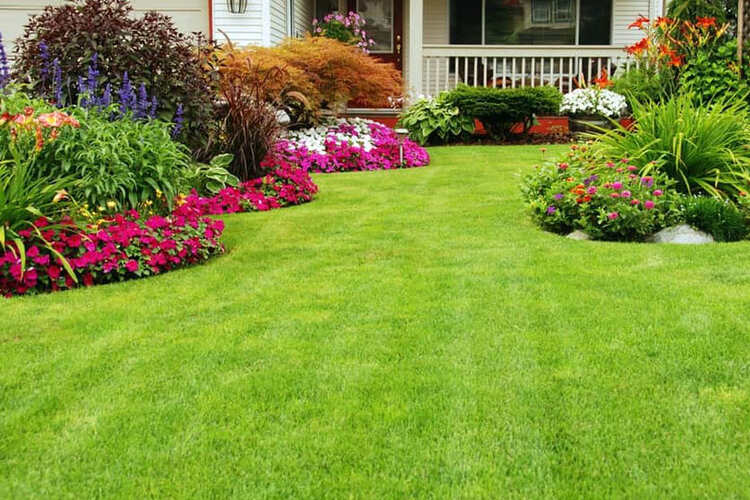
The best time to fertilize Bermuda grass is after it has fully resumed growth in spring, continuing through the active warm-season period as local recommendations allow. Do not use calendar month alone: the safe start and stop dates vary with soil temperatures, location, rainfall and your grass variety.
Spring: wait until it is really green
Do not rush out with nitrogen during a warm spell while the lawn is still mostly dormant. A University of Georgia Bermudagrass calendar advises waiting until soil temperature at 4 inches is consistently about 65°F and rising before spring nitrogen. Measure locally if possible and confirm that the lawn has resumed active growth. Early green shoots in one sunny corner do not mean every root zone is ready.
Summer: split nutrients to match growth
Bermudagrass can use nitrogen during the growing season, but a single heavy application may be less useful and riskier than measured, spaced applications. Follow a region-specific lawn calendar and your soil test, using the fertilizer label to calculate pounds of actual nitrogen rather than choosing a dose from bag size alone. High-maintenance hybrids, common Bermuda and low-input lawns may not share the same annual nitrogen target.
Keep mower settings, irrigation coverage and compaction in check; fertilizer cannot fix shade or standing water.
Late summer and fall: stop before dormancy
As days shorten and growth slows, taper and stop nitrogen according to the local extension schedule. In Georgia, late-summer and fall nitrogen can interfere with warm-season dormancy and increase the risk of spring dead spot or cold injury. A calendar from a colder or warmer region should not be copied without adjustment. Do not use a winter lawn-green-up product as a substitute for appropriate seasonal care.
How to decide what fertilizer to buy
- Identify Bermuda rather than fescue or an annual grassy weed.
- Collect a representative soil sample and follow the report for pH, potassium and phosphorus.
- Choose a turf fertilizer with an appropriate nitrogen source and guaranteed analysis.
- Calculate product quantity from label coverage; avoid overlap and spill onto hard surfaces.
- Water in if the label calls for it, and follow regional water and fertilizer restrictions.
If the lawn is brown or thin
Check for dormancy, shade, drought, poor drainage, scalping or pests before feeding. A stressed lawn may not respond to extra nitrogen and could worsen. For a step-by-step diagnosis see Bermuda grass turning brown. For shade limitations use the shade guide. Liquid fertilizer follows the same seasonal logic: liquid application timing.