
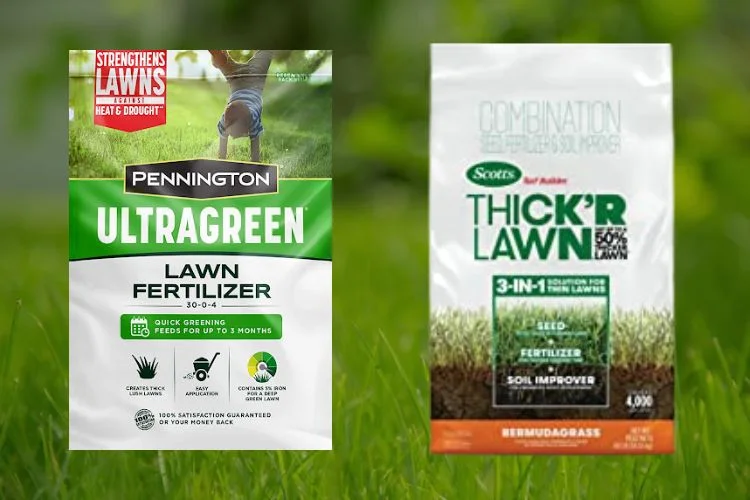
Short answer: The best fertilizer for bermudagrass is one selected from a soil test and applied while this warm-season lawn is actively growing. Nitrogen needs vary with soil, turf use and climate. Do not copy a cool-season lawn calendar or fertilize dormant grass just to make it turn green.
Affiliate disclosure: Swipe Garden may earn a commission from qualifying purchases through some links on the website. The guidance below does not depend on an affiliate relationship.
Compare common bermudagrass fertilizer types
| Type | Good choice when | Advantages | Trade-offs |
|---|---|---|---|
| Slow-release granular nitrogen | You want steadier feeding over an active growing period | Can spread nutrient delivery over more time | Release speed varies; rainfall and application rate still matter |
| Quick-release nitrogen | A soil-test-based program calls for a measured, short-term application | Nutrients can become available relatively quickly | Greater burn or runoff risk if overapplied or applied incorrectly |
| Liquid fertilizer | You have a calibrated sprayer and want precise small applications | Even distribution is possible with proper equipment | Coverage errors and repeated applications can be easy to overlook |
| Complete N–P–K product | A soil test indicates phosphorus or potassium deficiencies | Can address more than one nutrient need | Do not add phosphorus routinely when levels are sufficient |
A fertilizer's N–P–K label describes percentage nutrients by weight, not how many times to apply it. A bag labelled 20–0–10 contains 20% nitrogen, 0% phosphate and 10% potash. It does not mean “20 pounds of nitrogen per 1,000 square feet.” Follow a soil test and local extension rate before calculating the amount of product to spread.
How much nitrogen does bermudagrass need?
As a regional example, not a universal prescription, Clemson University's South Carolina maintenance program discusses roughly 2–4 pounds of actual nitrogen per 1,000 square feet across the growing season, with the amount depending partly on soil conditions. An individual application is not the same as the annual total. Local cooperative extension programs may advise different amounts, especially for low-input lawns or different climates.
For an application, first calculate lawn area, then follow the recommended pounds of actual nitrogen per area, then use the fertilizer's nitrogen percentage to find the product weight. If this calculation is unfamiliar, ask a local extension office or fertilizer supplier to check it before applying.
Best timing through the growing season
- Early spring: Confirm the lawn has greened up and is actively growing. Applying nitrogen ahead of a possible late frost may stimulate tender shoots and cause injury.
- Late spring through summer: This is the normal period for a fertilization program when bermudagrass is vigorous. Base spacing and total amount on your regional maintenance calendar.
- Late summer and fall: Avoid pushing tender growth before dormancy or frost. A soil test, not a marketing claim, should determine any need for phosphorus or potassium.
- Winter dormancy: Routine nitrogen feeding is generally inappropriate for dormant bermudagrass.
For specifics, consult the Clemson Bermudagrass Yearly Maintenance Program. Its timing is for South Carolina; adjust elsewhere for local weather, rainfall, frost dates and restrictions.
How to apply without stripes, burns or runoff
- Measure the area and read the fertilizer label before opening a bag.
- Calibrate the spreader or sprayer; make passes that provide even coverage rather than doubling the rate at overlaps.
- Keep fertilizer off sidewalks, driveways and drains. Sweep granules back onto the lawn.
- Do not fertilize before a heavy storm, on saturated ground, or where runoff will carry nutrients into waterways.
- Follow label-specific watering instructions; they vary between fertilizer formulations.
- Store leftover material dry and securely, away from children and pets.
Fertilizer will not fix every brown patch
Brown bermudagrass may simply be dormant. Dry soil, irrigation problems, shade, compaction, mower injury, insects or disease can also affect its appearance. Diagnose the cause before applying nitrogen. Sharp mower blades and an appropriate mowing height matter; our mower-blade selection guide and brown bermudagrass troubleshooting guide cover related issues.
Frequently asked questions
Is a high-nitrogen fertilizer always best?
No. Nitrogen often contributes to grass growth, but the right amount, application timing and soil-test-based phosphorus and potassium choices matter more than a high first number on the bag.
Can I fertilize right after laying new sod?
Establishment requirements vary with site preparation and sod condition. Use the sod grower's or local extension's establishment plan; do not assume established-lawn rates apply.
Should I add iron instead of nitrogen to green my lawn?
Iron can sometimes influence color without stimulating equivalent shoot growth, but it does not replace nitrogen or diagnose a true deficiency. Follow the product label and avoid staining hard surfaces.
Related Swipe Garden reading
See when to fertilize bermudagrass, bermudagrass versus fescue, and timing for liquid lawn fertilizer.