
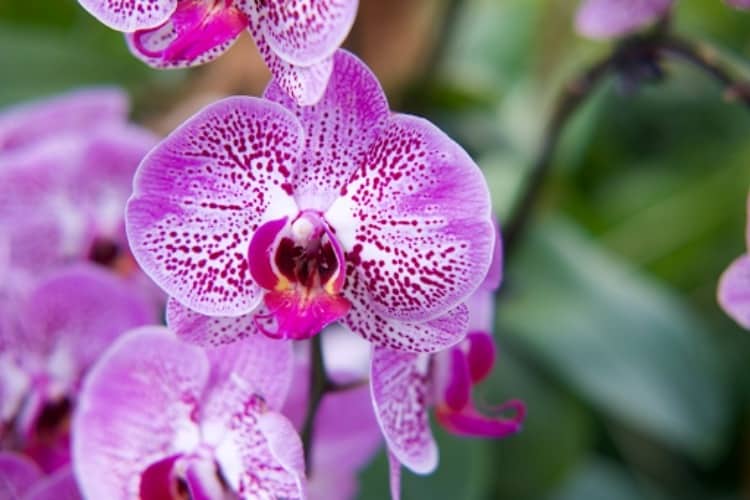
Quick answer: For a Phalaenopsis orchid in a reasonably bright room, an adjustable white LED may be enough to supplement daylight. A cluster of orchids, or a genus with higher light requirements, may suit a wider overhead fixture. Identify the orchid genus before buying: light levels that benefit one orchid can scorch another.
Affiliate disclosure: Some retailer links on this page may earn Swipe Garden a commission from qualifying purchases.
An east-facing window is often suitable for Phalaenopsis; the American Orchid Society also describes artificial lighting as a workable option. Other orchids can need considerably more light. A grow light is useful when the plant's position is too dim, but no single wattage or fixture is right for every orchid.
Which type of grow light makes sense?
| Fixture type | Practical use | Strength | Limitation |
|---|---|---|---|
| Adjustable bulb or multi-head lamp | A few orchids in a living room | Easy to direct at individual plants | Uneven output across a wide bench |
| Overhead LED panel | Several orchids or a dedicated shelf | More even coverage when correctly mounted | May be too strong or bulky for one Phalaenopsis |
| White LED strip | Orchid shelves with multiple small pots | Neat installation across a long space | Must check intensity at foliage level |
Model differences that matter for orchids
A Phalaenopsis in an east-facing window can need much less supplemental light than a high-light Cattleya or Vanda collection. The American Orchid Society's genus-specific advice matters more than a fixture's advertised suitability for “all orchids.”
| Model | Documented characteristics | Best question to ask |
|---|---|---|
| VIPARSPECTRA XS1000 | Manufacturer-listed 100W overhead grow light with a revised product line. | Can it be mounted far enough away, and is the output adjustable to the orchid's needs? |
| VIPARSPECTRA P1000 | Another manufacturer-listed 100W panel; it is a distinct series from XS1000. | Does this version's PPFD map fit the shelf and the genus grown? |
| VIVOSUN VS1000 | Manufacturer-listed 100W dimmable LED board. | Does a low dimmer setting supply adequate, even light without scorching a small collection? |
| SANSI adjustable lamp | Manufacturer sells clip-on configurations including a 30W three-head version. | Does the lamp reliably reach the leaves rather than only the flowering spike? |
Specifications: VIPARSPECTRA official models, VIVOSUN VS1000, SANSI adjustable lamp; plant care: American Orchid Society: Phalaenopsis culture and Orchid light principles. Current merchant listings may have different revisions or accessories.
Why buying a brighter lamp may not solve non-blooming
For Phalaenopsis, insufficient light can hinder flowers, but nighttime temperature patterns, plant maturity, root health and growing conditions are relevant too. Before increasing lamp brightness, check the genus-specific culture sheet; an intense LED set for high-light orchids can harm a Phalaenopsis at the same hanging distance.
Grow-light models and what to check
Choose a fixture for the actual growing area, mounting space and plant light requirements. Before buying, match the exact manufacturer model to the retailer listing and check the light-output chart, included accessories and safe installation instructions.
VIPARSPECTRA XS1000 LED
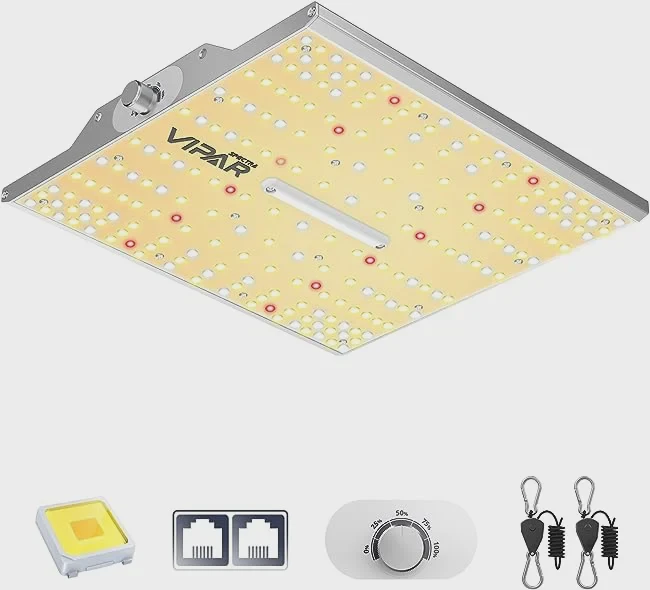
A compact panel to compare for multi-pot shelves. Check dimming, real coverage at the expected hanging height and heat around flower spikes.
Buying checklist: VIPARSPECTRA currently lists an XS1000 100W series. Verify the exact board revision and its PPFD map before using it over lower-light Phalaenopsis.
Check retailer listing and exact model
VIPARSPECTRA P1000 LED
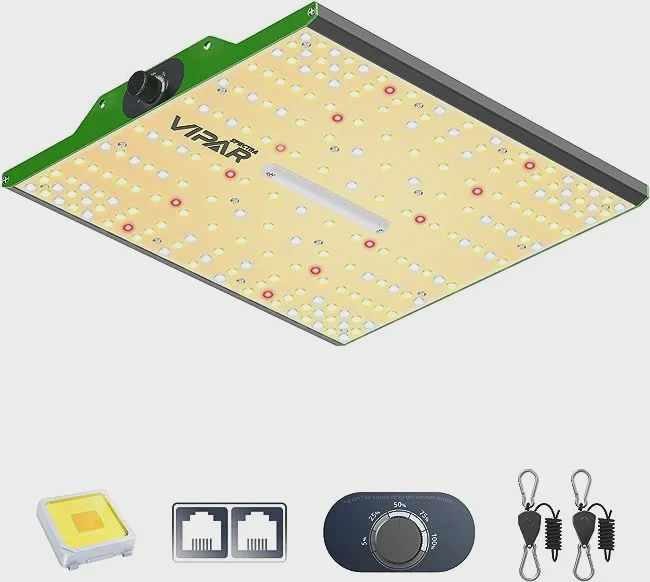
An overhead panel design to compare for a dedicated growing area. Check whether the specific model includes a timer and which mounting clearance its manual requires.
Buying checklist: VIPARSPECTRA's P1000 and XS1000 are distinct 100W models. Confirm the P1000's specific listing, mounting distance and dimming configuration.
Check retailer listing and exact model
VIVOSUN VS1000 LED
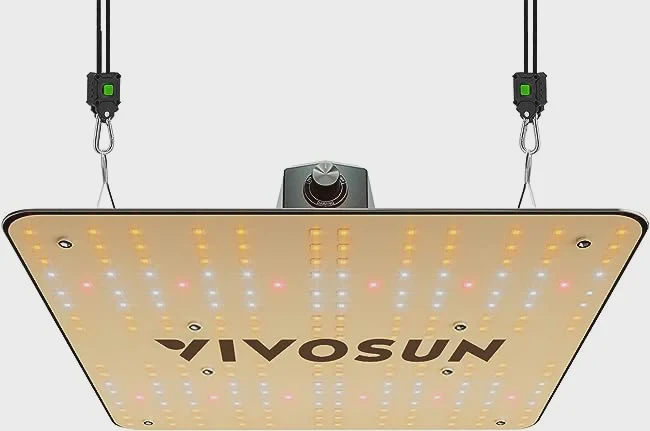
An overhead fixture option for growers who need coverage across several pots. Check the manufacturer's VS1000 light-output chart, hanging instructions and whether its control range suits your orchids.
Buying checklist: The manufacturer lists VS1000 as a dimmable 100W panel. Choose intensity based on the orchid genus and actual measured coverage, not the panel's maximum power.
Check retailer listing and exact model
SANSI Adjustable LED
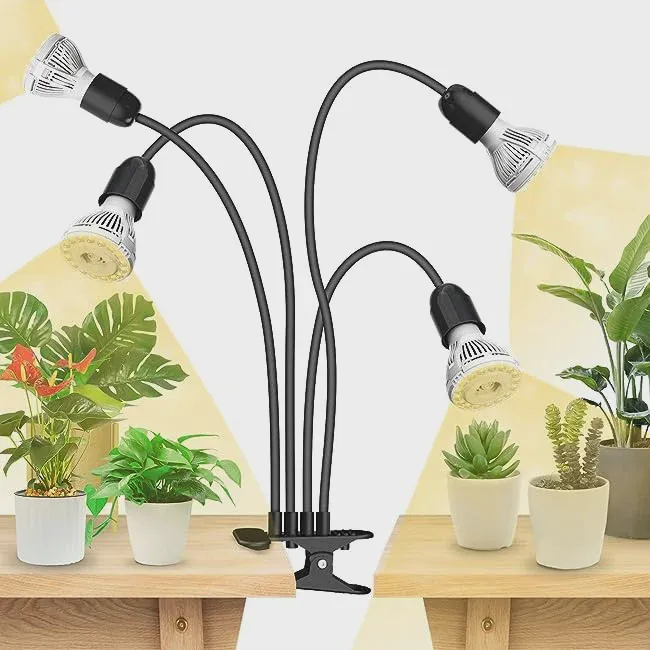
An adjustable format that may suit a small number of orchids. Check actual illuminated area, mounting stability, timer controls and whether the bulbs are included.
Buying checklist: SANSI has different adjustable 10–40W clip-on models. Select the actual head count, clip or stand type and intensity appropriate for a small orchid setup.
Check retailer listing and exact model
How to set up lighting for orchids
- Confirm the orchid genus and the window light it already receives. Phalaenopsis typically needs less intense light than many Cattleya and Vanda orchids.
- Position the lamp so that the light spreads over the leaves without touching flowers or leaves. Follow the manufacturer distance guidance; do not apply a seedling-strip height to a high-output panel.
- Set a consistent light-and-dark routine. Monitor leaves for bleaching or heat damage, and watch whether mature orchids bloom over time.
- Use a safe mounting method and keep electrical connections away from watering, misting and splashes.
Frequently asked questions
Can I use a regular white LED for an orchid?
A balanced-white LED can supplement daylight if it delivers adequate light at leaf level. Check coverage and intensity rather than the word “grow” on the package.
Why is my orchid not blooming under a grow light?
Insufficient light can prevent blooming, but orchid genus, maturity, temperature and root health also matter. Follow genus-specific culture guidance before increasing brightness.
Should the light stay on all night?
No. Orchids normally benefit from a regular day/night cycle. Use a timer and match duration to the orchid's needs and the daylight already present.