
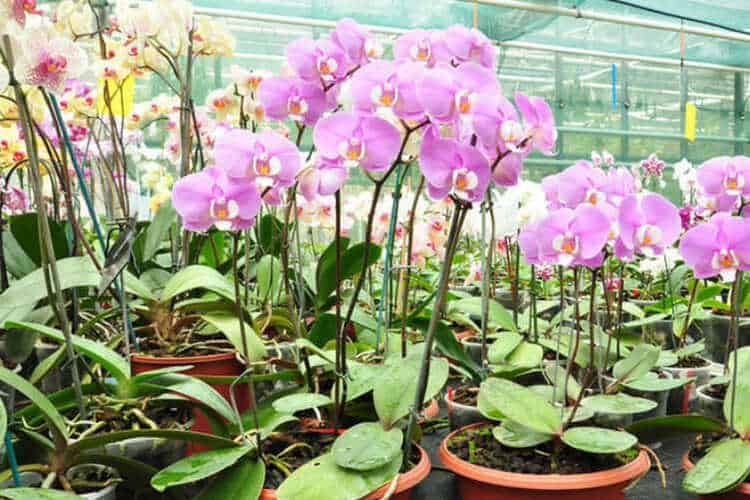
Fertilize an orchid lightly while it is actively producing healthy roots and leaves, using an appropriate soluble orchid fertilizer diluted according to its label. Start with moist, functioning roots and let the solution drain freely. Heavy doses do not make an orchid bloom faster and can injure its roots.
First identify your orchid and growing medium
A grocery-store moth orchid is typically a Phalaenopsis hybrid; a Cattleya, Cymbidium, Dendrobium or Vanda can have a different growth pattern and seasonal rest. Some orchids grow in coarse bark, others in sphagnum moss, and some are mounted with exposed roots. Their water retention and fertilizer needs are not interchangeable.
A healthy Phalaenopsis may keep growing much of the year in warm, well-lit conditions. A winter-resting deciduous orchid may need very little—or no—fertilizer while its normal rest is under way. Read the label on the plant and check the species-dependent off-season care guidance before making a feeding calendar.
Choose an appropriate fertilizer rather than a magic ratio
The numbers on the container describe nitrogen, phosphate and potash. Balanced formulas are commonly used, especially when the label is written for orchid cultivation. Some growers choose different formulations for bark-grown orchids because media, water supply and plant growth affect nutrition. There is no single “best” 20-20-20 or 30-10-10 ratio for every orchid and every water source.
Choose a complete fertilizer with micronutrients and clear directions for your orchid or medium. The American Orchid Society Phalaenopsis culture sheet discusses different approaches for bark and other mixes; the correct concentration matters as much as the headline ratio.
A safe step-by-step feeding method
- Confirm the orchid is growing and its roots are healthy. Hold fertilizer if roots are collapsing or the plant is acutely stressed.
- Examine the medium; when it is time to water, pre-moisten very dry bark or roots with plain water.
- Measure the concentrate precisely. Use the orchid label's weaker or routine-maintenance setting where the product provides one; never exceed labeled concentration.
- Apply the diluted solution to the potting medium, not to open flowers or into the crown.
- Let liquid flow freely from the pot and discard runoff in the saucer or decorative container.
- Alternate with plain-water irrigation or flush appropriately to limit salt buildup, especially in slow-draining medium.
When applying fertilizer, the roots must receive water and air as well as minerals. The orchid watering guide explains how pot weight and medium moisture help determine when to water.
How often should an orchid be fed?
Frequency depends on species, active growth, light, temperature, water quality, potting medium and fertilizer concentration. Some healthy orchids benefit from small regular doses during active growth, while dormant types should receive little or none. The American Orchid Society's “weakly, weekly” advice describes a strategy for suitable growing conditions—not a universal requirement to feed every orchid every Monday.
Check for new leaf, root or pseudobulb growth. If growth slows through shorter, darker days, reduce feeding accordingly. If you have just repotted a badly damaged plant, let healthy root growth reestablish before restarting a normal fertilizing program. See the timing and seasonal guide.
Avoid homemade fertilizer myths and salt buildup
Eggshell powder, ground chicken bones, sugary drinks and kitchen scraps cannot be measured as an immediate complete orchid nutrient solution. They may introduce contaminants or change the medium without supplying the right balance at the right time. Use a formulated feed you can dose accurately instead.
Signs suggesting excess fertilizer include brown root tips, blackened leaf tips, a crust on the pot or unusual wilting despite moisture. Stop feeding, check roots and the mix, flush only if the container drains properly, and replace heavily degraded medium when necessary. The AOS fertilizer-burn guidance explains why strong salt concentrations harm orchid roots.
A simple maintenance check
Before each proposed feeding, ask: Is this genus currently growing? Are there firm, functional roots? Is the mix neither dry to the point of rejecting water nor permanently wet? Will this product be diluted at the instructed rate? If the answer to any question is uncertain, correct that issue before using fertilizer.
For feeding during flowering, see orchid fertilization while in bloom. Better growth and flowering depend on correct care over time, not a single intensive application.