
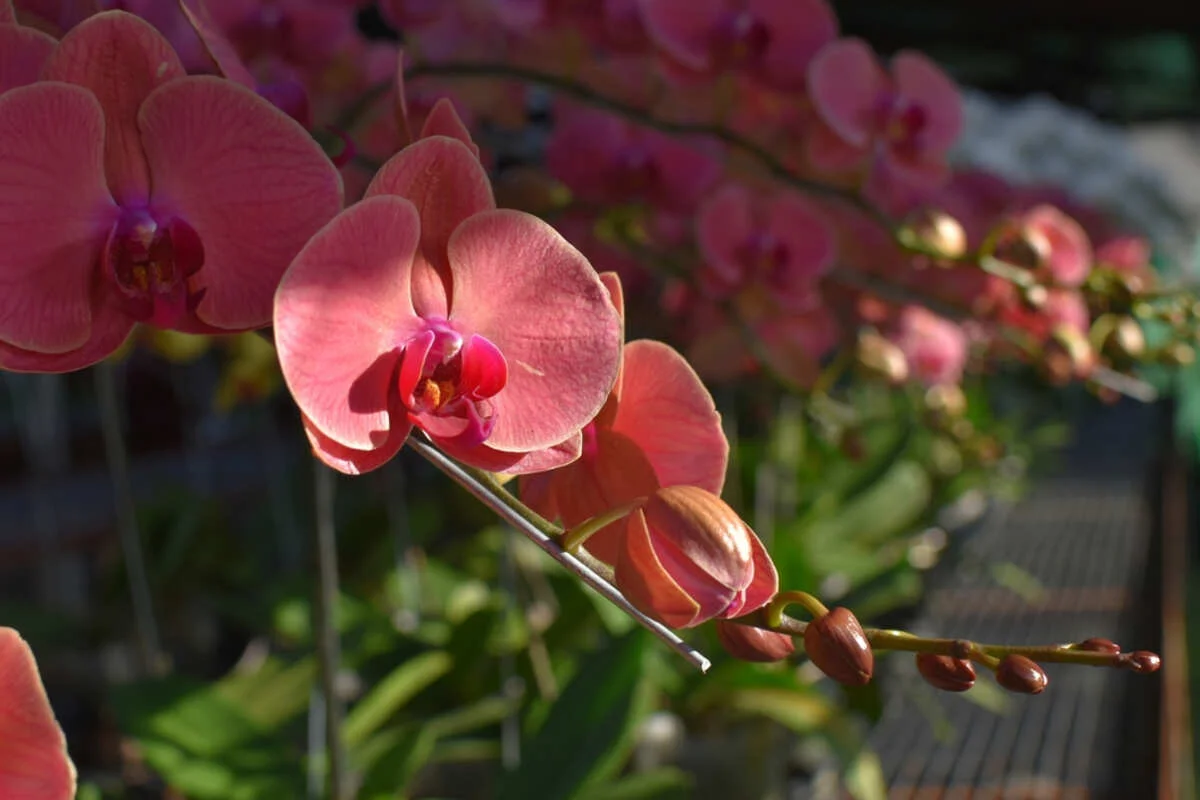
To help a moth orchid (Phalaenopsis) bloom again, focus on keeping the plant healthy, giving it suitable light, and allowing time for a new flower spike to develop. Mature moth orchids can flower again after a rest period, but bloom frequency depends on the hybrid and growing conditions. Dividing the plant, rooting a flower spike or cutting leaves does not trigger a reliable new flowering cycle.
First, identify your orchid
The advice below is mainly for the familiar supermarket moth orchid, Phalaenopsis. Orchids are a very diverse family: Cattleya, Dendrobium, Oncidium and others have different seasonal patterns, pruning needs and rest periods. Check the label, then consult a genus-specific guide. The American Orchid Society Phalaenopsis care sheet covers light, temperature, watering and feeding.
1. Give the plant appropriate light
Phalaenopsis generally needs bright, indirect light rather than prolonged harsh direct sun. An east-facing window or bright filtered position can suit many homes; watch foliage for signs of overheating or bleaching. Very dark conditions may keep a plant alive but discourage flowering. Explore light requirements for orchids while remembering genus differences.
2. Keep the roots healthy and water thoroughly
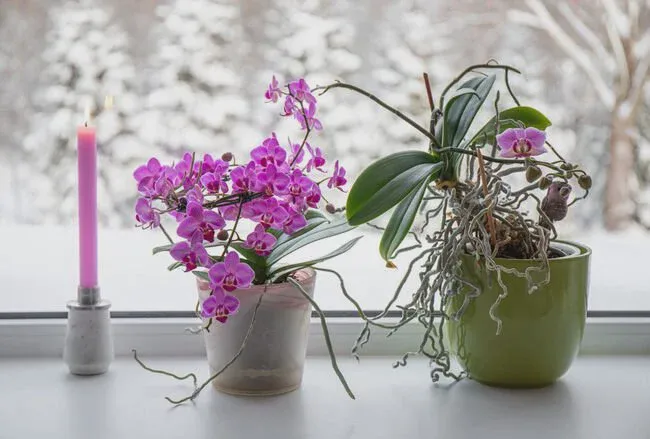
Water the potting medium thoroughly, let it drain, and wait until the medium is approaching dryness before the next watering. A Phalaenopsis has limited water storage and should not be allowed to remain bone-dry for prolonged periods, but constantly wet medium can suffocate roots. Test the potting medium and inspect visible roots rather than watering by a fixed calendar. Water early enough for the crown and leaves to dry. Never leave the pot standing in stagnant water.
3. Support active growth between flowering cycles
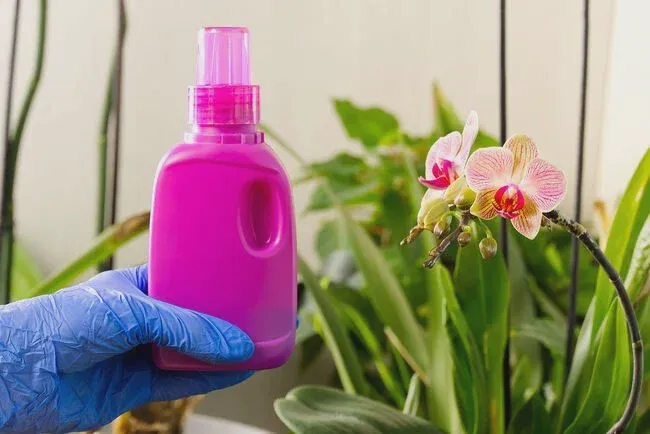
Healthy leaves and new roots provide the resources a plant needs to flower. Use an appropriate orchid mix with good drainage and airflow. Feed moderately with a balanced orchid fertilizer in line with its label and the orchid's growth. Excess fertilizer or a large single “bloom booster” dose does not compensate for inadequate light or damaged roots.
4. Understand temperature cues
Some Phalaenopsis hybrids respond to a modest period of cooler nights as flower-spike initiation begins. The American Orchid Society discusses seasonal temperatures that can encourage spikes. Avoid exposing orchids to frost, cold drafts or drastic swings. Cultivars vary, and cooler nights are not a guarantee of bloom.
5. Trim the old flower spike appropriately
When all flowers fade, inspect whether the spike remains green and the plant is strong. Some Phalaenopsis can develop a side branch from a healthy old spike; others are best allowed to produce a fresh spike. Cutting a spent spike near its base is reasonable when it has turned brown or the plant needs to invest in growth. A healthy green spike may be shortened above a node if you choose to try for secondary bloom, but this is optional rather than necessary.
Other orchid genera often do not rebloom from an old flowering spike, so do not apply Phalaenopsis pruning instructions to every orchid. The AOS orchid-care FAQ discusses why Phalaenopsis spike care is distinctive.
6. Be patient and troubleshoot before repotting
Flowering may take months, depending on the plant and growing season. Repeatedly moving, cutting or repotting a healthy orchid can add stress. If roots are rotten or potting media has broken down, repot in appropriate fresh material, ideally at a suitable stage of active root growth. If the plant is otherwise healthy but not blooming, check light and temperature before buying “instant bloom” products.
Common reasons a Phalaenopsis won't rebloom
- Too little light: the plant produces leaves but lacks energy to initiate a spike.
- Root damage: decayed medium or frequent saturation has reduced water uptake.
- Unsuitable temperatures: high heat or poorly managed night temperatures can affect spike development.
- Young or recovering plant: plant energy is going to roots and leaves.
- Wrong expectations: flower cycles vary with species, hybrid and conditions.
Frequently asked questions
Should I cut a green flower spike?
It's optional for a healthy moth orchid. A green spike may branch; a dead brown spike can be removed. Other orchids have different requirements.
How many times does a moth orchid flower in a year?
There is no universal number. Many bloom in seasonal cycles, and some hybrids can flower more often under suitable conditions. Avoid promises of a specific interval.
Does propagating an orchid make it rebloom faster?
No. Propagation makes additional plants when a species-appropriate method is used; it is not a reliable flowering treatment. See how to propagate orchids correctly.
Sources: AOS — Phalaenopsis Culture Sheet; AOS — Orchid Care FAQ; AOS — Dehydration and Root Health.