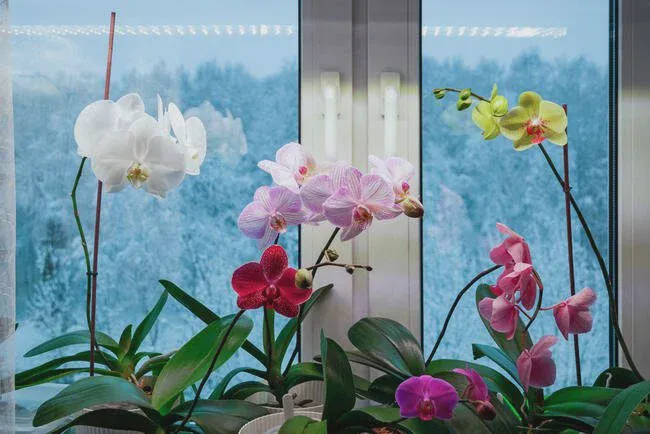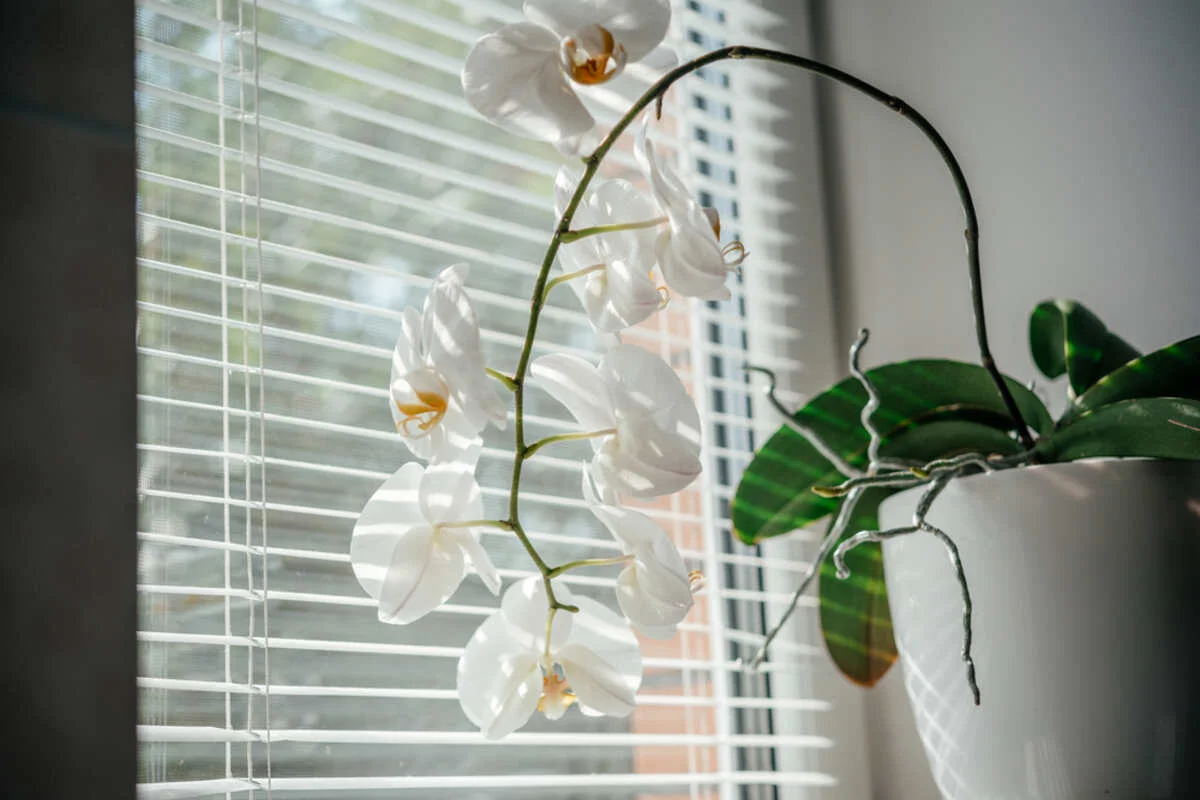
Most common indoor moth orchids (Phalaenopsis) prefer bright, filtered light rather than prolonged direct summer sun. Other orchids need more or less intensity, so no single “six to eight hours” rule works for the entire orchid family. Judge the actual light reaching the leaves, not only the direction the window faces.
Start by identifying the orchid
Phalaenopsis is the familiar supermarket orchid with broad leathery leaves and arching sprays of flowers. The American Orchid Society recommends an east-facing window in many homes; a shaded south or west exposure can also work. That window advice changes with latitude, season, nearby buildings and glazing.
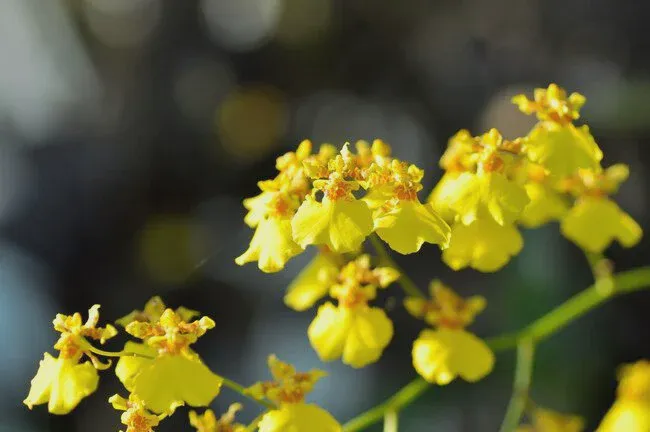
Many Oncidium and Cattleya types favor more light than a typical Phalaenopsis, while several shade-adapted slipper orchids prefer gentler conditions. Even within a genus, hybrids vary. Use the name on the nursery tag and a genus-specific American Orchid Society culture sheet rather than assigning every orchid an identical target.
How to recognize enough light
A Phalaenopsis that makes firm new foliage and roots but never blooms may be receiving insufficient light, although temperature, maturity and other conditions also affect flowering. Very deep green leaves can be one clue to low light, but leaf color varies by hybrid; judge it alongside growth and root health.
Place the orchid where the room is bright enough to read comfortably during daytime without the leaves baking in a hard patch of midday sun. Move the plant gradually if it has spent weeks in a shaded corner. An immediate jump from low to intense light can scorch existing leaves.
See how light affects reblooming for the common moth orchid.
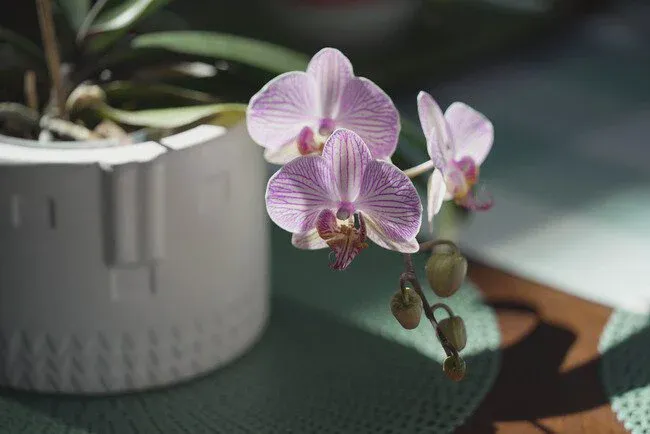
Signs of too much light
Warm, sun-exposed foliage can turn yellow-green, develop pale or white bleached patches, and eventually become dry brown or black. Once tissue is scorched it generally does not recover its original green surface. Shield the plant from the harshest exposure and evaluate new growth at its new location.
Do not mistake ordinary older-leaf yellowing for immediate sunburn. One uniform lower yellow leaf may be natural aging, whereas a patch facing an intense window after a sudden move suggests damage. Our yellow orchid leaves guide compares those patterns.
How long should an orchid receive daylight?
Photoperiod and intensity interact: weak light for many hours may deliver less usable energy than an appropriate period of brighter filtered light. The orchid family is too diverse to prescribe a universal number of hours. Indoor Phalaenopsis can often use the natural daylength of a well-lit window; growers adding lamps can choose a regular day/night schedule and adjust based on the plant and measured fixture output.
If a plant receives only brief weak winter light, move it closer to a suitable window or consider supplemental lighting. Darkness at night still matters; do not leave ordinary grow lamps running continuously. If you need a detailed equipment comparison, visit orchid grow-light setup choices.
Using LEDs without guessing from wattage
A grow light can be useful in apartments with limited window light. Position it according to the manufacturer's measured coverage and distance instructions, then observe the orchid for heat, scorch or weak growth. Electrical watts describe consumption, not the photosynthetic light arriving at the leaf surface.
Do not use an arbitrary distance or a bulb's marketing “equivalent wattage” as a guaranteed intensity measurement. Where the manufacturer supplies reliable PPFD information for your hanging height, use it rather than estimated brightness. Adjust carefully as the orchid's position and canopy develop.
A simple placement checklist
- Identify the genus and read its culture guidance.
- Assess actual window exposure and season, not just east versus west.
- Choose a stable bright position with the right degree of filtering.
- Watch new leaves, root tips and flower behavior over several weeks.
- Reduce intense sun promptly if patches start bleaching.
- Keep watering aligned with light and temperature; a dim orchid may use water much more slowly.
If the orchid is limp despite suitable light, investigate its roots instead of adding more illumination; see drooping-leaf diagnosis.