
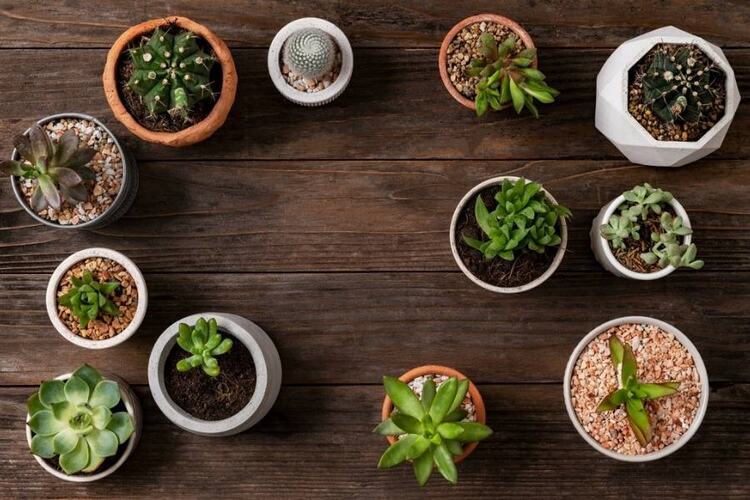
Yes, cactus mix can grow other plants, but its moisture balance must match their roots. A free-draining potting blend may suit many succulents and some dry-climate herbs. A tropical foliage plant that prefers evenly moist soil can struggle if the same mix dries extremely fast. Check the actual bag's texture and fertilizer, not just its product category.
What makes cactus soil different
Cactus mixes commonly combine structural mineral particles—perlite, pumice or coarse grit—with organic components such as composted bark or coir. The proportions vary widely by manufacturer. These components affect air spaces, drainage and the amount of water the pot retains. University of Minnesota Extension recommends well-drained mixes for many cacti and succulents, but that does not make all cactus bags interchangeable. Its growing guide also explains why excess water trapped near roots can promote rot.
Who may benefit from the mix
Many succulents, including some aloe, echeveria and jade plants, benefit from an airy root zone. Some sun-loving rosemary or thyme plants may also prefer less moisture retention than a typical indoor tropical foliage plant. However, species, pot size and climate matter: a succulent under weak indoor light dries differently from one in summer sun. Do not assume that all herbs, bonsai trees or snake plants need exactly one blend. Choose based on observed moisture and species-specific guidance, not generic labels.
Which plants may need a different mix
Calathea and other tropical foliage plants often need more moisture retention, although their roots still require oxygen. Extremely gritty cactus mix can leave them dry too rapidly; adding a suitable organic houseplant component can help if the base blend is very coarse. Conversely, adding too much fine compost to cactus mix may eliminate its key advantage. If unsure, choose a formulated houseplant mix instead. See Calathea leaf-curling diagnosis for the risks of both dry soil and waterlogging.
A practical potting test
- Identify your plant and its preferred moisture conditions.
- Read the bag for ingredients, pre-added fertilizer and any wetting agent.
- Use a container with working drainage holes and an appropriate root-ball size.
- Wet a test portion; it should drain but still hold enough moisture for that plant.
- After transplanting, check soil several centimeters down and lift the pot before deciding when to water.
Common myths to avoid
A fast-draining mix does not mean a plant should never be watered. Nor is ordinary potting soil automatically unsuitable for every succulent if it is amended appropriately. Stones in the bottom of a container cannot replace a drainage opening. Soil labels do not guarantee an ideal nutrient ratio; fertilizer depends on plant growth and any nutrients already present. Avoid mixing raw coffee grounds in merely to make a soil “richer.” For differences see coffee grounds and succulents and cactus mix for bonsai.