
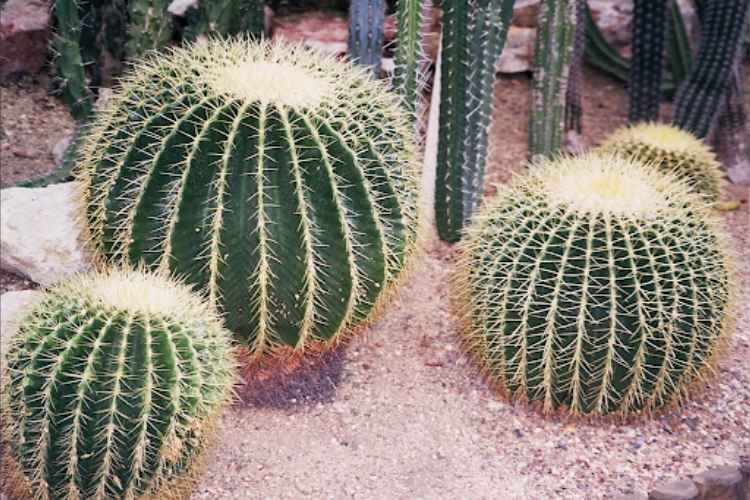
Many desert cacti appreciate direct sunshine; forest cacti often need bright filtered light instead. The word “cactus” covers a diverse plant family, so a single required number of sunlight hours is misleading. A sun-loving cactus recently grown in dim nursery light can also scorch if moved directly into strong outdoor sunlight.
Identify the kind of cactus first
Many desert species evolved in open habitats and produce more compact growth under sufficient light. Forest epiphytes such as Christmas cactus grow among tree branches and are not adapted to the same relentless midday exposure. The Royal Horticultural Society's cacti guide covers differing care and how to avoid harsh exposure. If the plant label contains a botanical name, use that name to find reliable species-level instructions instead of following a universal “six hours of sun” formula.
Is a sunny indoor window enough?
For many desert species, a bright window with good direct sun is helpful, although glass, curtains, season and distance from the window affect actual intensity. Supplemental horticultural lighting can help during dark winters, but wattage alone is not a measurement of light reaching the plant. New growth stretching into thin or pale extensions suggests inadequate brightness. Previously elongated sections will not become compact again; improved new growth is the useful outcome. See grow lights versus sunlight for the distinction.
How to prevent sunburn
- Identify the species and how much light it has received recently.
- Start with bright filtered light or gentler morning sun when moving it.
- Increase exposure gradually while watching for pale, tan, scorched or papery patches.
- Avoid sudden placement against hot glass or reflective walls.
- Reduce the harshest exposure if injury develops rather than moving straight into permanent deep shade.
Sun stress versus other damage
New red or purple coloring can be a protective response in some species and is not necessarily lethal scorch. Burnt patches often remain scarred. A black, soft or rapidly spreading area is more concerning for cold or rot, not merely excess sunshine; check roots, stem firmness and recent conditions. Read why cactus tissue turns black rather than attributing all dark discoloration to sun.
Watering and light work together
A cactus in strong warmth and light may use water faster than one sitting in winter shade, but many still need the substrate to dry between watering events. Provide a pot with drainage holes and a free-draining mix. Do not follow a fixed weekly watering rule or assume severe sun exposure can be compensated for by repeatedly saturating roots. For species-specific cultivation principles, consult University of Minnesota Extension's cacti and succulents guide.