
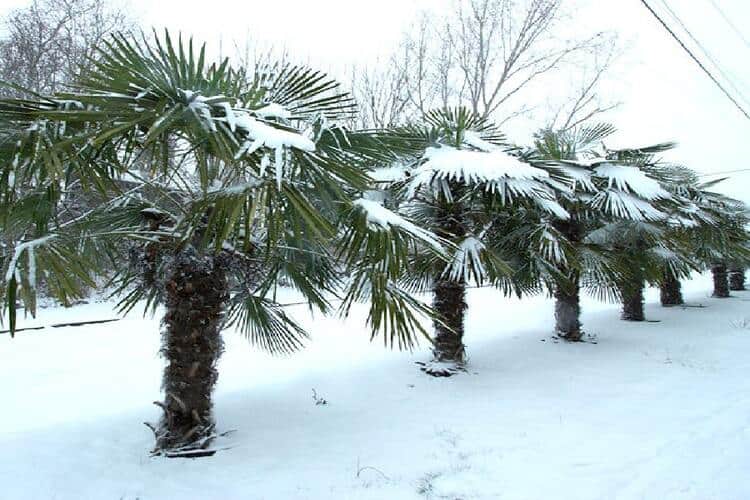
Whether a palm should be fertilized in winter depends on where it grows and whether it is actively growing. A palm outside in cold soil or suffering frost damage should not receive an improvised fertilizer dose to force recovery. In frost-free tropical or subtropical conditions, nutrient uptake and locally recommended fertilizer programs may continue through winter.
Cold-winter outdoor palms
Cold soil slows root activity, and fertilizer cannot reverse frozen or damaged foliage. Applying extra soluble nutrients while the palm is stressed can increase salt problems without solving the cause. Protect vulnerable palms from extreme temperatures according to species; after a freeze, monitor the emerging spear and new leaf growth as conditions warm rather than trying to green up necrotic tissue.
UF/IFAS explains that leaves emerging after cold events can show temporary nutrient-like symptoms caused by reduced nutrient uptake in cool soil. These often improve as soil warms. A routine, balanced program is more reliable than sudden foliar “rescue” feeding.
Frost-free climates are different
In the warmest climates palms may grow in every season, and regional extension programs sometimes recommend multiple controlled-release applications across the year. Follow the local program and product's release period, soil type and weather restrictions rather than a blanket “never fertilize in winter” rule. For example, nutrient leaching in sandy tropical soils differs from a palm in a cold container.
Indoor and potted palms
Judge a houseplant by light, temperature and actual growth. Short winter days may reduce growth indoors even when the room feels warm. Reduce or pause feeding when growth has slowed, avoid saturated potting media, and use a dilute dose only as appropriate for the species and product. Don't compensate for dim light by increasing fertilizer.
What to do after frost or yellowing
- Identify the palm species and expected cold tolerance.
- Check the growing point and wait for evidence of new growth before drastic pruning.
- Keep the root zone appropriately moist but not waterlogged.
- Check whether yellowing is on oldest or newest leaves; potassium and manganese problems can look different.
- Consult local extension or an arborist for a severely damaged or declining palm. Do not add trace elements without evidence.
A practical rule
For cold-stressed palms, avoid opportunistic winter feeding. For actively growing palms in genuinely warm regions, follow the local palm fertility calendar. For routine care see when palms should be fertilized and how to apply palm fertilizer.