
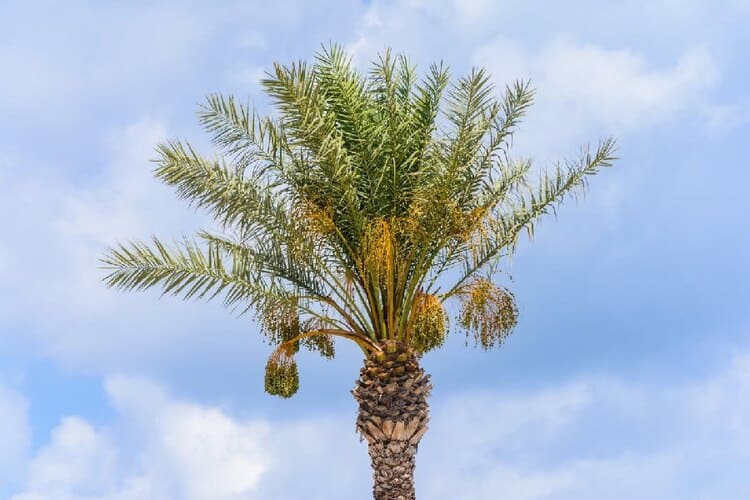
To fertilize a landscape palm properly, start with the plant species, soil and a locally recommended fertilizer analysis. In sandy Florida landscapes, UF/IFAS favors controlled-release blends supplying nitrogen, potassium, magnesium and micronutrients rather than nitrogen alone. The exact product, dose and schedule depend on soil conditions and the palm's size.
Choose a formula for palms, not only for quick greening
In nutrient-poor Florida soils, potassium deficiency is common and may cause yellow-orange spotting, tip death and frizzling on older leaves. Magnesium and manganese deficiencies can cause different patterns. Generic high-nitrogen turf fertilizers may worsen the balance by stimulating growth without enough accompanying potassium. UF/IFAS guidance describes controlled-release 8-2-12-4Mg-type blends with micronutrients for established landscape palms in that region.
Outside Florida, follow local research-based recommendations. A name or NPK number on the bag does not confirm that nutrients release at the rate palms can use.
Application steps
- Read the label: verify palm use, release period, area covered, maximum rate and watering rules.
- Check soil and drainage: a palm with root damage or poor drainage may not absorb nutrients despite adequate soil supply.
- Measure the fertilized area: feeder roots extend outward; avoid piling granules against the trunk.
- Broadcast evenly: distribute the measured product across the intended root zone, not in isolated handfuls.
- Avoid overlapping doses: neighboring lawn and ornamental fertilizers may also reach palm roots.
- Water as directed: make sure fertilizer is incorporated according to its label without heavy runoff.
- Monitor new leaves: older injured tissue generally will not repair itself; response is best judged on newer growth.
Newly installed and container palms need their own plan
A transplanted palm's main priorities are correct planting depth, root establishment and moisture management. Fertilizer timing and form vary by species, soil and the nursery's existing slow-release products. For container palms, check the potting mix and the label's container-specific rate; do not copy large-landscape application quantities into a pot.
Do yellow leaves always mean more fertilizer?
No. Yellowing can result from natural aging, water stress, root disease, cold injury or nutrient deficiency. Location matters: potassium symptoms often appear on older palm fronds, while some manganese problems affect new growth. UF/IFAS illustrates the patterns in its nutrient deficiency guide. Do not indiscriminately cut off partly living, nutrient-deficient fronds; removal can make nutritional stress worse, and always keep the central growing point intact.
Timing and troubleshooting
Feed on a regional program appropriate to actively growing palms and the fertilizer's release life; avoid extra applications simply because a month changed. After cold injury or storm damage, diagnose the problem before adding fertilizer. See winter palm feeding and using palm fertilizer around other plants.