
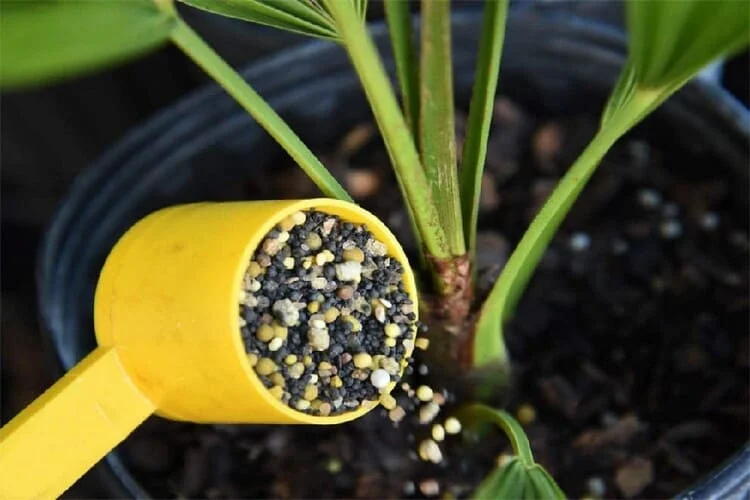
Fertilize palms according to local growing conditions and the fertilizer's release period, not a single universal month. Healthy landscape palms in frost-free regions may need routine nutrition year-round; palms growing in cooler locations or in containers can slow down and need fewer applications. Avoid treating every yellow frond as an urgent reason to feed.
Use growth and climate to set the calendar
Research-based landscape recommendations from UF/IFAS are designed partly for sandy soils that leach potassium and magnesium readily. A controlled-release palm fertilizer can support steady nutrient supply without large soluble pulses, and repeat applications should follow both the label and local program. Where winters are cold, active growth and root uptake slow; do not apply an automatic winter nitrogen dose to force green color.
What about spring, summer and fall?
Spring can be a suitable start in temperate locations when sustained warming brings new growth. During a warm growing season, adhere to the product's stated longevity rather than reapplying every time older leaves look yellow. In regions with winter dormancy or cold injury risk, avoid adding unnecessary late fertilizer. In truly tropical landscapes, season and rainfall may matter more than air-temperature labels such as “spring feeding.”
How often should a palm be fed?
There is no reliable one-size-fits-all interval. UF/IFAS describes multiple applications per year for suitable slow-release landscape products in Florida, but the right frequency depends on the formula, rainfall, soil type, species and existing nutrient supply. A high-nitrogen lawn product is not a substitute for a balanced palm blend. For palms in pots, follow container directions and reduce feeding when growth slows.
How to tell if your palm needs attention
- Older fronds yellow-orange or spotted: consider potassium deficiency, but check with a reliable palm diagnostic key.
- New growth emerges distorted: could point to another deficiency or growing-point injury, requiring careful assessment.
- One older leaf turns brown while new growth is healthy: natural leaf senescence may be occurring.
- Whole plant droops or crown declines: examine irrigation, drainage, planting depth and pests before fertilizing.
See the application walkthrough. If cold weather is approaching, read winter palm fertilization before taking action.
Bottom line
Use the local palm calendar and label to plan measured nutrition. Healthy new growth is a better sign of success than whether an older, already-damaged frond turns green again.