
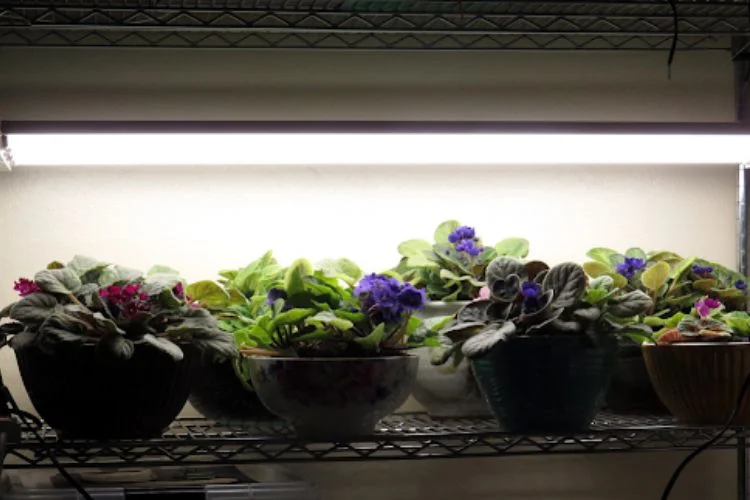
Yes. Fluorescent shop lights can grow seedlings and supplement indoor foliage when their tubes are close enough and their output covers the crop. Modern LEDs are often more efficient, but there is no reason to discard a safe, working fluorescent fixture solely because it is older technology.
When fluorescent lights work
University of Minnesota Extension includes fluorescent tubes among suitable artificial sources for growing plants. Their relatively broad illumination is practical for a flat tray of seedlings, microgreens or low-to-medium-light houseplants. The main constraint is intensity: tubes need to be close to the growing tips and lifted as plants grow. A tall plant far below the fixture may receive little helpful light at its lower leaves. Running fluorescent lights on a timer is more predictable than trying to use an office ceiling light from several feet away.
Tubes and fixture types
T5 and T8 refer to tube diameter, not to the presence of a magical plant-growing spectrum. Both can help when chosen with compatible ballasts and sufficient light output. Compact fluorescent lamps can illuminate individual pots but are less convenient for uniform tray coverage. Select a white/full-spectrum tube as needed; a combination of cool-white and daylight lamps has long been used by indoor seed starters. Old fluorescent tubes contain mercury and require appropriate handling at disposal.
Light schedule and mounting
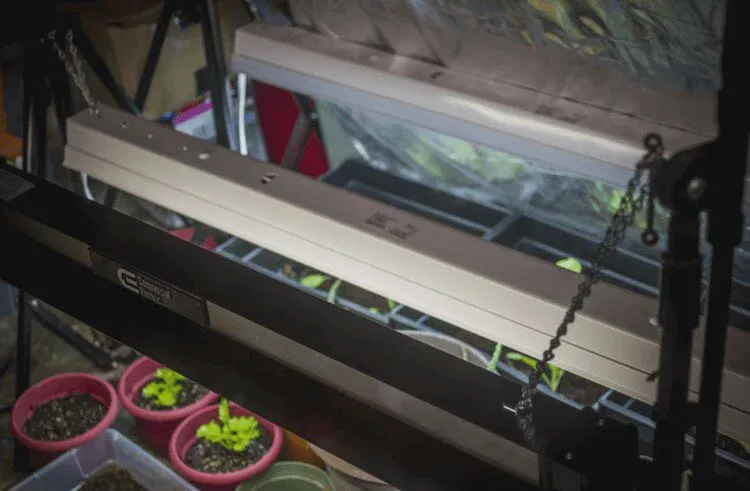
For seedlings, University of Minnesota recommends bright light for roughly 16–18 hours daily, and other extension guidance emphasizes keeping ordinary fluorescent fixtures close enough to prevent stretching. Use adjustable chains or stable brackets, and do not let foliage touch warm tubes. A plant in a sunlit window may need fewer supplemental hours than one in a basement. Avoid continuous 24-hour operation by default; a timer preserves a night period.
Signs that more light is needed
Seedlings that lean or make elongated stems are not receiving enough effective light. Move the fixture lower within a safe distance, add another tube to cover more of the tray, or switch to a stronger LED unit. Pale upper leaves can instead indicate too much light or another stress; do not blindly move the lamp closer. Plants under fluorescents still need normal watering and airflow, because steady low light can slow water use and leave potting mix wet longer.
Fluorescent versus LED
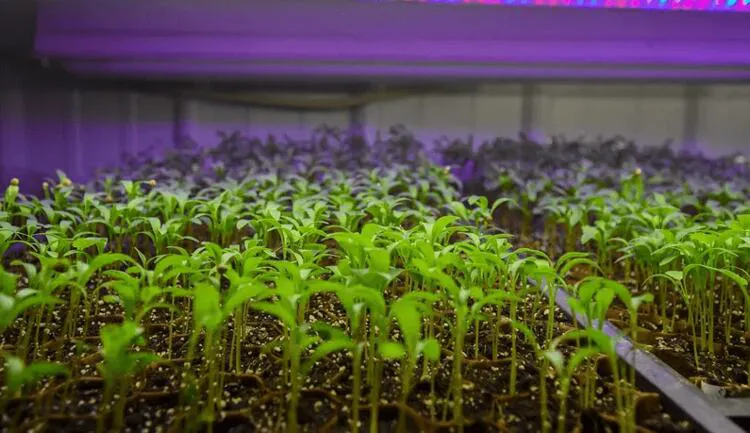
An efficient LED generally draws less electricity for comparable usable output and often lasts longer. Fluorescent tubes may offer a cheap entry point if you already own compatible hardware; their broader bar shape is helpful on shelves. Compare electricity use, replacement cost, fixture size and PPFD at plant level before upgrading. Avoid believing that fluorescent means only blue or that LEDs always produce no heat: actual products vary.
Practical checklist
- Check ballast/tube compatibility and inspect for damage.
- Mount the lights securely over the full tray.
- Use a timer and raise the fixtures as seedlings grow.
- Recycle spent fluorescent tubes according to local mercury-lamp rules.
Sources and related guides
- University of Minnesota Extension
- University of Minnesota Extension
- University of New Hampshire Extension
Read next: fluorescent vs led grow light · t5 vs t8 grow lights · best grow lights for seedlings