
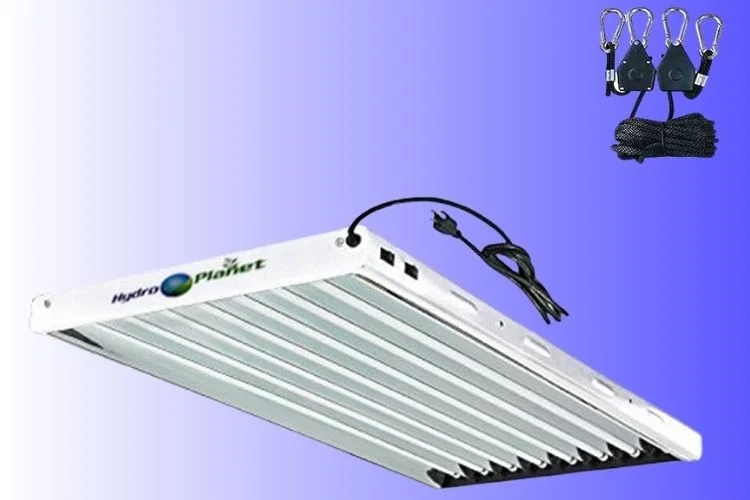
T5 and T8 describe fluorescent tube diameters, not an automatic ranking of grow-light quality. T5 tubes are five-eighths of an inch in diameter and T8 tubes are eight-eighths (one inch). Both can grow seedlings when the fixture supplies adequate light close to the leaves; ballast compatibility and complete fixture output matter more than tube size alone.
What the labels mean
The 'T' refers to a tubular lamp, and the number counts eighths of an inch in tube diameter. T5 and T8 equipment use different compatible bases and ballasts; do not force one type into another fixture. Labels such as T5 HO can refer to high-output versions, so the words T5 and T8 alone cannot tell you the power consumption or photosynthetic output. Check the real lamp specification rather than inferring growth performance from thickness.
Growing seedlings under fluorescent tubes
University of Minnesota and University of New Hampshire Extension both describe ordinary fluorescent shop lights as useful for raising seedlings. Suspended bars can cover flats fairly evenly if kept close enough to the tops, and adjustable chains make them easy to raise with the plants. The correct distance depends on fixture output, heat and coverage. Use the particular extension guidance for simple shop-light setups rather than assuming a powerful horticultural lamp should hang at the same height.
Brightness, watts and efficiency
A high-output T5 system can produce more light than a lower-output T8, but it may also use more electricity. High-quality T8 fixtures can successfully grow transplants when they deliver a suitable daily light integral. Compare actual watts, lamp life, replacement cost and canopy-level PPFD. An LED bar could also be an efficient replacement, though LED retrofit tubes sometimes require specific ballasts or rewiring and should only be installed as the manufacturer directs.
Light color and growing stages
Cool-white, daylight and horticultural-spectrum fluorescent tubes can all produce usable plant light. The visible color is not the sole factor in growth: sufficient intensity and daily duration are essential. A tray of newly germinated seedlings needs robust overhead illumination to avoid long, weak stems. Once plants outgrow the small flats, the canopy footprint and height may require different placement or a larger system.
Safe ownership and disposal
Fluorescent lamps can contain mercury and should be recycled or handled under local lamp-disposal guidance. Replace worn or flickering tubes when recommended, and never bypass the ballast to fit an incompatible lamp. Protect fixtures from water and avoid letting seedlings touch warm tubes. If choosing a completely new system, compare an appropriate LED bar with the cost of fluorescent fixtures and future lamp replacements.
Practical checks
- Match the source and spectrum to your actual crop and growing stage.
- Check PPFD at a stated distance instead of trusting an equivalency label.
- Use a stable light/dark schedule, and adjust only when new growth suggests it.
- Keep electrical fittings safely mounted and away from watering.
Credible sources
- University of Minnesota Extension — lighting guidance
- University of Minnesota Extension — lighting guidance
- University of New Hampshire Extension — lighting guidance
Related guides: do fluorescent lights help plants grow · fluorescent vs led grow light · how to choose a grow light