
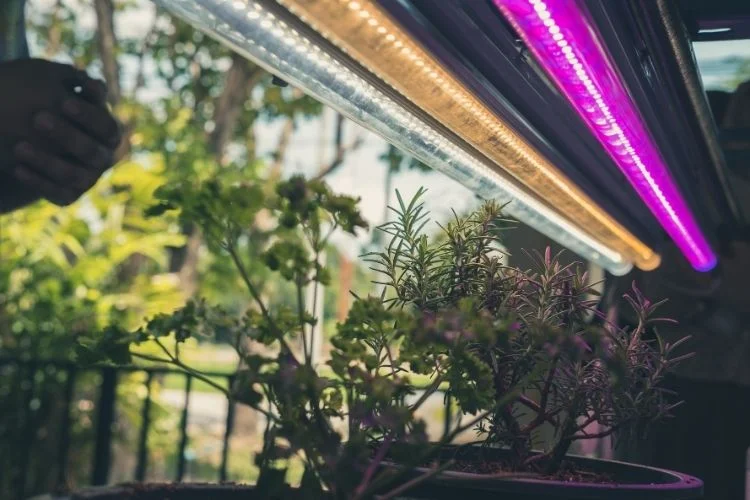
Sunlight is a highly effective light source for plants, and grow lights are useful where natural light is insufficient, inconsistent or difficult to control. A well-designed LED setup can grow plants entirely indoors, but a bright window or greenhouse may reduce how much electricity you need. The best answer depends on the crop, season and actual daily light reaching the leaves.
What sunlight provides
Direct outdoor sunlight typically supplies far more light than a dim indoor window, and it contains a broad spectrum that plants can use. Glass, awnings, walls, season and latitude change the light available indoors. A south-facing window in one hemisphere and time of year is not a universal guarantee of enough light. Observe the duration and intensity of direct and indirect light at the actual plant location.
What grow lights provide
Artificial light offers a repeatable schedule and can illuminate a seed tray in winter or a shelf far from windows. Different LEDs produce different photosynthetic output and distribution; choosing a fixture with a credible PPFD map is helpful. Grow lights do not create sunlight's exact environment: temperature, airflow, humidity and nutrients still need attention. An LED plant may become leggy if the fixture is too dim, and it can scorch if the lamp is too intense.
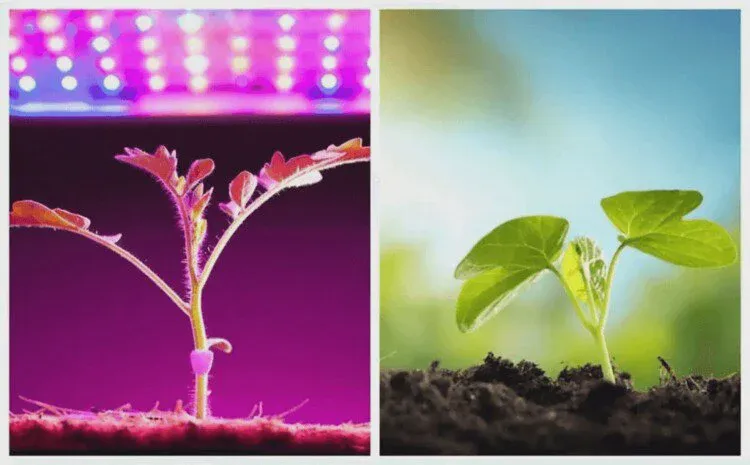
How to combine both sources
If a plant receives a few hours of useful daylight, a grow light can fill the deficit rather than run at full power throughout the day. Avoid abruptly moving shade-adapted leaves from a dim room into strong direct sun; increase exposure gradually. In a greenhouse, supplemental lighting may be worthwhile during darker weeks, but run time should reflect the existing sunlight. Purdue Extension explains this in terms of daily light integral, or the total light accumulated over the day.
Seedling and houseplant differences
Young seedlings often stretch badly in windows because the intensity and duration are inadequate, especially early in spring. University of Minnesota Extension recommends fluorescent or LED lighting for reliable indoor seed starting. Some established foliage plants do well in moderate windows, while citrus and sun-loving herbs need much brighter conditions. A lamp that is perfect for a peace lily may be insufficient for basil.
Environmental and practical costs
Using existing daylight costs no electricity for the light itself, though windows may influence room heat. Artificial lights consume power and require safe installation but make more locations usable for plants. Evaluate the electricity cost, strength of output, equipment durability and any cooling needed. There is no need to choose one source exclusively: many successful indoor gardens use both.
Practical checklist
- Observe the actual light available at your window.
- Determine plant light category and seasonal changes.
- Add measured supplemental light where growth is weak.
- Adjust the timer for meaningful natural sunlight; retain nightly darkness.
Sources and related guides
Read next: how to choose a grow light · best grow lights for seedlings · what size grow light do i need