
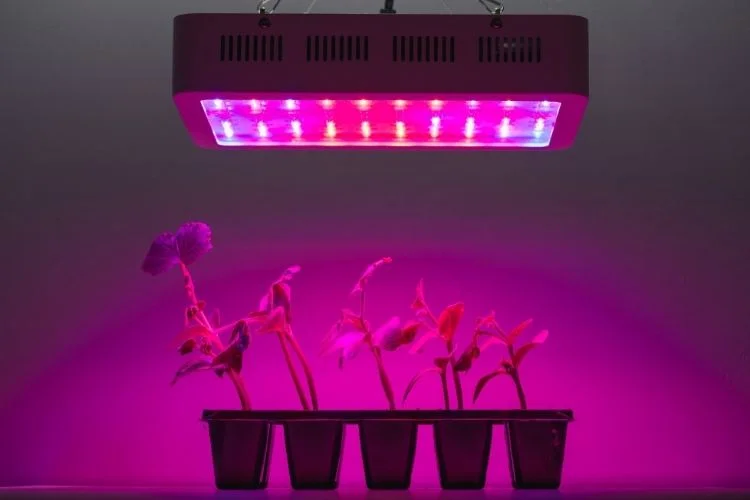
A grow light is designed and specified for plant lighting, while an ordinary lamp is intended for people. Both can emit light plants use; the important difference is whether enough of that light reaches the canopy evenly over the required period. The word 'grow' does not automatically make a poorly designed bulb superior to a good white LED.
What plants need from light
Plants use photons within the photosynthetically active range to build carbohydrates. In practical terms, growers need the right intensity, distribution, spectrum and duration for a particular species. A desk light may look bright from the sofa while illuminating only a tiny section of a plant. A grow fixture should ideally offer measured PPFD at named distances and an expected coverage footprint. Color temperature and lumens describe aspects of visible light but do not substitute for plant-level PPFD.
When a normal bulb is enough
A few low-to-medium-light foliage plants beside a window may benefit from a balanced white LED in a safely rated lamp. The more natural light you already have, the less supplemental light may be necessary. Keep the fixture free of shades that block the beam, and track whether leaves grow at normal size rather than becoming smaller or widely spaced. Several seed trays or a productive herb shelf are better served by a dedicated bar or panel designed for the full footprint.
How the fixtures differ
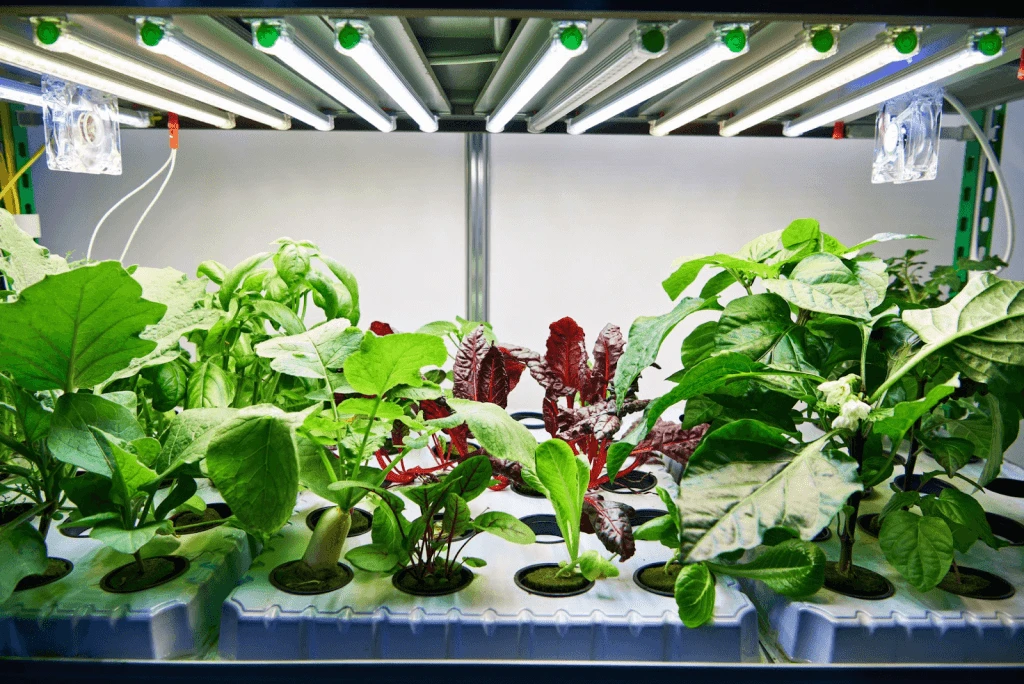
Grow fixtures often provide hanging kits, dimming and horticultural PPFD maps; household lamps focus on appearance and comfortable human lighting. Neither style guarantees uniform canopy light if placed too far away. Bright horticultural panels may bleach leaves when too close, while weak household bulbs can create spindly growth. Compare actual electrical input and canopy measurements—not a marketing claim like '1000W equivalent'—and consider easy adjustability as plants grow.
A useful schedule
Most indoor plants benefit from a predictable light and dark cycle. University of Minnesota Extension describes approximately 16–18 hours for seedlings and shorter or species-specific periods for houseplants; flowering species sometimes need special nighttime conditions. Adding extra hours cannot always replace low light intensity. Purdue's DLI concept combines canopy light and time to help make sensible comparisons.
Choose for your particular space
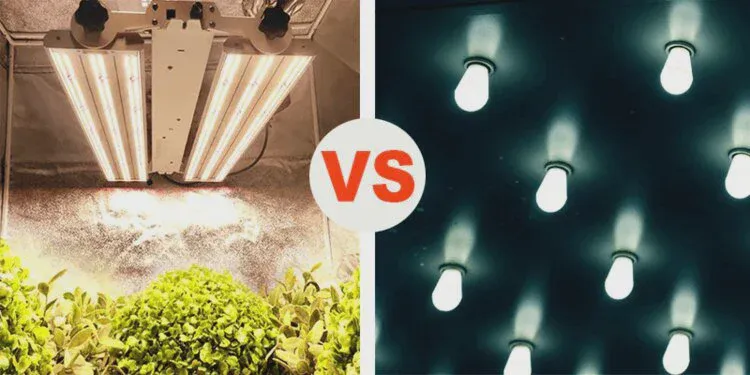
Start with the plants: a pothos and a tomato seedling are not equivalent. Then consider where you will mount the light, how much natural sun enters and how many leaves the beam covers. A white LED bulb in a floor lamp can be economical for one decorative plant; a strong adjustable bar is usually simpler for growing multiple seedlings. Safely rated wiring and dry outlets matter regardless of branding.
Practical checklist
- Match plant light needs to the space.
- Measure or compare canopy-level light, not room brightness.
- Prefer adjustable mounting and a regular timer.
- Change distance or output based on growth rather than assumptions.
Sources and related guides
Read next: can i use a regular lamp to grow plants · what is the difference between led lights and grow lights · what size grow light do i need