
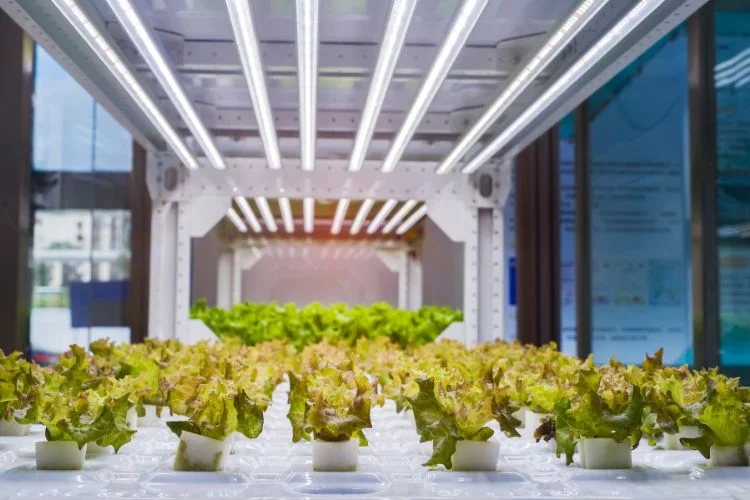
A grow light can itself be an LED light. The difference is its design goal and published performance: horticultural LEDs aim to deliver an appropriate quantity and distribution of plant-usable light, while ordinary LEDs focus on comfortable illumination for people. Both can emit light that supports photosynthesis, but not every household bulb delivers enough to grow seedlings.
Why the terms overlap
LED stands for light-emitting diode, a technology used in both ordinary room bulbs and plant fixtures. 'Grow light' describes an intended use, not a separate fundamental kind of light. A white desk-lamp LED can provide wavelengths useful to photosynthesis. A dedicated LED grow board may use white, red and far-red diodes and be designed to cover a known canopy. The relevant difference is output and installation, not whether one uses legitimate photosynthetic light and the other does not.
Light measurements help explain the gap
Normal lighting packages emphasize lumens and color temperature, quantities designed around human visual perception. Horticultural fixtures often report PPF and PPFD—plant-relevant photon measurements, ideally with maps at stated heights. Purdue Extension explains why DLI is valuable for judging the total exposure through the day. Watts alone tell you energy use rather than the photon supply hitting leaves. A seemingly very bright decorative bulb may illuminate only a small patch of canopy.
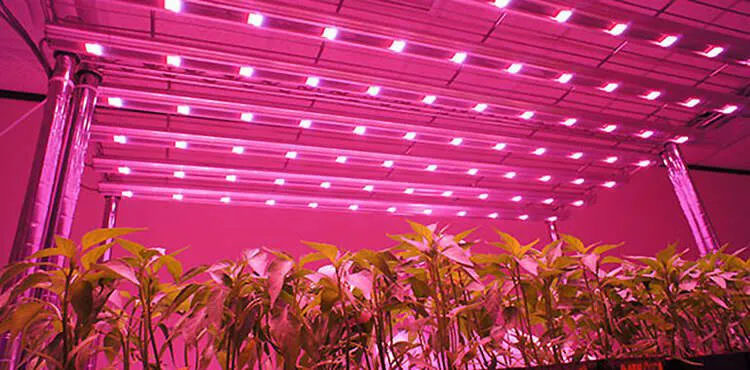
When a regular LED is sufficient
A foliage houseplant receiving window light may only need modest supplementary illumination. A white LED in a safe open fixture could provide that, without a purple specialty bulb. Use the lamp so light reaches leaves directly and monitor new growth. If the plant produces very small leaves or long stems pointing toward the light, coverage or intensity may be inadequate. A tall plant may need more even lighting from several positions.
When a horticultural unit is better
Seed starting, leafy crops grown in a windowless room and fruiting vegetables generally require more dependable area coverage and light supply. A grow bar or panel can offer mounting hardware, dimming and a PPFD chart, making it easier to place over several plants. A powerful panel may need more clearance than an ordinary bulb and can stress foliage when hung too close. The maker's instructions must guide installation.
Choose with the plant, not the label
Identify species, growth stage, available natural light and canopy area. Compare real watts and verified PPFD distribution at your intended height. Use a timer and keep a sensible dark interval. Avoid interpreting a marketing label such as 'full spectrum' as proof that the fixture has enough intensity. For an indoor shelf, safe electrical installation and practical controls are as important as nominal output.
Practical checks
- Match the source and spectrum to your actual crop and growing stage.
- Check PPFD at a stated distance instead of trusting an equivalency label.
- Use a stable light/dark schedule, and adjust only when new growth suggests it.
- Keep electrical fittings safely mounted and away from watering.
Credible sources
Related guides: grow light vs regular light · can you use regular light bulbs as grow lights · how to choose a grow light