
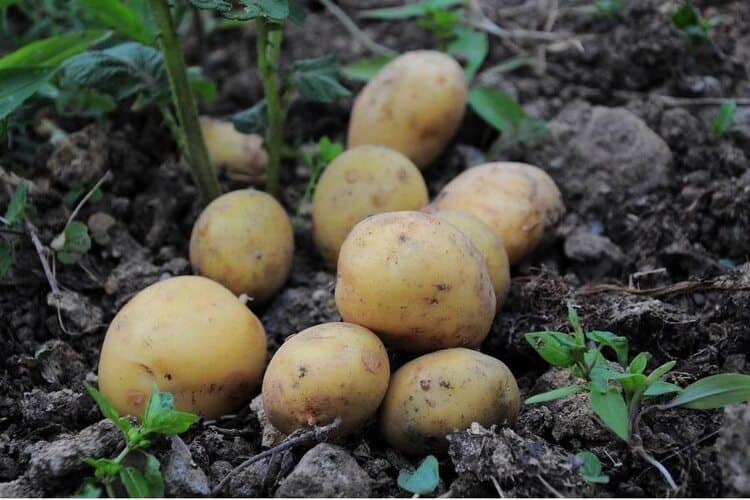
A practical starting point for home potatoes is to plant seed pieces 10–12 inches (25–30 cm) apart, about 3–5 inches deep, in rows 30–36 inches (75–90 cm) apart. Those are University of Minnesota Extension's home-garden recommendations. Closer spacing generally favors more small tubers; wider spacing gives individual plants more room to produce larger tubers.
Quick spacing guide
| Setting | Starting recommendation | What to adjust |
|---|---|---|
| Typical in-ground rows | 10–12 inches between pieces, 30–36 inches between rows | Allow room for access and hilling |
| Fingerlings or new potatoes | Use the seed supplier's spacing, often nearer the close end | Smaller harvested tubers can suit tighter planting |
| Larger storage potatoes | Use the wider end of the variety's recommended spacing | Check cultivar-specific mature size |
| Containers or grow bags | Follow container size and seed supplier's plant-count guidance | Root volume, drainage and light limit capacity |
Container plant counts vary too much by pot dimensions to promise that a fixed number of potatoes fits every bucket.
How to plant seed potatoes correctly
- Buy certified disease-free seed potatoes, not untreated supermarket potatoes of uncertain disease status.
- Use small whole seed tubers or cut larger ones into suitable pieces, each with at least one healthy eye, following the local cut-and-cure guidance.
- Wait until the soil has warmed enough for planting in your region.
- Mark row spacing with stakes or twine and position seed pieces at the recommended intervals.
- Cover pieces with soil and irrigate as needed for even establishment.
- As stems grow, hill soil around them to keep forming tubers out of sunlight and prevent greening.
What happens if they are too crowded?
Too many plants compete for root-zone nutrients, water and light. Individual potatoes may finish smaller, and a crowded canopy can make scouting and harvesting harder. Spacing too far apart wastes bed space and may allow more weeds between plants. Because cultivar maturity and natural tuber size vary, match the final distance to your harvest goal rather than pursuing the maximum number of stems.
Should you use square-foot spacing?
Dense raised-bed plans can work when light, soil depth, hilling space and airflow are sufficient, but a strict one-piece-per-square-foot rule should not override a seed supplier's recommendations. Measure the actual usable soil area, not the outside of the container or bed frame. Do not plant so near a sidewall that expanding tubers are exposed to light.
Water and nutrients after planting
Maintain even moisture while tubers initiate and grow; severe drying followed by heavy water can affect tuber quality. Use a potato-specific soil-test and nutrient plan. University of Minnesota notes that potatoes have different fertilizer needs from most other vegetables, so don't copy the sweet-potato or lawn program. Read potato yield expectations and when to reduce irrigation.