
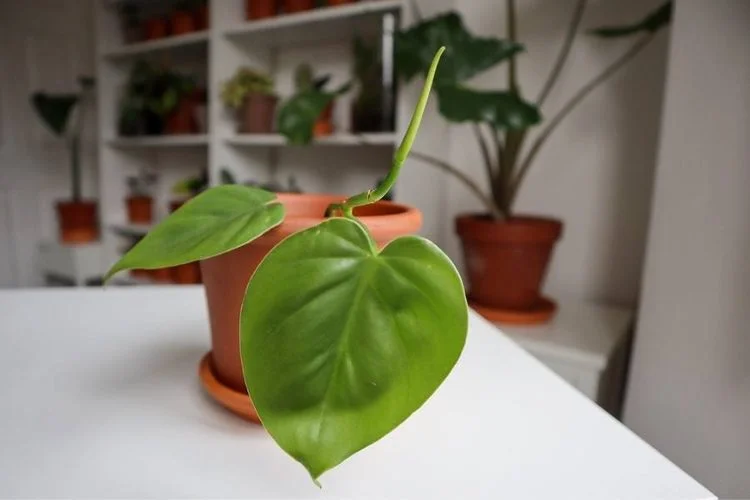
Red Emerald is a climbing cultivar of Philodendron erubescens. North Carolina State Extension describes its deep red leaf stalks, heart-shaped leaves and deep-green mature foliage. It benefits from filtered bright light, steady warmth, a moist but well-drained root zone and somewhere to climb. Contrary to some older care charts, it is not a cool-climate houseplant that prefers 55–65°F year-round.
How to recognize Red Emerald
The deep reddish petioles and greener heart-shaped leaves are a useful combination. New leaves can emerge lighter, maturing into a deeper green. The plant is a vine, unlike compact nonclimbing types sometimes sold under similar philodendron names. Compare several leaves and stem traits rather than treating red color alone as proof, since other P. erubescens selections have reddish stems. NC State Extension specifically lists ‘Red Emerald’ among recognized cultivars and describes its habit.
Light and temperature
Place it in bright indirect light, with sheer filtering or a little distance from harsh midday sun. Very weak light slows growth and often produces longer gaps between leaves. North Carolina State gives a broadly warm range for blushing philodendron and recommends protection from cold drafts; comfortable indoor warmth is generally suitable. Avoid sudden switches between a cold window and strong afternoon sun. Leaves damaged by heat or chilling do not turn green again, so correct the conditions and assess the next emerging leaf.
Water, drainage and humidity
Keep the mix slightly moist during active growth without leaving it waterlogged. A container with drainage holes and an airy, organic-rich substrate is preferable to dense garden dirt. Check below the top layer and water thoroughly once the mix has dried enough for your specific pot, then empty the saucer. Drought can cause curling and soft foliage; persistent saturation can damage roots and yellow leaves. If air is persistently dry, use measured humidity and sensible room ventilation rather than assuming misting repairs wet roots.
Support, fertilizer and repotting
Give the climbing stem a moss pole or sturdy trellis and attach it loosely with soft ties. Do not fasten the growing leaf stalks tightly. Feed conservatively with suitable houseplant fertilizer during active growth, following label instructions and recognizing fresh potting mix may already contain nutrients. Repot only when roots have genuinely filled the existing pot or the growing medium has broken down. A slightly larger drained pot is usually safer than an oversized one, which can stay wet for a long time.
How to propagate by stem cutting
- Find a healthy stem section with at least one node and, if practical, a leaf.
- Cut below the node using clean tools and wear gloves to avoid irritating sap.
- Keep the node in clean water or a moist airy rooting substrate; do not submerge leaves.
- Provide filtered bright light and stable warmth while roots form.
- Move the rooted cutting to a small draining pot and keep it out of direct hot sun during establishment.
The RHS philodendron guide supports nodal stem cuttings and climbing support. A detached leaf without a node is not a reliable new vine.
Problems and pet safety
Inspect for mealybugs, scale and mites if new leaves are distorted or sticky. A brown tip can mean several things, including water stress, salt buildup or low humidity; look at the whole plant before prescribing fertilizer. Philodendron contains irritating calcium oxalate crystals and should not be eaten by cats, dogs or children. Read philodendron curling leaves or compare Golden Dragon trade-name care. Evidence: NC State Philodendron erubescens and RHS Philodendrons.