
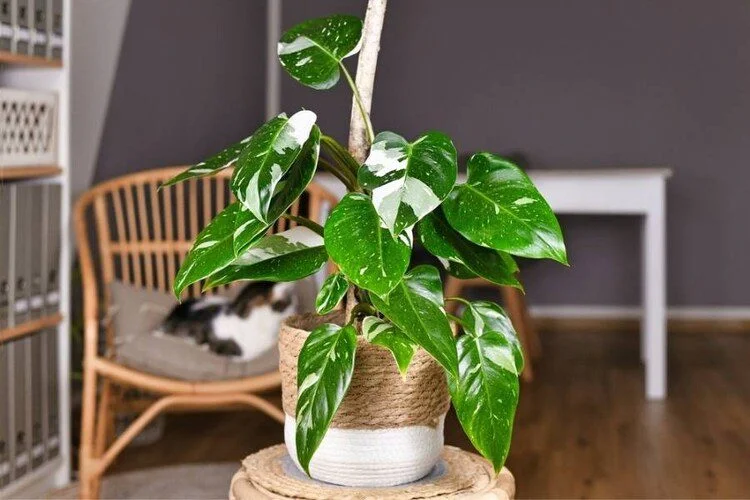
A plant sold as Philodendron ‘Golden Dragon’ should be cared for as a climbing tropical philodendron: bright filtered light, airy soil, careful watering and a stable support. “Golden Dragon” is a horticultural trade label used inconsistently across sellers, so it should not be treated as a verified botanical species name. Leaf shape and variegation can vary across plants sold under the same label.
What is a Golden Dragon philodendron?
The trade name often describes a climbing plant with lobed, irregularly shaped green leaves, sometimes mottled with yellow or lime-green areas. However, nursery catalogs do not always agree on parentage or cultivar identity. It is safer to retain a grower's original label and examine several leaves, nodes and connected stems than to declare every specimen a named species such as Philodendron bipennifolium. Botanical names are governed by taxonomic references; product listings by themselves do not establish synonyms. The care principles below follow reliable general philodendron guidance, not unverified cultivar trials.
Light and leaves
Provide bright, indirect light near a window, with some protection from intense midday sun. Deep shade can slow growth and produce smaller, less strongly developed foliage. Variegated sectors have less chlorophyll and may scorch more easily, but increasing light does not guarantee that a green stem will develop a particular yellow pattern. Move gradually from shade to a brighter position and judge the newest leaves over time. The Royal Horticultural Society's philodendron guide describes suitable indoor light and the importance of acclimation.
Water, potting mix and humidity
Use a container with holes and a loose mix that holds some moisture but does not remain waterlogged. Coarse bark and perlite can contribute air spaces alongside an appropriate houseplant base. Check the mix below the surface; water thoroughly when the root zone has partly dried, then drain excess water. Avoid a fixed seven-day schedule. Typical warm indoor conditions are suitable; protect from cold drafts and heaters. If edges become crispy, investigate actual soil moisture, high heat and room humidity before using a humidifier.
Climbing support, pruning and feeding
A pole or trellis provides a climbing surface and helps manage the vine's weight. Secure the stem loosely without binding a developing leaf petiole. Prune just beyond an appropriate node for shape, using clean shears and gloves to protect from irritating sap. During active growth, use a balanced houseplant fertilizer conservatively according to the label; avoid overfeeding a newly repotted or root-damaged plant. A healthy climbing vine may develop differently from the same plant trailing unsupported, but there is no guaranteed number of leaf lobes or size from adding a moss pole.
Propagating safely
- Select a healthy vine free of visible pests.
- Find a real stem node with a viable growth point; a detached leaf alone is not sufficient.
- Cut below the node with clean pruners and keep foliage out of standing water.
- Root the node in water or an airy moist medium in warm filtered light.
- Once rooted, pot gently and avoid keeping the new container soggy.
Learn the same stem-node principles in propagating Philodendron Birkin, while recognizing these are distinct trade-named plants.
Troubleshooting and safety
Yellowing with wet roots can signal overwatering, while crisp edges and a lightweight pot suggest drying problems. Inspect new growth for thrips, mealybugs and other insects before applying any product. Philodendron sap can irritate skin and its calcium oxalate-containing tissues are unsafe for pets and people to chew; keep the plant out of reach. More clues: curled philodendron leaves and Red Emerald care. Sources: RHS Philodendron and NC State Philodendron overview.