
Independent gardening guides. Some links earn us a commission at no cost to you. Read our affiliate disclosure
Newsletter
Dancing lady orchid (Oncidium alliance hybrids)

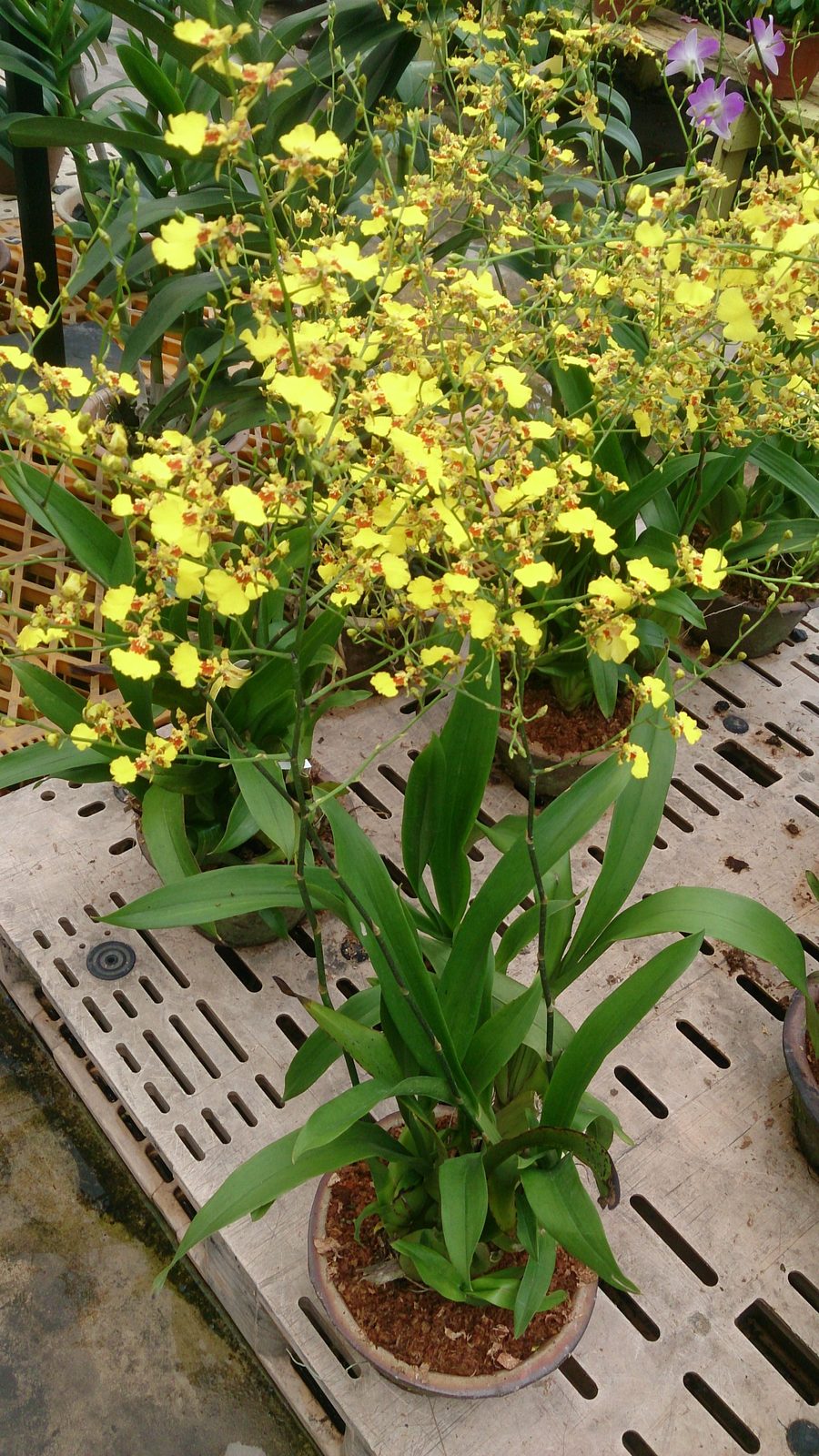
Photo: Mokkie, CC BY-SA 3.0 via Wikimedia Commons

Dancing lady orchid

Oncidium alliance hybrids · Orchidaceae

Also known as: Dancing lady, Oncidium, Oncidium orchid, Oncidium alliance, Oncidesa, Oncostele, Aliceara, Oncidopsis, Cambria, Oncidium Twinkle, Tiger orchid, Odontoglossum (former name)

Oncidium-alliance hybrids bear sprays of small, often yellow dancing-lady flowers. Care differs between warm- and cool-growing types, so check the label.

Light
Medium light, Bright indirect light, Some direct sun
Care level
Moderate
Where it grows
Indoors
Cats and dogs
Pet safety unknown

We couldn't confirm whether this plant is safe for pets. Keep it out of reach and ask your vet.

View My Garden

Check a problem with this plant

How to identify it

"Dancing lady" is the common name for Oncidium, a large genus of evergreen orchids from tropical and subtropical America that mostly grow on trees, and for the many hybrids in its alliance. Plants on sale are usually hybrids, including crosses with related genera labelled ×Oncidesa, ×Oncostele, ×Aliceara or ×Oncidopsis. The cool-growing types once called Odontoglossum (tiger orchids) are now classed as Oncidium.

  • Large pseudobulbs (swellings) at the base, with narrow, leathery evergreen leaves.
  • Long, branching flower stems with many small flowers that have a large, ruffled lip, often yellow flecked or striped with maroon, but also pink, reddish-purple or white.

Fleshy "mule-ear" types and twig-dwelling "equitant" types need drier conditions than typical dancing ladies.

Light

Light needs depend on the type, so check the label for warm- or cool-growing.

  • Warm-growing types (the classic, often yellow, dancing ladies): the RHS says they are more forgiving of bright light than other popular orchids and can take direct sun in the morning or evening. East- and west-facing windowsills are ideal; a south window needs a little shade from intense summer sun. The American Orchid Society (AOS) says most oncidiums thrive with one to five hours of sun a day, and more light usually means more flowers.
  • Cool-growing types (formerly Odontoglossum, including Cambria hybrids): the RHS recommends filtered, subdued light, such as a north- or north-east-facing window.

Leaf colour helps: bright green is right, reddish-green means too much light and dark green too little.

Potting mix and drainage

Use a very free-draining, bark-based orchid mix; NC State notes these orchids will not grow in ordinary potting mix or soil. For indoor plants, AOS also lists tree fern fiber, or fine bark mixed with sphagnum moss. Keep the mix loose so plenty of air reaches the roots, and never leave the pot standing in water.

  • They like their roots fairly tightly packed, so repot only when the bark has broken down or there is no room for new growth, roughly every two years, after flowering.
  • Choose a pot only slightly larger, with room for two or three new pseudobulbs; overpotting can lead to root rot.
  • Keep the plant at its previous depth, with the newest growth away from the rim. Handle the roots gently: healthy roots are white and firm.

When to water

Water thoroughly, then wait until the mix has dried part of the way down. AOS says the medium should dry at least halfway through the pot before watering again, and NC State gives the same half-dry check. Plants with thick, fleshy roots or leaves need water less often than thin-leaved ones.

  • Push a wooden skewer or a finger into the mix, or lift the pot: a drier pot feels lighter.
  • Look at the pseudobulbs: the RHS notes that wrinkled pseudobulbs generally mean the plant isn't getting enough water.
  • Water less in winter, when growth slows.

Don't overwater: the RHS warns that the large, fleshy pseudobulbs and roots are prone to rot if the mix stays too damp. Water the mix rather than the leaves, because AOS notes the foliage is susceptible to infections.

Humidity and temperature

Temperature needs differ by type. The RHS says warm-growing oncidiums need about 18–25°C (65–77°F) by day and 13–17°C (55–63°F) at night, while cool-growing types need a minimum night temperature of 11°C (52°F). For both, a drop in temperature at night helps trigger flowering, which is why a windowsill, cooler at night, often suits them. AOS describes the group as intermediate to warm and happy indoors at room temperature.

Humidity advice varies: AOS says many oncidiums need less humidity than other orchids, while the RHS suggests 55–75% for warm-growing types. Standing the pot on a tray of damp pebbles, without the pot sitting in water, helps. Give plenty of air movement, but avoid cold draughts.

Feeding

Feed regularly but lightly while new growths are developing, using an orchid fertiliser at the product label rate; AOS notes that regular feeding builds strong pseudobulbs. For warm-growing types, the RHS suggests feeding from spring to autumn at every second or third watering, and AOS says not to fertilise in winter.

Cool-growing types follow a different pattern: the RHS cool-growing guide carries on feeding through autumn and winter, switching to a higher-potassium or flowering orchid feed if you wish.

Propagation

Division is the usual method. Large clumps can be divided when repotting after flowering, ideally only once the clump is overcrowded. Cut through the rhizome joining the pseudobulbs so that each piece has at least three healthy pseudobulbs, ideally with a growing shoot; the RHS and NC State both give this three-pseudobulb minimum. Trim dead roots, remove brown, shrivelled pseudobulbs, and pot each division separately in bark-based orchid compost.

New divisions may take two or three years to flower. See How to propagate orchids: division, keikis and backbulbs.

Growth and size

Dancing ladies produce new pseudobulbs at the base each season and form large clumps over time. Size varies widely across the genus: NC State notes some are miniatures about 6 inches tall while others grow far larger, and the RHS describes warm-growing types with leaves up to 60 cm (2 ft) long.

AOS says oncidiums have no special blooming requirements; many flower once a new growth matures, sometimes up to three times a year. The RHS says most warm-growing types flower in autumn and winter, though modern hybrids can bloom at any time, and a large plant may carry six or seven sprays. After flowering, cut the old stem off at the base.

Warning signs

  • Wrinkled pseudobulbs. Usually too little water. Check the roots first: if they are white and firm, water more thoroughly. If they are black and rotten, the cause is overwatering; the RHS advises cutting out any rotting pseudobulb with sterile secateurs and watering less.
  • Pleated, "accordion" new leaves. AOS links this to too little water or too long between waterings. Check how quickly your mix dries and avoid long dry gaps.
  • Reddish-green leaves. Too much light; add light shade. Dark green leaves mean too little light; move it closer to the window.
  • No flowers. Check light, and whether nights are cooler than days.
  • Small insects on leaves or stems. Check for aphids, mealybugs and red spider mites; use a product labelled for the pest and follow the label.

See wrinkled orchid leaves and orchid leaves turning yellow.

Related guides

Sources

  1. NC State Extension Gardener Plant Toolbox: Oncidium (checked October 11, 2026)
  2. American Orchid Society: Oncidium Culture Sheet (checked October 11, 2026)
  3. American Orchid Society: Novice Culture Sheet: Watering Know-how (PDF) (checked October 11, 2026)
  4. Royal Horticultural Society: How to grow oncidium orchids (warm growing) (checked October 11, 2026)
  5. Royal Horticultural Society: How to grow oncidium orchids (cool growing) (checked October 11, 2026)
  6. ASPCA Animal Poison Control: Dancing Doll Orchid (Oncidium flexuosum) (checked October 11, 2026)
  7. ASPCA Animal Poison Control: Golden Shower Orchid (Oncidium sphacelatum) (checked October 11, 2026)

Last reviewed