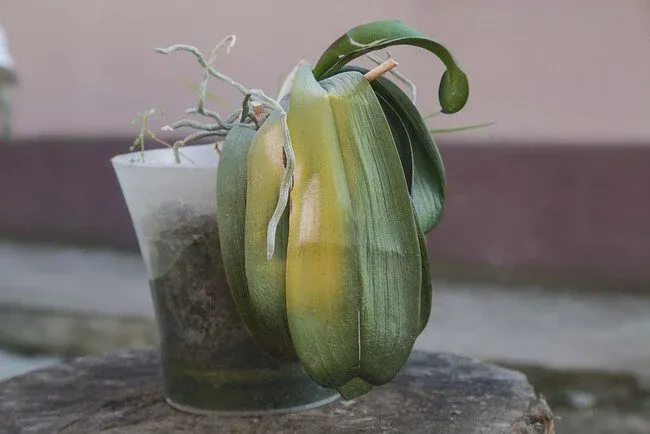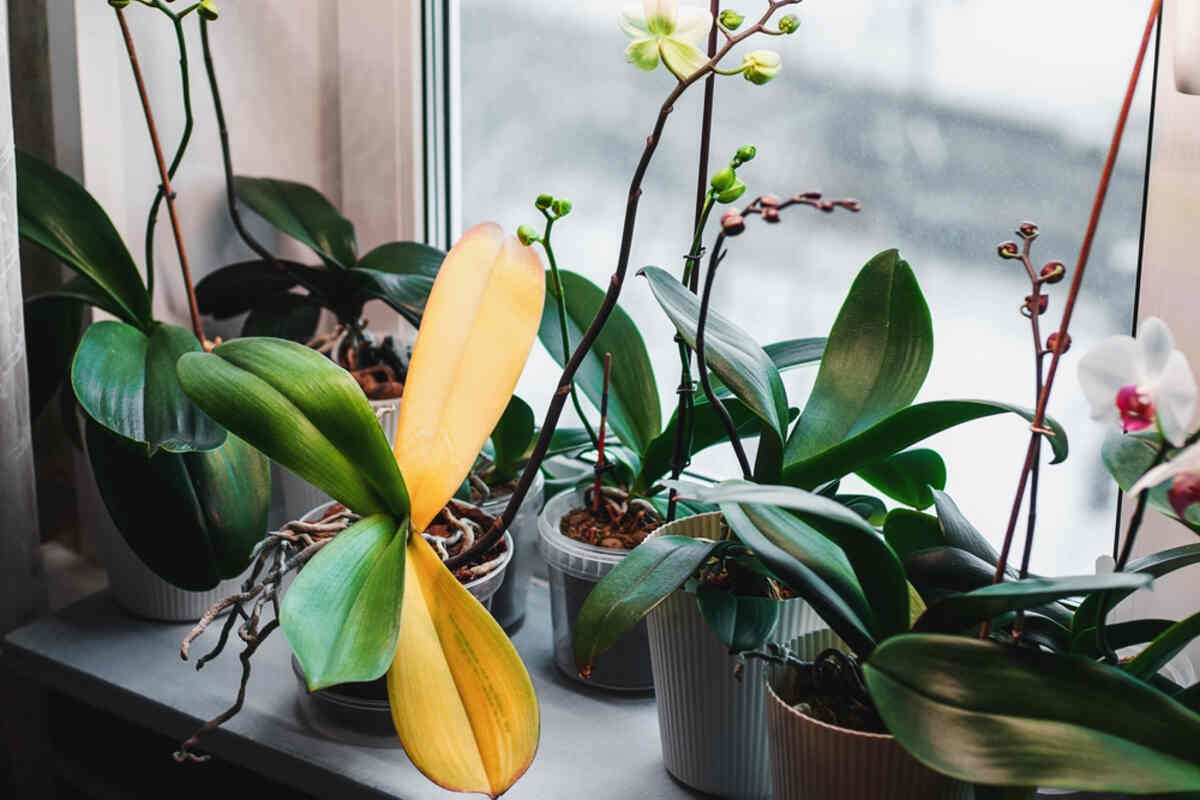
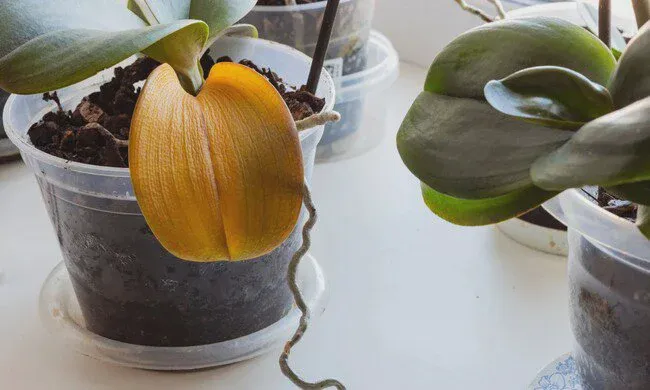
One older, lower Phalaenopsis leaf turning uniformly yellow and eventually falling away can be normal aging. Several leaves yellowing together, a mushy crown, new yellow leaves or yellow patches that spread need investigation. Before fertilizing or cutting foliage, check the roots, growing medium, light and recent temperature changes.
Begin with the pattern of yellowing
One older leaf changing evenly from green to yellow: the plant may simply be shedding aging foliage. Multiple leaves with drooping in wet medium: suspect root damage and inadequate aeration. Yellow to bleached areas on the brightest side: inspect for sun or heat injury. Wet-looking patches becoming dark or mushy: isolate and investigate disease.
The American Orchid Society's guide to leaf yellowing distinguishes ordinary lower-leaf aging from degraded potting mix and environmental injury. A photograph of leaf color alone does not identify the cause.
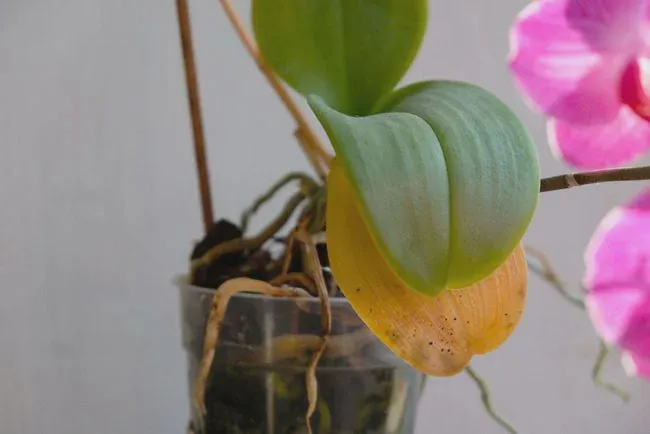
When yellow leaves are a normal part of growth
A healthy moth orchid may gradually shed an old lower leaf as new foliage develops. The leaf can turn a clear yellow, lose firmness and eventually detach. If only one older leaf is changing and other leaves and roots are vigorous, do not rush to cut it off. The plant may still be reabsorbing nutrients from that leaf.
Some deciduous orchid genera have more dramatic seasonal leaf loss. An orchid's group matters: normal Catasetum leaf drop should not be confused with widespread yellowing in a Phalaenopsis that is expected to remain evergreen.
Root trouble and saturated medium
Check the inner pot and the center of the bark or sphagnum. If it stays wet for too long, roots may lack air and start to decay. Rotten roots often turn soft and break apart; healthy roots should remain firm. Without functional roots, leaves may turn yellow, droop or wrinkle even though the pot looks moist.
Correct drainage, remove clearly dead roots with clean tools and replace decomposed medium only when necessary. Water on the basis of medium moisture, not a fixed weekly schedule. The watering guide explains how to evaluate wet versus dry media without guessing.
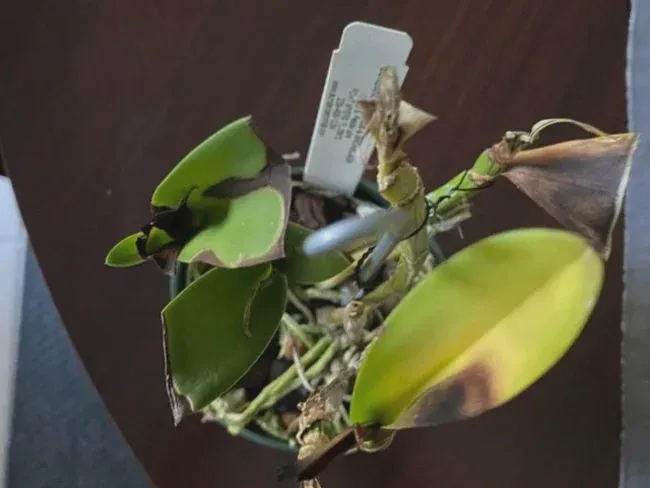
Sun, heat and temperature shocks
Strong direct sunlight can create pale yellow or white patches that later become papery tan or brown. Sudden exposure after a dim winter can scorch leaves, and those damaged patches will not turn green again. Move the plant gradually into appropriate filtered light.
Cold damage or abrupt temperature changes may create dark, water-soaked or collapsed patches, especially on tender growth. Keep sensitive moth orchids out of cold drafts and away from direct heater blasts; do not expose them to extremes in an attempt to trigger blooming.
Nutrients, pests and infection
Prolonged nutrient shortage may produce pale growth, but adding fertilizer is not the first response to yellow leaves while roots are damaged. Excessive salt concentrations can also injure roots and tips. Check root health, light and water first; then use measured appropriate fertilizer when healthy growth is active.
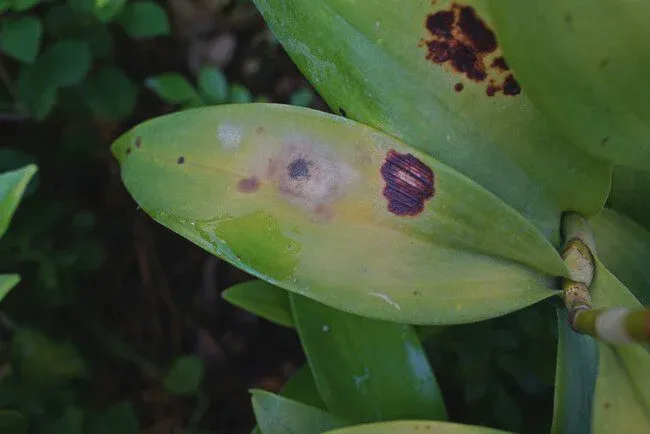
Inspect leaf undersides and crowns for scale, mealybugs, fine speckling or sticky residue. Rapidly spreading mushy or water-soaked lesions can point to a contagious disease, so isolate the plant and keep foliage reasonably dry. Consult the orchid recovery guide if the crown or many roots are failing.
Five steps that help most home growers
- Identify the genus and count how many leaves are yellowing.
- Check the oldest and newest leaves separately; photograph progression.
- Inspect the pot for standing water, broken-down mix and firm or decayed roots.
- Review changes in sun exposure, cold, heat, transport and feeding.
- Correct the demonstrated issue and monitor new growth instead of expecting dead tissue to recover.
Related patterns: drooping leaves, wrinkled leaves and physical splits.