
Independent gardening guides. Some links earn us a commission at no cost to you. Read our affiliate disclosure
Newsletter
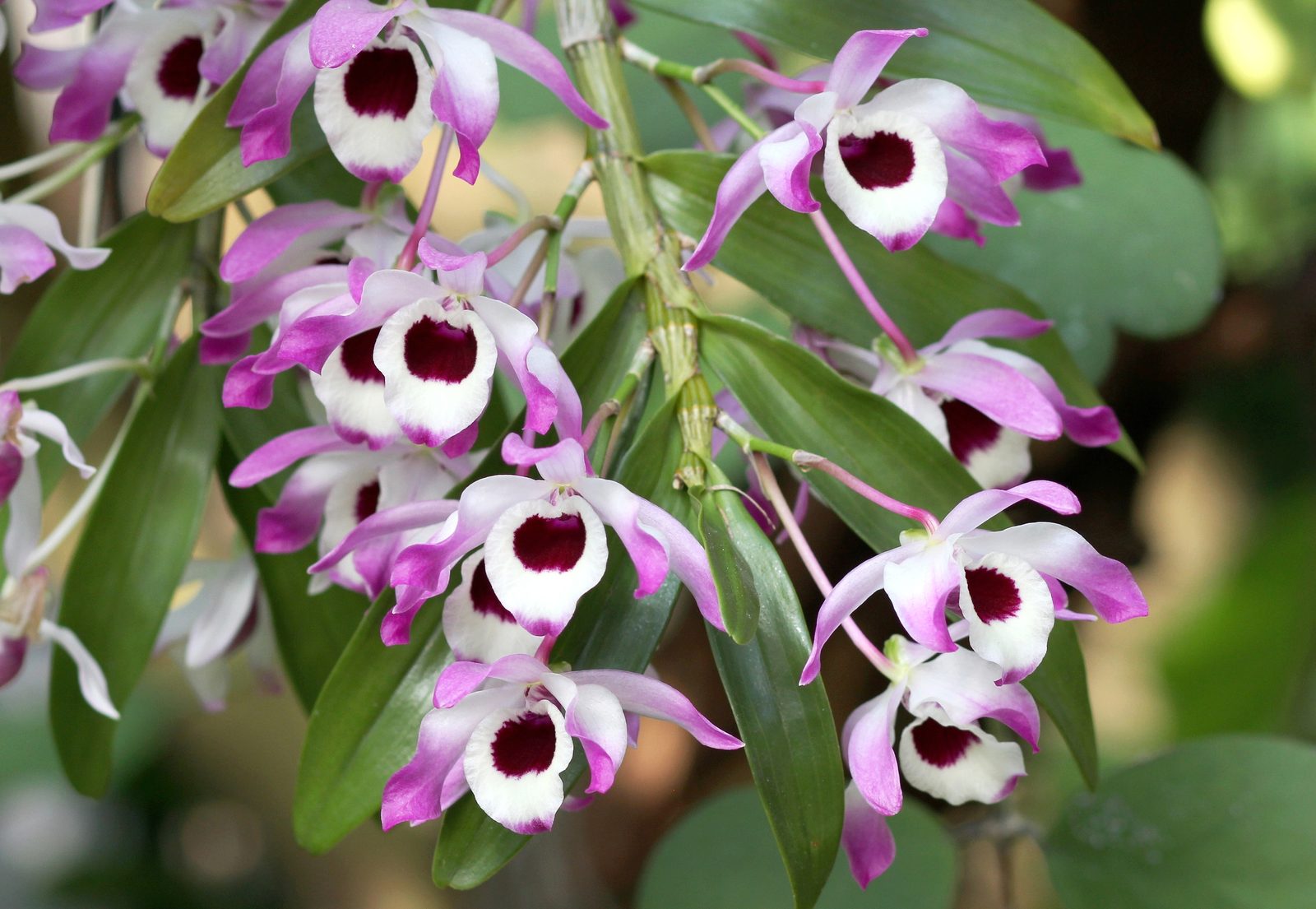
Noble dendrobium (Dendrobium nobile)

Photo: Maja Dumat, CC BY 2.0 via Wikimedia Commons

Noble dendrobium

Dendrobium nobile · Orchidaceae

Also known as: Noble dendrobium, Noble rock orchid, Nobile dendrobium, Nobile-type dendrobium, Soft-cane dendrobium, Dendrobium nobile hybrids, Dendrobium orchid

Dendrobium nobile and its hybrids are cane-stemmed orchids that flower along the canes in winter and spring after a cool, bright, drier autumn rest.

Light
Bright indirect light
Care level
Moderate
Where it grows
Indoors
Cats and dogs
Pet safety unknown

We couldn't confirm whether this plant is safe for pets. Keep it out of reach and ask your vet.

View My Garden

Check a problem with this plant

How to identify it

Dendrobium is a huge genus of about 1,600 species, and NC State notes that its diversity defies one-size-fits-all growing instructions. This profile covers only Dendrobium nobile and its many hybrids, the soft-cane or nobile-type dendrobiums.

  • Upright, segmented, cane-like stems (pseudobulbs) with oval leaves 5–8 cm long.
  • Flowers borne singly or in small clusters from nodes along the canes.
  • The species has fragrant rose-pink flowers up to 5 cm across with a maroon lip, from winter into spring.

Hard-cane types, such as Dendrobium phalaenopsis hybrids, carry long sprays from the upper nodes, need warm conditions and do not need a rest. Check the label before following this care.

Light

Nobile-type dendrobiums need bright light all year, including through their winter rest. The New York Botanical Garden says these hybrids need extended, very bright light to stay vigorous and flower, and suggests a south-facing window with a sheer curtain, or an east or west window with long hours of light. The American Orchid Society (AOS) says nobile types prefer filtered light: a bright east or south window with several hours of indirect or filtered sun. Direct midday sun may be too strong.

Light matters most in autumn, when buds form; the RHS suggests giving as much light as possible then. AOS notes leaves should be medium green. Plants grown too dark become lanky, and plants grown too bright may yellow or scorch.

Potting mix and drainage

Use a free-draining, bark-based orchid mix. For indoor plants, AOS suggests fine or medium bark with some sphagnum moss added to hold a little moisture. Let excess water drain straight out; plants left standing in water can get root rot.

  • Dendrobiums grow best slightly pot-bound. NC State notes their root systems are small, so use the smallest pot that fits; clay pots help aeration and stop tall canes tipping over.
  • Avoid a much larger pot: the extra compost stays wet longer and can cause root rot.
  • Repot when new roots begin to emerge, ideally just after flowering in spring, or when the mix breaks down. The RHS suggests refreshing the compost every two to three years.

When to water

Nobile types follow a seasonal wet-then-dry rhythm, so check the mix and the season rather than watering on a schedule.

  • Spring and summer (active growth): AOS says to keep the mix evenly moist, letting it dry slightly between waterings. Lift the pot to check: the RHS notes that dry compost feels a lot lighter than moist compost. Water thoroughly and let it drain.
  • Autumn and winter (rest): once the new canes have matured, cut watering back sharply. The NYBG suggests tapering off in autumn, then giving little or no water for two to three months, just enough to keep the canes from shrivelling.
  • Restarting: resume regular watering in spring as new growth or flower buds appear.

Watering freely during the rest can lead to plantlets forming instead of flowers.

Humidity and temperature

Dendrobium nobile is a cool-growing orchid. The RHS gives an optimum range of 10–24°C (50–75°F) for cool-growing dendrobiums and says they need a drop in night temperature to flower reliably, so a bright, cooler room suits them better than a warm, centrally heated one. For the growing season, the RHS species profile advises nights above 10°C (50°F).

The cool, dry autumn and winter rest is what sets flower buds. The NYBG suggests days below 70°F and nights around 55°F during the rest, with low humidity; plants kept too warm tend to produce plantlets (keikis) instead of flowers.

During active growth, AOS says most dendrobiums grow best at 40–70% humidity, with good air movement.

Feeding

Feed only while the plant is actively growing, using an orchid fertiliser at the product label rate. The RHS suggests plain water every fourth watering to flush salts out of the compost, and advises avoiding high-nitrogen feeds, especially after midsummer.

Nobile types need a break from feeding to flower. AOS advises reducing fertiliser in autumn, and the NYBG suggests stopping in autumn and through the winter rest, then starting again once flower buds are well formed. The RHS likewise says to stop feeding dendrobiums that need a dormant season.

Propagation

  • Keikis: some dendrobiums form plantlets at nodes on their canes. The RHS suggests detaching one once it is at least a third the size of the parent and has its own pseudobulbs and roots, then potting it in bark-based or coir compost. It may take a year or two to flower.
  • Division: large, established plants can be cut through the rhizome with a sharp, clean tool. Each piece needs several healthy green canes with fleshy roots, and AOS suggests keeping three to five canes per division to avoid setbacks in flowering. Divide only when necessary; the RHS says smaller divisions can take up to three years to flower.

See How to propagate orchids: division, keikis and backbulbs.

Growth and size

The RHS describes Dendrobium nobile as an epiphytic orchid up to about 30 cm tall in cultivation, with an upright, columnar habit. Flowers form at nodes along the canes, mainly from winter into spring.

Some leaf loss is normal. NC State describes the soft-cane group as mostly deciduous, and the NYBG notes that nobile hybrids are deciduous to semi-deciduous, so a plant that sheds leaves and looks bare in winter is not necessarily unwell. The RHS notes the species is often evergreen in cultivation. Keep old canes: the RHS advises removing them only when completely shrivelled and pale brown, and cutting flowered stems back once the blooms have faded.

Warning signs

  • Plantlets (keikis) instead of flowers. Often a sign the rest was too warm or too wet. Next autumn, keep the plant cool, bright and much drier until buds form. Pot up keikis once rooted; see orchid propagation.
  • Leaves dropping in winter. Often normal seasonal leaf loss. Check that the canes are firm and keep to rest-period watering.
  • Canes shrivelling during the rest. Give just enough water to stop the shrivelling, then let the mix dry again.
  • Lanky growth or few flowers. Too little light; move it somewhere brighter, especially in autumn. Yellowed or scorched leaves suggest too much sun. See orchid leaves turning yellow.
  • Wet pot, roots brown and mushy. Possible root rot from waterlogging; repot into fresh bark, trimming dead roots.
  • Small insects on leaves or canes. Check for aphids, mealybugs and red spider mites; use a product labelled for the pest and follow the label.

Related guides

Sources

  1. Royal Horticultural Society: Dendrobium nobile (noble dendrobium) plant profile (checked October 11, 2026)
  2. Royal Horticultural Society: How to grow Dendrobium (checked October 11, 2026)
  3. American Orchid Society: Dendrobium General Culture Sheet (checked October 11, 2026)
  4. NC State Extension Gardener Plant Toolbox: Dendrobium (checked October 11, 2026)
  5. New York Botanical Garden, Plant Information Service (Mertz Library FAQ): My nobile Dendrobium hybrid orchid grew only keikis (babies) rather than flowers. What am I doing wrong? (checked October 11, 2026)
  6. ASPCA Animal Poison Control: Leopard Orchid (Dendrobium gracilicaule) (checked October 11, 2026)

Last reviewed