
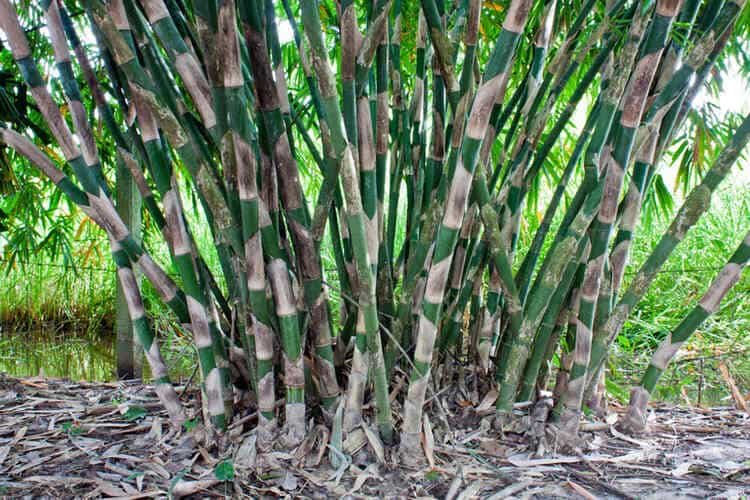
Fertilize clumping bamboo only when growth and soil conditions justify it. A healthy established clump in fertile soil may not need routine heavy feeding. If a soil test or weak growth points to nutrient shortage, apply a measured, appropriately labeled fertilizer as new shoots and leaves grow in the species' local growing season. “Clumping bamboo” covers several genera with different light and climate needs.
Start by identifying the bamboo
Bambusa multiplex, commonly called hedge bamboo, is a warm-climate clumping bamboo that favors full sun to dappled sun and moist fertile soil. Fargesia robusta is a cool-climate clumper that North Carolina Extension describes as preferring partial shade and fertile, moisture-retentive but well-drained ground. Copying one plant's spring or summer feeding schedule to the other may not suit their climates or periods of active growth.
Best timing: during active growth
When supplemental nutrition is needed, the main opportunity is just before or during the locally appropriate growing period as new shoots and leaves develop. In climates with cold winter rest, do not apply a concentrated late-season nitrogen dose to force soft growth. Warm tropical clumpers may grow on a different seasonal rhythm. The exact application month depends on species, local temperatures, rainfall and fertilizer release interval.
How to tell if bamboo needs feeding
Healthy plants may spread gradually and retain good foliage without regular fertilizer. Pale leaves, sparse canes or little new growth can result from low nutrients, but also from drought, hot dry wind, inappropriate sun exposure, compacted soil, damaged roots or a plant that is simply establishing. First check irrigation, drainage, soil pH and competition. Use a soil test when possible; feeding a waterlogged or severely stressed clump can make matters worse.
Choose and apply fertilizer carefully
- Confirm the botanical species and consult regional extension or nursery guidance.
- Check a soil test and the label for a suitable landscape or ornamental grass fertilizer.
- Calculate the dose by intended root-zone area rather than guessing from cane height.
- Spread evenly over the appropriate root area, keeping fertilizer from piling against culm bases.
- Water as the product specifies, avoiding runoff or standing water.
- Monitor new shoots and foliage, then wait at least the label's interval before any repeat application.
Should you add compost or mulch?
Maintaining moist, well-structured soil often helps more than frequent soluble fertilizer. North Carolina Extension describes Bambusa multiplex as preferring compost-rich soil and Fargesia robusta as preferring moisture-retentive yet well-drained conditions. A moderate layer of organic mulch can buffer moisture and temperature if kept off the culm bases; excess wet mulch against stems may encourage problems. Do not amend an already wet compacted site by simply piling on fertilizer.
Avoid confusing clumping and running bamboos
True clumping species generally grow by gradually expanding their crown; running bamboos spread by long rhizomes and can be much more invasive. A fertilizer program will not make a running bamboo behave as a clumper. Confirm identity before planting near property boundaries, and follow local invasive-plant rules. If the goal is screening rather than bamboo specifically, compare available space and alternative garden tree choices.
Takeaway
Base bamboo feeding on species, active growth and actual nutrient need. A measured spring or growing-season application can be appropriate; an automatic monthly high-nitrogen regimen is usually not a sound default.